How to Choose Insulated Screwdrivers for Panel and Transfer Switch Work
This post contains affiliate links. We earn a commission when you purchase through our links at no extra cost to you. We only recommend products we’ve personally tested and use ourselves.
Quick Answer
Choose insulated screwdrivers that carry a true 1000V rating, have tips that match your panel’s screws, use slim shafts that reach recessed terminals, and give you a way to hit the torque printed on the breaker label. Everything else is comfort and preference.
- Rating: double triangle symbol, 1000V, IEC 60900 or ASTM F1505
- Tips: slotted, Phillips, and #1 and #2 square or combination
- Shaft: slim profile, 4 to 6 inches long
- Torque: an insulated torque screwdriver for small terminals
Learning how to choose insulated screwdrivers for panel and transfer switch work comes down to four things: a real voltage rating, the right tips, a slim shaft, and torque control. Get those right and the rest is preference. Get them wrong and you either cannot reach the screw or you trust a tool that was never built to protect you.
This guide walks through each decision in plain language. If you already know what you need and just want product picks, jump to our roundup of the best insulated screwdrivers for panel and transfer switch work.
Why the Right Screwdriver Matters at the Panel
Panels punish small mistakes. Between 2011 and 2024, OSHA recorded 1,654 workplace electrical deaths in the United States, according to the Electrical Safety Foundation International. Electricity accounted for 5.6% of all workplace fatalities in that period.
70%of workplace electrical deaths happen in non-electrical occupations (ESFI)
20%of electrical deaths come from unexpected contact with energy (ESFI)
25%of connections made without a torque tool land near the correct value (IAEI)
10,000Vtest voltage behind every 1000V insulated tool rating
The detail that surprises people is who gets hurt. ESFI reports that 70% of those deaths were in non-electrical occupations, and unexpected contact with energy was the second leading cause at 20%. In other words, the risk is highest for people who open a panel only now and then.
Loose connections are the quieter problem. Research published in IAEI Magazine found that only about 25% of connections made without a torque tool landed within 20% of the manufacturer’s value. That means roughly three in four were wrong, and a loose lug on a transfer switch carries your full generator load.
What Makes Panel and Transfer Switch Work Different
A panel is a crowded metal box full of bus bars, lugs, and terminals set close together. A bare screwdriver shaft can bridge two parts in an instant. An insulated shaft removes that path.
Transfer switches and interlock kits raise the stakes. You are working beside the main lugs, landing heavier conductors, and connecting a second power source. Every connection must be tight, correct, and made without a slip.
The Safety Rule That Comes Before Any Tool
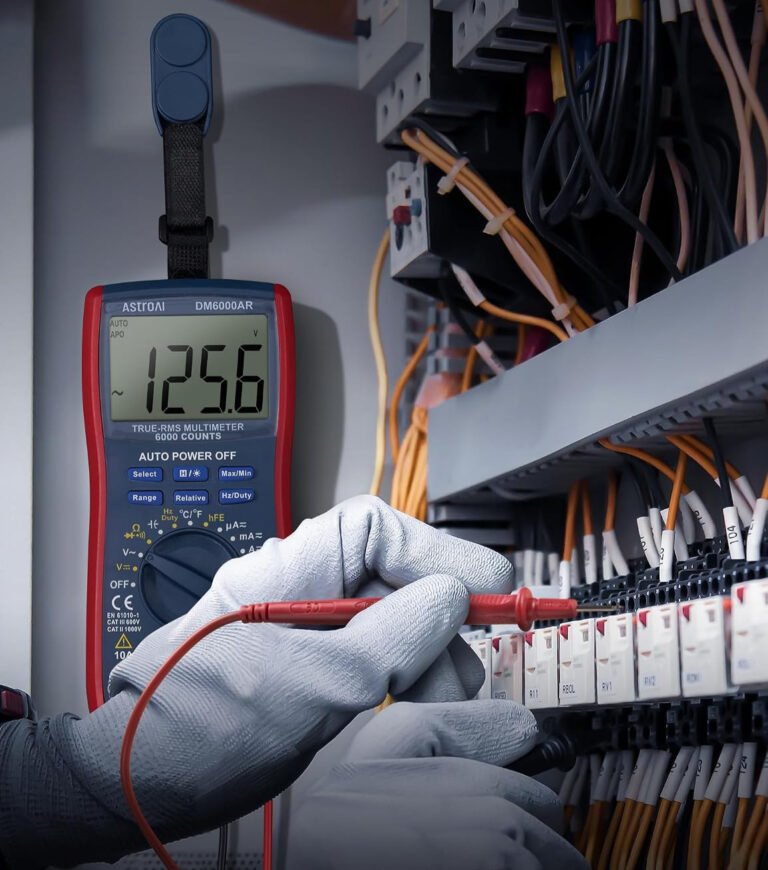
No screwdriver makes live work safe. Turn the power off, lock it out where you can, and prove the circuit is dead with a tester you trust. Our guide to the best voltage tester for generator hookup covers that step.
Remember that the main breaker does not kill everything. The service conductors and line-side lugs in a main panel stay energized until the utility disconnects them. This is why OSHA 1910.335 calls for insulated tools whenever a tool might contact exposed energized parts.
Installing a transfer switch or interlock usually needs a permit and, in many areas, a licensed electrician. If you are unsure, hire one. An insulated screwdriver is a backup layer, not a license to work hot.
How to Choose Insulated Screwdrivers: 7 Steps
Step 1Check for a True 1000V Rating
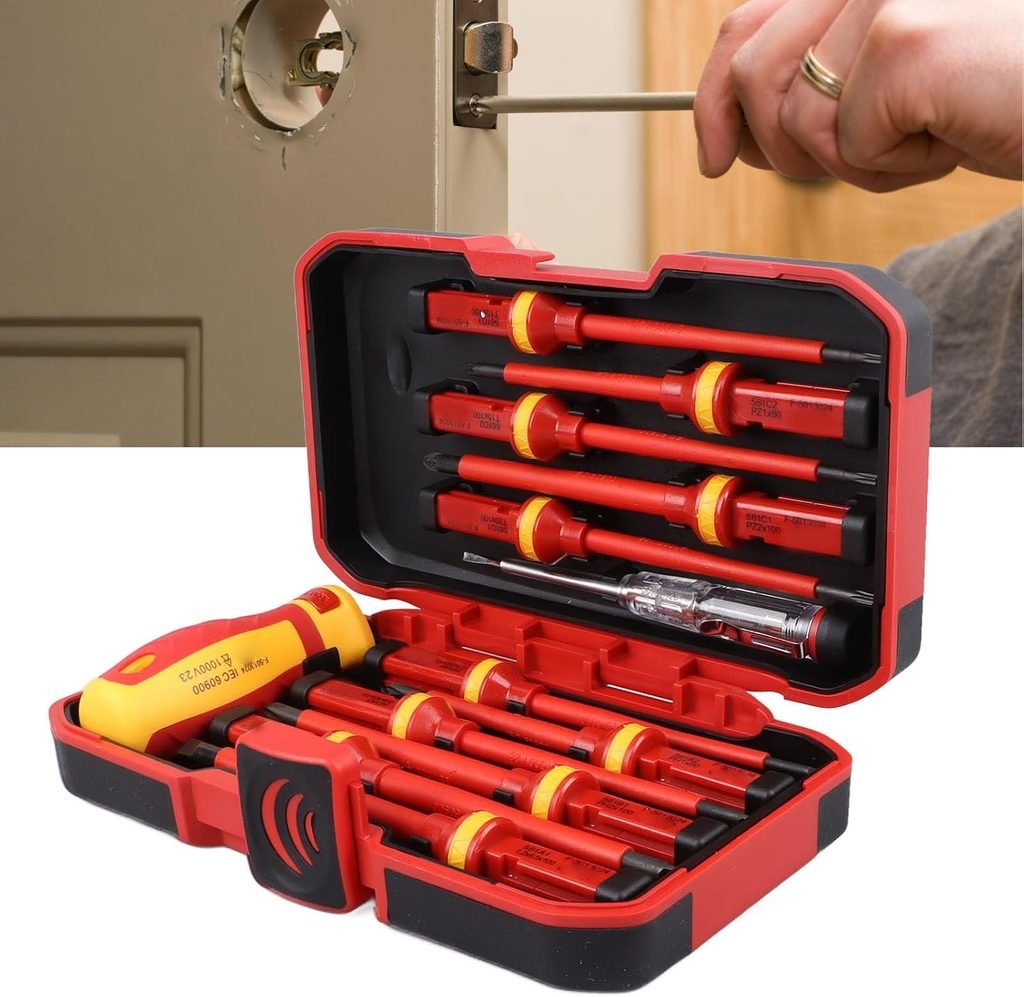
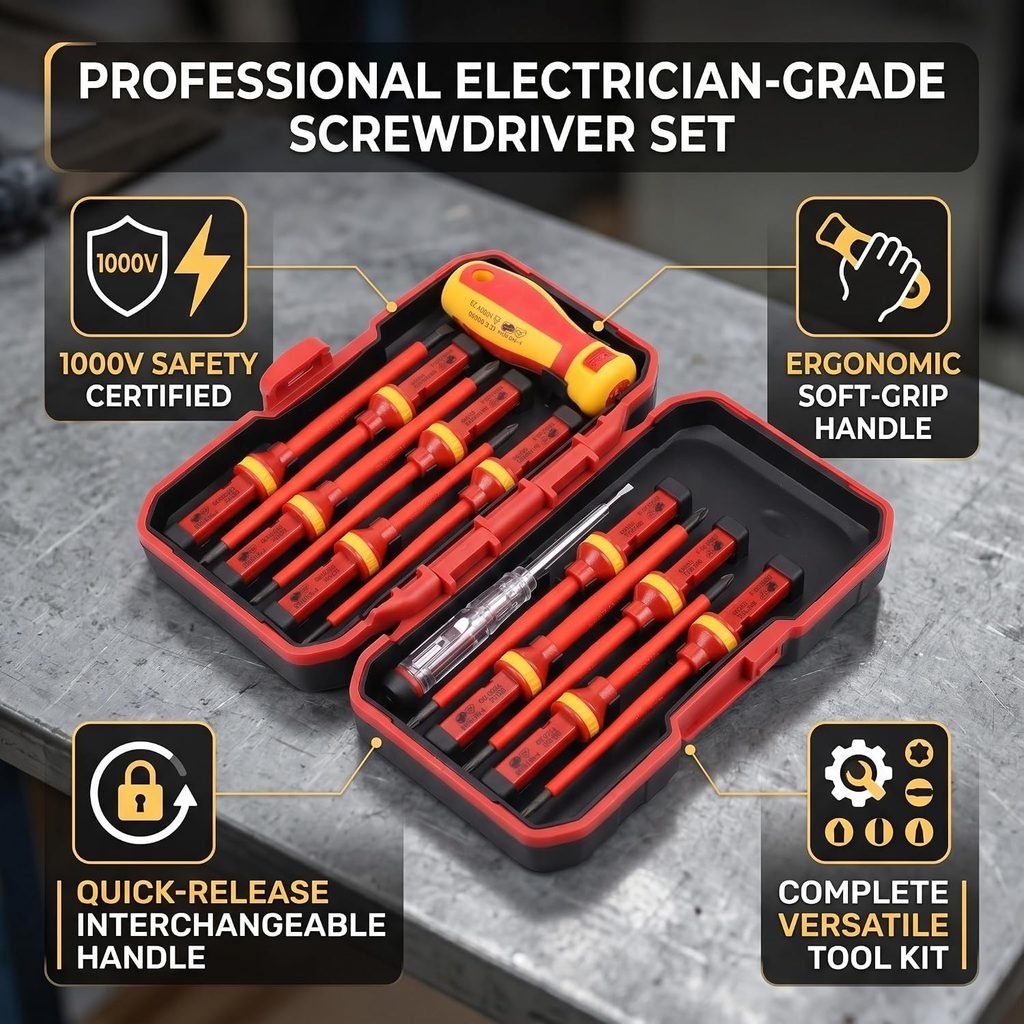
Start with the markings, not the handle color. A real insulated screwdriver shows the double triangle symbol, the 1000V figure, and a standard such as IEC 60900 or ASTM F1505. Many also carry the VDE mark from the German test institute.
The rating has a wide safety margin built in. Tools certified to these standards are tested at 10,000 volts to earn a rating of 1000V AC and 1500V DC. That is ten times the working voltage.
A rubber comfort grip is not insulation. If the shaft is bare steel or the markings are missing, treat the tool as uninsulated.
Step 2Match the Tips to Your Panel’s Screws
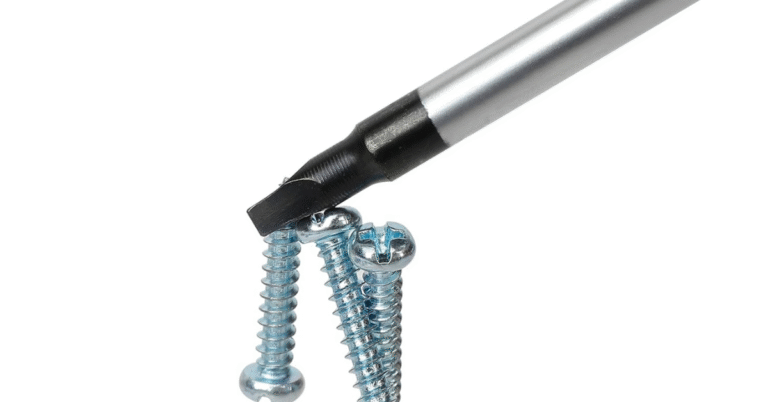
Look at the screws before you shop. Most North American load centers use a mix of slotted, Phillips, and #2 square (Robertson) heads. Many breaker and neutral bar screws are combination heads that accept either a slotted or a square tip.
A square or combination tip grips these screws far better than a plain slotted blade. Milwaukee calls its combination tip ECX, and other brands sell a similar profile under their own names. Less cam-out means less chance of the tip slipping toward a live part.
A practical minimum tip list for panel work:
- Slotted: 3/16 inch and 1/4 inch
- Phillips: #1 and #2
- Square: #1 and #2
- Combination slotted and square: #1 and #2, if your breakers use them
Transfer switches add one more need. Larger lugs often use hex socket screws, so you may also need insulated hex drivers or a torque wrench with hex bits. Check the installation sheet for the exact sizes.
Step 3Choose a Slim Shaft for Recessed Terminals
Insulation adds thickness. On a standard insulated screwdriver, the coated shaft can be too fat to enter the recessed terminal openings found on many breakers and terminal blocks.
Slim-profile blades solve this. Brands label them SlimLine, Slim Tip, or similar, and the insulation narrows near the tip so it fits inside the opening. For panel work, this feature matters more than almost any other.
Check the length as well. A shaft of about 4 inches reaches most terminals, while a 6 inch blade helps inside deep enclosures.
Need to find the right breaker before you open anything? See our picks for the best circuit breaker finder for panel work.
Step 4Plan for Torque
Since the 2017 edition, NEC 110.14(D) has required a calibrated torque tool wherever the manufacturer gives a numeric torque value. Nearly every breaker and lug has one printed on its label. Tightening by feel is the habit behind the failure rate quoted above.
An insulated torque screwdriver covers the small terminals. Check that its range, in inch-pounds, includes the values on your breaker labels. Choose one with interchangeable slim blades so the same handle fits every screw type.
It will not cover everything. IAEI notes that the service lugs in a 200 amp residential panel can call for around 250 inch-pounds, which is torque wrench territory. Plan for both tools if your project includes main or feeder lugs.
Step 5Decide Between Fixed and Interchangeable Blades
Both styles work. The right one depends on how often you open a panel and how much you want to carry.
| Factor | Fixed blade set | Interchangeable blade set |
|---|---|---|
| Best for | Daily trade use | Homeowners, occasional use, torque handles |
| Speed | Fastest, grab and go | Slower, you swap blades |
| Feel | Solid, one piece | Good, if the blade locks firmly |
| Carry size | Larger, several drivers | Compact pouch |
| Relative cost | Higher for full tip coverage | Lower per tip type |
| Watch for | Missing square or combination tips | A loose blade lock, one more part to inspect |
For a one-time generator hookup, an interchangeable set gives you the most tips for the least money. Electricians who work in panels daily usually prefer fixed blades for their speed and solid feel.
Step 6Check the Handle and Build Quality
You will be turning screws to a set torque, so grip matters. Look for a handle that fills your palm and has a soft, non-slip surface. A guard at the front of the handle helps stop your fingers from sliding forward.
Look at how the insulation is made. Better tools mold the insulation directly onto the shaft so it cannot slide or peel. Some brands use two layers in contrasting colors, so damage shows as soon as the inner color appears.
Tip quality counts too. Hardened, precisely machined tips seat fully in the screw and resist rounding. A worn tip slips, and slipping is how accidents start inside a panel.
Step 7Inspect and Store Them Properly
Inspect every insulated screwdriver before each use. Retire it if you see cuts, cracks, burns, or a different color showing through the insulation. There is no safe repair for damaged insulation.
Store them apart from sharp tools. A dedicated pouch or the original case protects the coating far better than a loose toolbox. Keep them clean and dry, and never use them as pry bars or chisels.
Insulated Screwdriver Checklist at a Glance
| Feature | What to look for | Why it matters |
|---|---|---|
| Voltage rating | Double triangle, 1000V, IEC 60900 or ASTM F1505 | Proves the tool was tested at 10,000V |
| Tips | Slotted, Phillips, #1 and #2 square, combination | Matches panel and breaker screws |
| Shaft | Slim profile, 4 to 6 inches | Reaches recessed terminals |
| Torque | Insulated torque handle with a range that covers your labels | Meets NEC 110.14(D) |
| Insulation | Molded to the shaft, two-color if possible | Damage is easy to spot |
| Handle | Full size, non-slip, finger guard | Control at a set torque |
| Storage | Pouch or fitted case | Protects the insulation |
Three Sets That Fit These Criteria
If you would rather start from a short list, these three sets match the steps above. Each one is reviewed in detail in our insulated screwdriver roundup, and you can line them up in the side-by-side comparison tool.
Best if you need torque control
Wiha 28789 Insulated TorqueVario-S Set
An adjustable insulated torque handle with interchangeable SlimLine blades. It is the simplest way to meet the NEC torque rule on small terminals. Expect premium pricing.Check Price on Amazon
Best for a one-time panel project
Klein Tools 32288 8-in-1 Insulated Set
One 1000V rated handle with interchangeable insulated blades in a compact pouch. It sits at the budget-friendly end of the range. Check the blade list against your panel’s screws before you order.
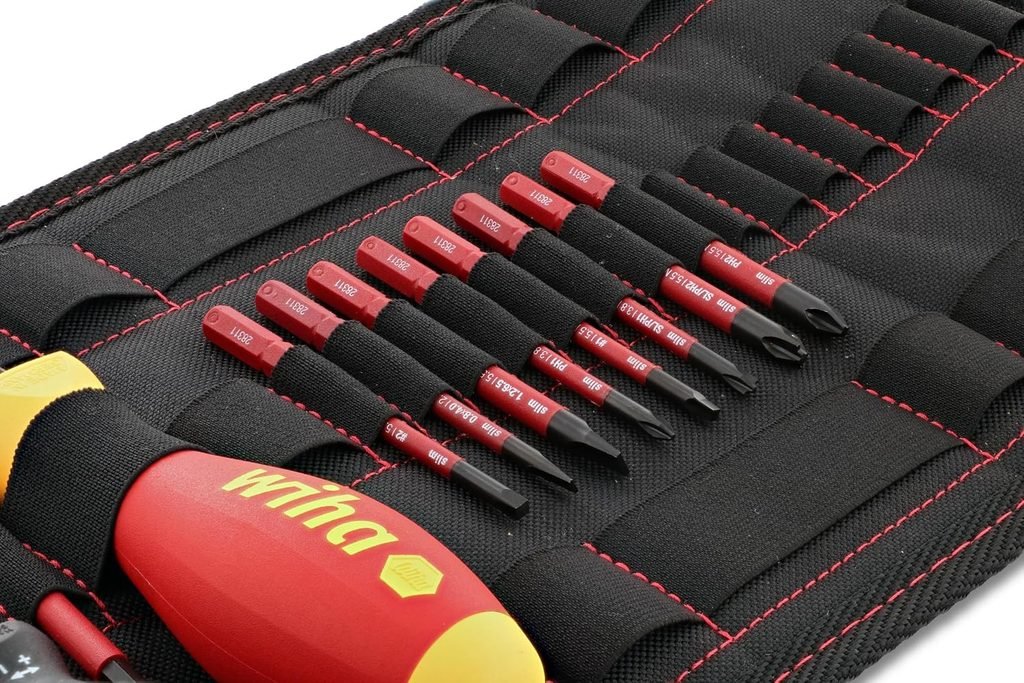
Best fixed blade set for daily use
Milwaukee 48-22-2206 1000V Insulated Slim Tip Set
A fixed blade set with slim tips made for recessed terminals, priced in the mid-range. It suits electricians who want grab-and-go speed and a solid one-piece feel.Check Price on Amazon
Common Mistakes to Avoid
- Trusting a cushion grip. Without the 1000V mark and a coated shaft, it is an ordinary screwdriver.
- Buying only slotted and Phillips. You will meet a square or combination screw within minutes.
- Ignoring shaft width. A thick insulated shaft that cannot reach the terminal is useless.
- Tightening by feel. Three in four hand-tightened connections miss the specified torque.
- Using a damaged tool. A nick in the insulation removes the protection you paid for.
- Skipping the meter. Insulated tools do not replace testing for voltage.
A clamp meter helps you confirm load after the work is done. Our guide to the best clamp meter for electricians explains what to look for.
Frequently Asked Questions
Do I need insulated screwdrivers if the power is off?
Yes. Turning off the main breaker does not de-energize the service conductors or line-side lugs, and circuits are sometimes misidentified. Insulated screwdrivers give you a second layer of protection if a tip touches something that is still live.
What does the 1000V rating on a screwdriver mean?
It means the tool is certified for work on or near circuits up to 1000V AC or 1500V DC under IEC 60900 or ASTM F1505. Each tool is tested at 10,000 volts to earn that rating. Look for the double triangle symbol next to the 1000V mark.
What screwdriver tips do breaker panels use?
Most residential panels in North America use slotted, Phillips, and #2 square screws, and many breaker terminals have combination heads. A set with slotted, Phillips, square, and combination tips covers nearly every panel. Larger lugs usually need hex drivers.
Can I torque breaker terminals with an insulated screwdriver?
Only with an insulated torque screwdriver that is calibrated and adjustable. A standard insulated screwdriver cannot tell you how tight the screw is. NEC 110.14(D) requires a calibrated torque tool whenever the manufacturer lists a torque value.
How do I choose insulated screwdrivers for a one-time generator hookup?
Pick a compact interchangeable set with a true 1000V rating, slim blades, and slotted, Phillips, and square tips. Add an insulated torque screwdriver if you are landing the conductors yourself. If you are learning how to choose insulated screwdrivers on a budget, this is the lowest cost route that still meets the standards.
Ready to Pick a Set?
Now that you know how to choose insulated screwdrivers, see our tested shortlist of the best insulated screwdrivers for panel and transfer switch work. Planning a full generator hookup? Build your tool list with the project tool checklist, or take the tool finder quiz for a personal recommendation.
Also Read On:
>>>https://toolexpertreviews.com/how-to-keep-tools-safe-in-van/
>>>https://toolexpertreviews.com/best-insulated-screwdrivers-panel-transfer-switch-work/
>>>https://toolexpertreviews.com/best-clamp-meter-for-electricians/