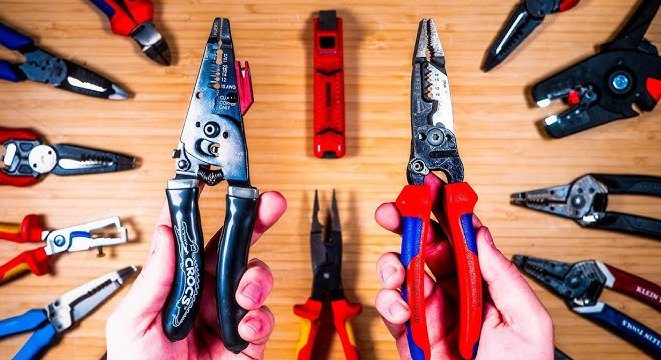
Best Circuit Breaker Finder for Panel Work: 5 Picks for 2026
The best circuit breaker finder for panel work turns a frustrating guessing game into a quick, one-person job. Instead of flipping breakers one at a time while your family loses the Wi-Fi and the freezer, you plug in a transmitter, scan the panel, and get a clear answer. After more than ten years of residential and light commercial electrical work, I consider a good breaker finder one of the most underrated tools in any electrician or DIYer’s bag.
This guide compares five breaker finders across three budget levels. You will see which one suits a quick outlet swap, which one handles 240V circuits, and which one is worth the investment if you trace wires for a living.
This post contains affiliate links. We earn a commission when you purchase through our links at no extra cost to you. We only recommend products we’ve personally tested and use ourselves.
Quick verdict: our top picks
- Best overall: Klein Tools ET310. Automatic sensitivity, a built-in GFCI tester, and an angled head that reads crowded panels well.
- Best budget: Southwire 41210S. A simple, low-cost kit for homeowners who map a panel once or twice a year.
- Best manual control: Extech CB10. A sensitivity dial for experienced users who want to tune out false hits.
- Best for higher voltages: Zircon Breaker ID Pro 300. Built for panels that carry more than standard 120V branch circuits.
- Best for professionals: Klein Tools ET450. Traces energized and dead circuits, plus wires behind drywall and underground.
Why the right breaker matters: the numbers
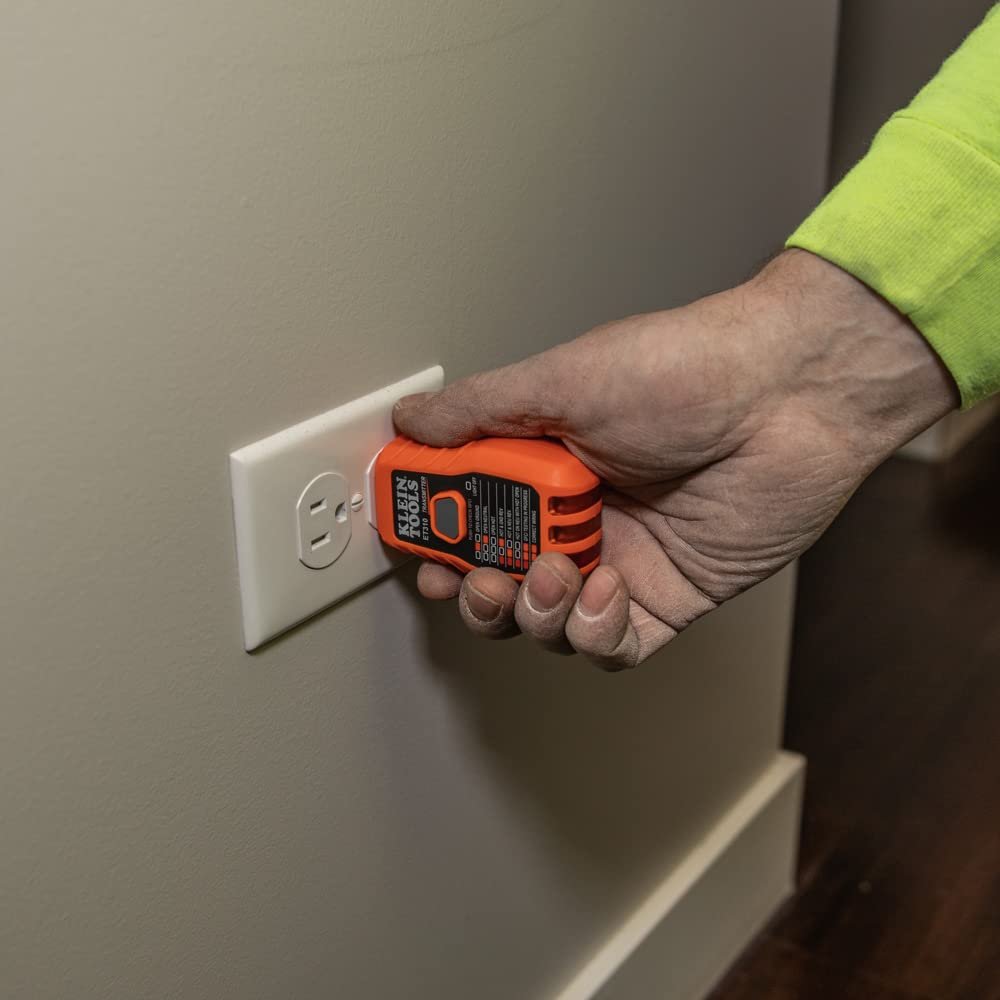
Mislabeled panels are more than an annoyance. They push people to work on circuits they only think are off, and they slow down emergency shutoffs when something goes wrong.
46,652Average yearly U.S. home fires linked to electrical failure or electrical equipment, 2020 to 2024 (NFPA)
527Average civilian deaths per year from those same home electrical fires (NFPA)
$2.4BAverage yearly direct property damage from home electrical fires (NFPA)
70%Share of workplace electrical deaths, 2011 to 2024, in non-electrical jobs (ESFI)
According to the National Fire Protection Association, home electrical fires make up about 13% of all home structure fires but roughly 18% of home fire deaths. That gap tells you electrical fires tend to be more dangerous than average.
On the job site, the Electrical Safety Foundation International reports 2,070 U.S. workplace fatalities involving electricity between 2011 and 2024. ESFI’s earlier analysis found that one in three of those deaths happened at private residences, which is exactly where most panel work takes place.
Engineer’s safety note: A breaker finder tells you which breaker to switch off. It does not prove the circuit is dead. After you flip the breaker, always confirm zero voltage with a proper tester, like the ones in our guide to the best voltage tester for generator hookup, and follow OSHA lockout/tagout guidance on commercial jobs.
How to choose a circuit breaker finder for panel work
Every breaker finder uses the same basic idea. A transmitter plugs into an outlet or clips onto a fixture and sends a signal down the circuit, and a handheld receiver picks up that signal at the panel. The differences come down to the six factors below.
1. Automatic vs. manual sensitivity
Automatic models calibrate themselves as you sweep the panel, then flag the strongest signal. They are the easiest choice for beginners. Manual models let you turn sensitivity down step by step, which helps experienced users cut through false readings on neighboring breakers.
2. Voltage range
Most homeowner finders work only on 120V AC outlets. If you service 208V, 240V, or 277V circuits for dryers, water heaters, or commercial lighting, you need a model rated for those voltages. Using a 120V tool on a higher-voltage circuit can damage the transmitter or create a hazard.
3. Built-in GFCI and wiring tests
Many finders double as outlet testers. A built-in GFCI test button and wiring-fault lights let you check an outlet and find its breaker in one trip. This matters most in kitchens, bathrooms, and garages where GFCI protection is required.
4. Head shape and panel density
Modern panels are packed tight, and tandem breakers, AFCI breakers, and GFCI breakers can confuse weaker receivers. An angled or narrow tip helps you hold the receiver against one breaker at a time. That single detail cuts down on false positives in a 40-space panel.
5. Adapters for lights and switches
Not every circuit you work on has an outlet. Look for kits that include a light socket adapter or alligator-clip leads so you can test ceiling fixtures and hardwired devices. Without them, you are stuck tracing only receptacle circuits.
6. Wire tracing ability
Basic finders only identify breakers. Professional tracers can also follow cable through walls, find a single wire in a bundle, and work on de-energized circuits. If you remodel, troubleshoot, or run new circuits, that extra capability pays for itself fast.
Circuit breaker finder comparison table
| Model | Best for | Voltage | Sensitivity | GFCI test | Wire tracing |
|---|---|---|---|---|---|
| Klein Tools ET310 | Best overall | 120V AC | Automatic | Yes | No |
| Southwire 41210S | Budget buyers | 120V AC | Automatic | Yes | No |
| Extech CB10 | Manual control | Up to 125V AC | Manual | Yes | No |
| Zircon Breaker ID Pro 300 | Higher-voltage circuits | Up to 300V AC | Automatic | No | No |
| Klein Tools ET450 | Professionals | Indicators for 12V to 480V | Adjustable | No (has NCV) | Yes |
The best circuit breaker finders for panel work, reviewed
Best Overall
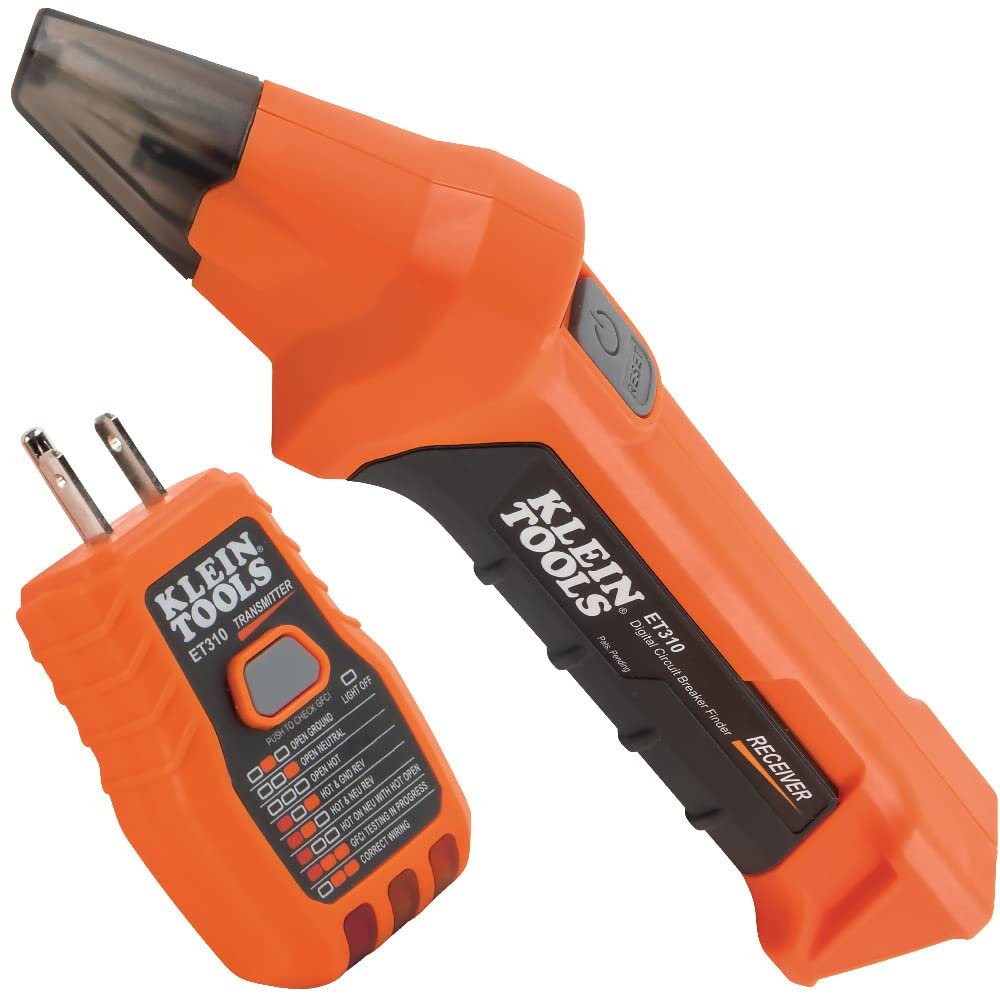
1. Klein Tools ET310 Digital Circuit Breaker Finder
The ET310 is the finder I recommend first to homeowners and apprentices. Its receiver calibrates itself as you sweep the panel, then locks onto the breaker with the strongest signal using both a beep and an arrow display. The angled head makes it easy to press against one breaker at a time in a crowded panel.
The transmitter also works as a GFCI outlet tester with wiring-fault lights. That means one tool handles two jobs during a kitchen or bathroom outlet swap.
| Voltage | 120V AC outlets |
| Sensitivity | Automatic |
| Extras | GFCI tester, wiring-fault indicators, angled receiver head |
| Power | Receiver runs on a 9V battery; transmitter draws from the outlet |
Pros
- Very easy for first-time users
- Reliable in dense residential panels
- Two tools in one kit
Cons
- 120V outlet circuits only
- No manual sensitivity override
- Light fixtures need a separate adapter
Best Budget
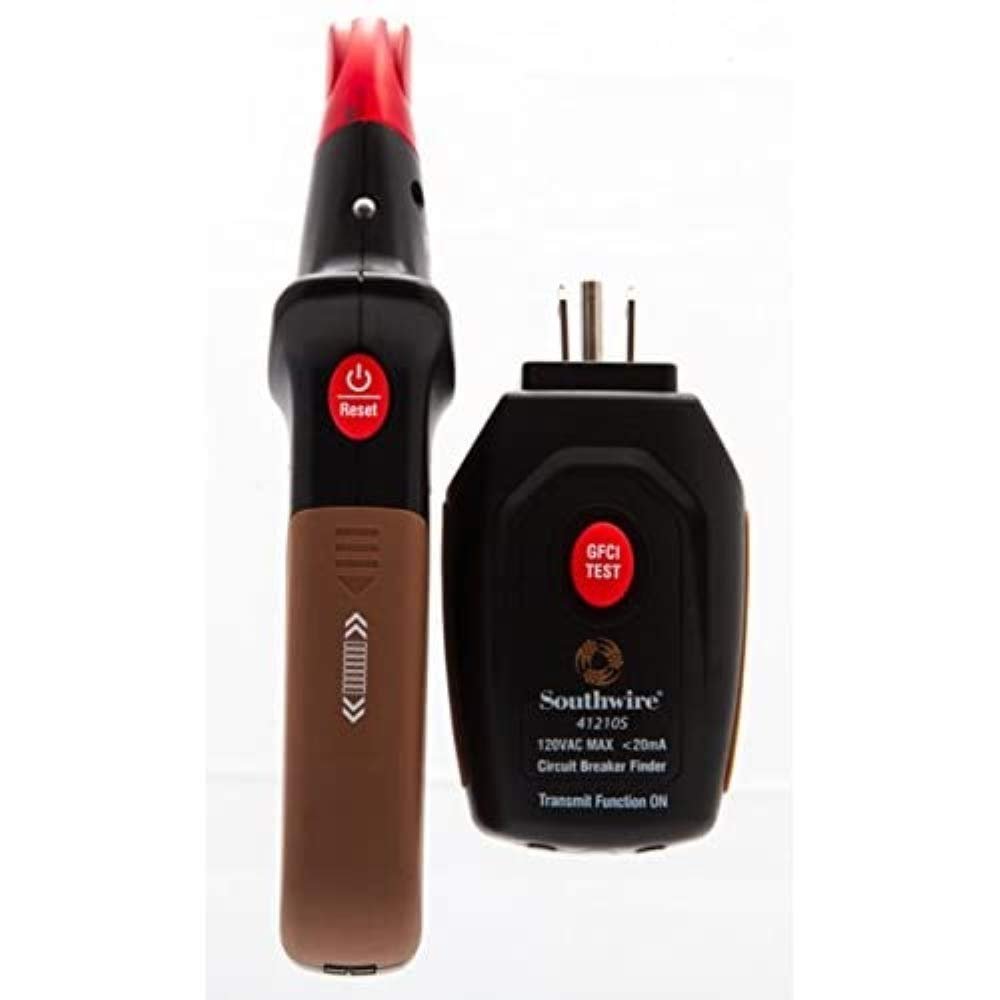
2. Southwire 41210S Circuit Breaker Finder
The Southwire 41210S covers the basics for noticeably less money than the Klein. It uses automatic sensitivity and includes a GFCI test, so a homeowner can map a panel and test outlets without buying two tools.
It does not feel as rugged as the ET310, and the receiver can be slower to settle on a single breaker. For someone labeling a panel once after moving in, that tradeoff is easy to accept.
| Voltage | 120V AC outlets |
| Sensitivity | Automatic |
| Extras | GFCI tester, wiring indicators |
| Ideal user | Occasional DIY panel mapping |
Pros
- Budget-friendly price
- Simple one-button operation
- GFCI test included
Cons
- Lighter build quality
- Can need a second sweep in busy panels
- 120V only
Best Manual Control
3. Extech CB10 AC Circuit Breaker Finder
The Extech CB10 is for people who want control. Its receiver has a sensitivity adjustment, so you can start high, find the rough area, then turn it down until only one breaker responds.
That approach takes practice, but it works well in older panels where signals bleed across neighboring breakers. It also includes a GFCI test on the transmitter.
| Voltage | Up to 125V AC |
| Sensitivity | Manual adjustment |
| Extras | GFCI tester, outlet wiring indicators |
| Ideal user | Experienced DIYers and electricians |
Pros
- Fine control over false hits
- Handles older, noisy panels well
- Compact kit
Cons
- Learning curve for beginners
- Slower than automatic models
- 120V class circuits only
Our score: 8.5/10Check Price on Amazon
Best for Higher Voltages
4. Zircon Breaker ID Pro 300
Most breaker finders stop at 120V, which leaves you guessing on dryer, range, and water heater circuits. The Zircon Breaker ID Pro 300 is built for a wider range of circuits, which makes it useful for anyone who works on 240V appliances or light commercial panels.
It uses automatic detection, so the learning curve stays low. The main tradeoff is the lack of a GFCI test, so pair it with a basic outlet tester.
| Voltage | Up to 300V AC |
| Sensitivity | Automatic |
| Extras | Multi-voltage transmitter, clip leads |
| Ideal user | Appliance installers, property maintenance |
Pros
- Covers 240V appliance circuits
- Automatic and quick
- Good for mixed residential and commercial work
Cons
- No GFCI test
- Pricier than basic 120V kits
- Bulkier transmitter
Our score: 8.6/10Check Price on Amazon
Best for Professionals
5. Klein Tools ET450 Advanced Circuit Tracer Kit
The ET450 is a different class of tool. It traces both energized and non-energized breakers, fuses, and wires, and its adjustable receiver can follow a signal through drywall, cement block, and underground runs.
The kit includes blade and ground prongs, alligator clips, 3 ft and 20 ft leads, and a hard case. The receiver adds a flashlight and a non-contact voltage (NCV) function, while the transmitter shows external voltage indicators from 12V up to 480V.
| Voltage | Indicators for 12V, 48V, 120V, 240V, 480V |
| Sensitivity | Adjustable |
| Extras | Wire tracing, NCV, flashlight, backlit LCD, hard case |
| Ideal user | Electricians, remodelers, facility techs |
Pros
- Works on live and dead circuits
- Traces wires behind walls and underground
- Complete pro kit with case
Cons
- Premium price tier
- More than most homeowners need
- Takes time to master
Our score: 9.1/10Check Price on Amazon
How to use a breaker finder safely at the panel
Plug the transmitter into the outlet you plan to work on, and confirm its lights show the outlet is live. Take the receiver to the panel, keep your hand off the bus bars, and sweep across the breakers without removing the dead front cover.
When the receiver signals, switch that breaker off and check that the transmitter goes dark. Then verify zero voltage with a tester, and use insulated screwdrivers for the actual repair.
Scored summary
| Rank | Model | Award | Score | Price tier |
|---|---|---|---|---|
| 1 | Klein Tools ET310 | Best Overall | 9.4 | Mid-range |
| 2 | Klein Tools ET450 | Best for Professionals | 9.1 | Premium |
| 3 | Zircon Breaker ID Pro 300 | Best for Higher Voltages | 8.6 | Mid to upper |
| 4 | Extech CB10 | Best Manual Control | 8.5 | Mid-range |
| 5 | Southwire 41210S | Best Budget | 8.3 | Budget |
Frequently asked questions
What is the best circuit breaker finder for panel work?
For most homeowners and apprentices, the Klein Tools ET310 is the best circuit breaker finder for panel work. It combines automatic sensitivity, a GFCI tester, and an angled head that performs well in crowded panels.
Can a circuit breaker finder work on 240V circuits?
Only if it is rated for that voltage. Most basic models are 120V only, so choose a multi-voltage option like the Zircon Breaker ID Pro 300 or a pro tracer like the Klein ET450 for 240V work.
Why does my breaker finder beep on more than one breaker?
Signals can bleed onto neighboring breakers, especially in dense or older panels. Sweep the panel again slowly, lower the sensitivity if your model allows it, and trust the strongest reading.
Do I still need a voltage tester if I have a breaker finder?
Yes. A breaker finder identifies the circuit, but only a voltage tester confirms that the power is actually off. Always test before you touch any conductor.
Can a breaker finder trace wires inside walls?
Standard finders cannot. Advanced tracer kits such as the Klein ET450 can follow a signal through drywall, block walls, and underground runs.
Still comparing options? Put any two picks head to head with our side-by-side tool comparison, or plan your next job with the project tool checklist.See Our Top Pick on Amazon
Related reading:
>>>Best Fish Tape for Pulling Wire: 7 Top Picks for 2026
>>>Best Thermal Imaging Camera for Electrical Inspection (2026): 6 Expert Picks