Best Heated Jackets for Winter Job Sites (2026 Buyer’s Guide)
Choosing the right heated jackets for winter job sites can decide whether your crew works a full shift or packs up at lunch. Cold hands slow you down, stiff shoulders make you clumsy, and a shivering worker on a ladder is a safety problem. This guide compares five battery heated work jackets on runtime, heat coverage, and how well they handle real site abuse.
I am an electrical engineer, so I looked past the marketing and did the battery math on every jacket. You will see exactly how many watts each heat setting pulls and how that turns into hours on the job. If you already own a cordless tool platform, that single detail could save you a lot of money.
We independently evaluate every recommendation. If you buy through our links, we may earn a commission at no extra cost to you.
Quick Verdict: Our Top Picks
- Best Overall: Milwaukee M12 Heated TOUGHSHELL Work Jacket (up to 12 hours on low, heated pockets)
- Longest Runtime: Makita 18V LXT Heated Jacket DCJ205 (up to 35 hours on low with a 6.0Ah pack)
- Best for DeWalt Users: DeWalt 20V MAX Soft Shell Heated Jacket DCHJ060 (heated collar, USB power source)
- Best Without a Tool Battery: ORORO Men’s Classic Heated Jacket (battery included, machine washable)
- Most Heat Zones: Gobi Heat TOUGH Grit Heated Work Jacket (5 zones, heats up to 140°F)
Why Cold Is a Real Job Site Hazard: The Numbers
Winter work is not just uncomfortable. Construction crews spend more time exposed to weather than almost any other workforce in the country, and the data backs that up.
91.0%
of construction and extraction workers had outdoor exposure on the job in 2024, according to the BLS Occupational Requirements Survey.
1,301
average hypothermia related deaths per year in the US from 1999 to 2011, with about 67% among males (CDC).
42,480
workplace injuries involving ice, sleet, or snow needed at least one day away from work in 2014, and 82% were falls (BLS data).
Construction laborers sit at the very top of the exposure list. The Bureau of Labor Statistics reports that at least 99.5% of construction laborers worked outdoors in 2023, compared with about one third of all workers (BLS).
OSHA explains that hypothermia sets in when normal body temperature of 98.6°F drops to 95°F or lower. Frostbite can happen above freezing because of wind chill, and trench foot can develop at air temperatures as high as 60°F when feet stay wet (OSHA Cold Stress QuickCard). OSHA also lists dressing properly as a core part of cold stress prevention in its Cold Stress Guide.
A heated jacket does not replace breaks in a warm area or a buddy system. It does keep your core warm, and a warm core keeps blood flowing to your hands so you can grip tools safely. Pair it with good insulated work gloves and waterproof work boots for full coverage.
How to Choose a Heated Work Jacket
1. Match Your Battery Platform First
Milwaukee, DeWalt, and Makita jackets run on the same packs as your drills and saws. If you already own those batteries, buying the bare jacket is the cheapest path and you get spares from your tool bag. If you mix brands or just want warmth, a jacket with its own 7.4V battery like ORORO or Gobi Heat is simpler.
2. Understand Runtime With Simple Battery Math
Runtime depends on battery energy, measured in watt hours (Wh). Multiply volts by amp hours to find it, so an 18V 6.0Ah Makita pack holds about 108 Wh. Makita rates the DCJ205 at 35 hours on low with that pack, which works out to roughly 3 watts of heat.
On high, the same jacket lasts 8.5 hours, so it pulls about 12.7 watts. The ORORO battery holds 35.4 Wh and lasts 10 hours on low, close to 3.5 watts. The lesson is simple: high heat burns your battery three to four times faster than low, so use high to warm up, then drop to low.
Lithium ion cells also lose usable capacity in deep cold. Keep your spare battery in an inside pocket, not in the truck bed.
3. Count the Heat Zones That Matter
Core zones on the chest and back keep your body temperature stable. Heated hand pockets are a big bonus on site, because you can warm your fingers between tasks without pulling off your gloves. A heated collar helps on windy scaffolds and roofs.
4. Check the Shell and Fit Over PPE
Look for a water and wind resistant shell, because a wet jacket loses heat fast. Make sure the cut leaves room for a hi-vis safety vest on top and a fall protection harness without crushing the battery pocket. Some jackets run small, so check sizing charts and size up if you plan to layer.
5. Look for Washability and Certified Batteries
Job site jackets get filthy, so a machine washable design (with the battery removed) is a real advantage. Choose batteries with UL or CE certification from the brand itself. Never use off brand packs in a garment that sits against your body all day.
Planning a full winter kit for your crew? Our free Project Tool Checklist helps you list every item before the first frost.
Heated Work Jackets Compared
| Jacket | Battery | Heat Zones | Max Runtime (Low) | Battery Included |
|---|---|---|---|---|
| Milwaukee M12 TOUGHSHELL | M12 | 3 (chest, back, pockets) | 12 hours | Bare or kit |
| Makita DCJ205 | 18V LXT | 5 | 35 hours (6.0Ah) | No |
| DeWalt DCHJ060 | 20V MAX | 4 (incl. collar) | Up to 7 hours (1.5Ah) | Bare or kit |
| ORORO Classic | 7.4V proprietary | 3 | 10 hours | Yes |
| Gobi Heat TOUGH Grit | 7.4V 6,500mAh | 5 | 9 hours | Yes |
Want to line two jackets up against your own priorities? Use our side-by-side tool comparison.
The 5 Best Heated Jackets for Winter Job Sites, Reviewed
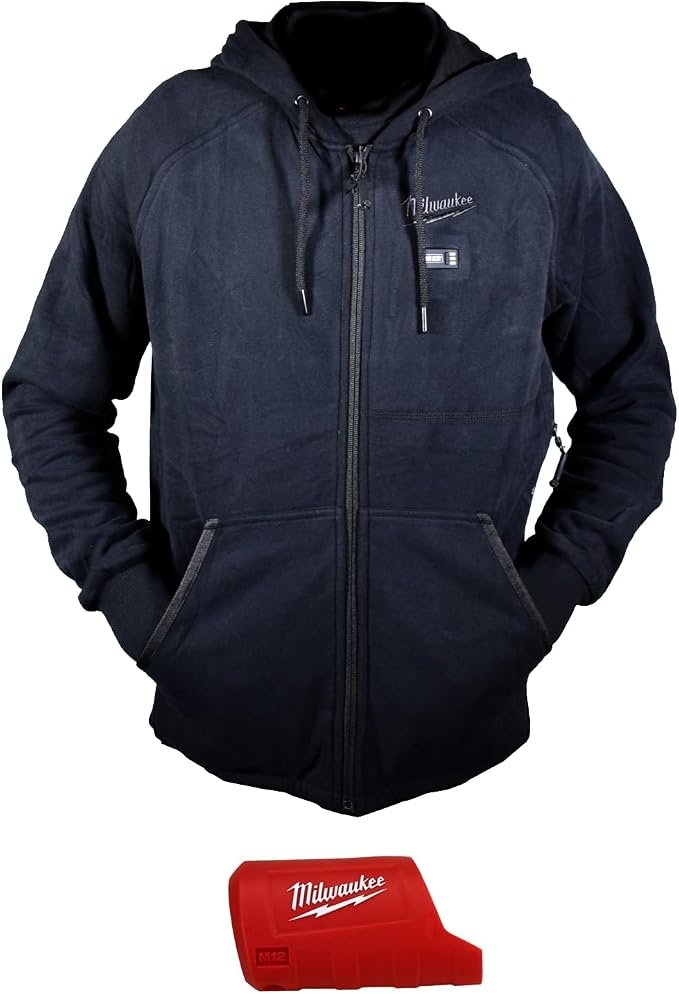
1. Milwaukee M12 Heated TOUGHSHELL Work Jacket: Best Overall
Milwaukee’s latest TOUGHSHELL uses what the brand calls HEXON heat technology, with heat spread across the chest, back, and hand pockets. Milwaukee also says it packs three times more insulation than before, which helps the jacket hold warmth when the battery is off. The 100% stretch polyester shell carries a DWR finish to shed light rain and snow.
Milwaukee rates runtime at 12 hours on low, 6 on medium, and 3 on high. Each zone has its own high, medium, and low setting, and it works with every M12 battery plus the Heated Gear Power Source with app control (Milwaukee).
| Battery | Milwaukee M12 |
| Heat zones | Chest, back, pockets |
| Runtime | 12 h low / 6 h medium / 3 h high |
| Shell | Stretch polyester, DWR finish |
Pros
- Independent control for each zone
- Heated pockets for cold fingers
- Runs on any M12 pack you already own
Cons
- No heated collar
- Kit versions cost noticeably more than the bare jacket
Verdict: 9.4/10. The best all round choice for trades already on Milwaukee M12.
2. Makita 18V LXT Heated Jacket DCJ205: Longest Runtime
No jacket here outlasts the Makita. With a 6.0Ah LXT battery, Makita rates it at up to 35 hours on low, 14 on medium, and 8.5 on high (Makita). Even a smaller 3.0Ah pack is rated for about 17 hours on low.
You get five core heat zones across the chest, back, and both pockets, plus a fleece interior and stretchy side panels for reach. The two way zipper is a smart touch for anyone wearing a tool pouch.
| Battery | Makita 18V LXT (sold separately) |
| Heat zones | 5 |
| Runtime (6.0Ah) | 35 h low / 14 h medium / 8.5 h high |
| Extras | USB charging port, fleece lining, two way zipper |
Pros
- Multi shift runtime on one pack
- Five zones including pockets
- Charge your phone from the battery
Cons
- Battery and charger sold separately
- Sizing can run small, so consider sizing up
Verdict: 9.2/10. The pick for long shifts and multi day cold snaps.Check Price on Amazon
3. DeWalt 20V MAX Soft Shell Heated Jacket DCHJ060: Best for DeWalt Users
This is the only jacket in our list with a heated collar, alongside the left chest, right chest, and mid back. An LED controller gives you three settings plus a pre-heat function that warms the jacket quickly at the start of the day. The shell is water and wind resistant, and the waist and cuffs adjust to seal out drafts.
DeWalt lists up to 7 hours on low with a compact 1.5Ah battery, though its own overview also mentions 5.5 hours, so plan around the lower figure (DeWalt). The battery pocket stretches to fit larger XR packs for longer days, and the included USB power source has two charging ports.
| Battery | DeWalt 20V MAX |
| Heat zones | 4 (L and R chest, mid back, collar) |
| Runtime | Up to 7 h low (1.5Ah) |
| Sizes | S to 3XL |
Pros
- Heated collar for windy heights
- Pre-heat function
- Two USB ports on the power source
Cons
- Shortest rated runtime on a compact pack
- No heated pockets
Verdict: 8.9/10. A natural fit for crews built around DeWalt 20V MAX.Check Price on Amazon
4. ORORO Men’s Classic Heated Jacket: Best Without a Tool Battery
If you do not own a cordless platform, ORORO is the easiest way in, because the battery comes in the box. Carbon fiber heating elements cover the left chest, right chest, and upper back. ORORO rates it at 3 hours on high, 6 on medium, and up to 10 on low.
The 7.4V battery has a USB port for your phone, and the jacket is machine washable once you pull the battery (ORORO). The softshell is a little dressier than the tool brand options, so it doubles as a commute jacket.
| Battery | 7.4V lithium ion (included) |
| Heat zones | 3 (L and R chest, upper back) |
| Runtime | 10 h low / 6 h medium / 3 h high |
| Care | Machine washable |
Pros
- Ready to wear out of the box
- Slim battery, no bulky tool pack
- Easy machine washing
Cons
- Shell is lighter duty than tool brand jackets
- Spare batteries are proprietary
Verdict: 8.6/10. Best for supervisors, inspectors, and anyone outside a tool ecosystem.Check Price on Amazon
5. Gobi Heat TOUGH Grit Heated Work Jacket: Most Heat Zones
The TOUGH Grit puts four heat zones on the front and one large zone across the back. Three settings reach up to 140°F, which makes it one of the warmest options for brutal mornings. A slim 6,500mAh 7.4V battery is included and is rated for about 9 hours.
It is built as a work jacket first, so it suits framers, roofers, and utility crews who want heat without joining a tool platform.
| Battery | 7.4V 6,500mAh (included) |
| Heat zones | 5 (4 front, 1 back) |
| Runtime | Up to 9 hours |
| Max temp | Up to 140°F |
Pros
- Widest heat coverage on the front
- Battery included
- Very warm high setting
Cons
- High setting drains the battery fast
- Fewer retail options than big tool brands
Verdict: 8.5/10. Maximum warmth for the coldest crews.Check Price on Amazon
Final Scores at a Glance
| Rank | Jacket | Best For | Score |
|---|---|---|---|
| 1 | Milwaukee M12 TOUGHSHELL | Best overall | 9.4 |
| 2 | Makita DCJ205 | Longest runtime | 9.2 |
| 3 | DeWalt DCHJ060 | DeWalt users | 8.9 |
| 4 | ORORO Classic | No tool battery | 8.6 |
| 5 | Gobi Heat TOUGH Grit | Most heat zones | 8.5 |
Frequently Asked Questions
Are heated jackets safe to wear on a construction site?
Yes, when you use the brand’s own certified battery and keep the wiring undamaged. These jackets run on low voltage DC, typically 7.4V to 20V, which is well below shock risk levels. Inspect the cable and connector before each shift and retire any jacket with exposed or frayed wiring.
How long does a heated jacket battery last in freezing weather?
Expect less than the rated figure, because lithium ion cells deliver less energy in deep cold. Rated runtimes on low range from about 7 hours on a compact DeWalt pack to 35 hours on a 6.0Ah Makita pack. Keep a spare battery warm in an inside pocket to swap at lunch.
Can I wear a heated jacket under a hi-vis vest or harness?
Yes, and on most sites you should. Wear the vest over the jacket so it stays visible, and make sure harness straps do not press on the battery or cable. If the jacket is bulky, size the harness to fit over it rather than loosening straps.
Can you wash a heated jacket?
Most can be machine washed once you remove the battery, including ORORO jackets and the Makita DCJ205. Close the battery pocket, use a gentle cycle, and let it dry fully before reconnecting power. Always follow the care label on your specific model.
Is a heated jacket or heated vest better for job sites?
A vest gives better arm movement and layers well under a shell, so it suits active trades like framing. A jacket adds weather protection and often heated pockets, which helps on cold, static tasks like inspections or equipment operation. Many crews own both and choose by the day’s work.
Ready to stay warm all shift?
If you already run Milwaukee M12, the TOUGHSHELL is the easy win. Still unsure which gear fits your trade?Take the Tool Finder Quiz
Also Read On:
>>>Best OSHA Compliant Fall Protection Harnesses for Working at Height
>>>High Visibility Safety Vests: 6 Best Hi-Vis Picks for 2026
>>>Best Cut-Resistant and Impact Work Gloves: Top 5 Picks for 2026