How to Use a Belt Sander: 7 Pro Tips for a Smooth Finish
A belt sander is the fastest way to strip, level, and shape wood when you have a lot of material to remove. It is also the easiest power tool to ruin a workpiece with if you rush. Learning how to use a belt sander correctly is the difference between a glass smooth surface and a gouged mess.
This guide walks you through setup, grit selection, sanding technique, and the small habits that separate clean work from costly mistakes. Everything here comes from years of real bench time, not spec sheets. Follow the steps in order and your first pass will look like your tenth.
We independently evaluate all of our recommendations. If you click on links we provide, we may receive compensation.
The Short Version
Keep the sander moving, always sand with the grain, and let the tool’s weight do the work. Start coarse to flatten, then step up through finer grits to refine.
Never set the sander down while the belt is still spinning. That one habit prevents most beginner gouges.
What a Belt Sander Is Best For
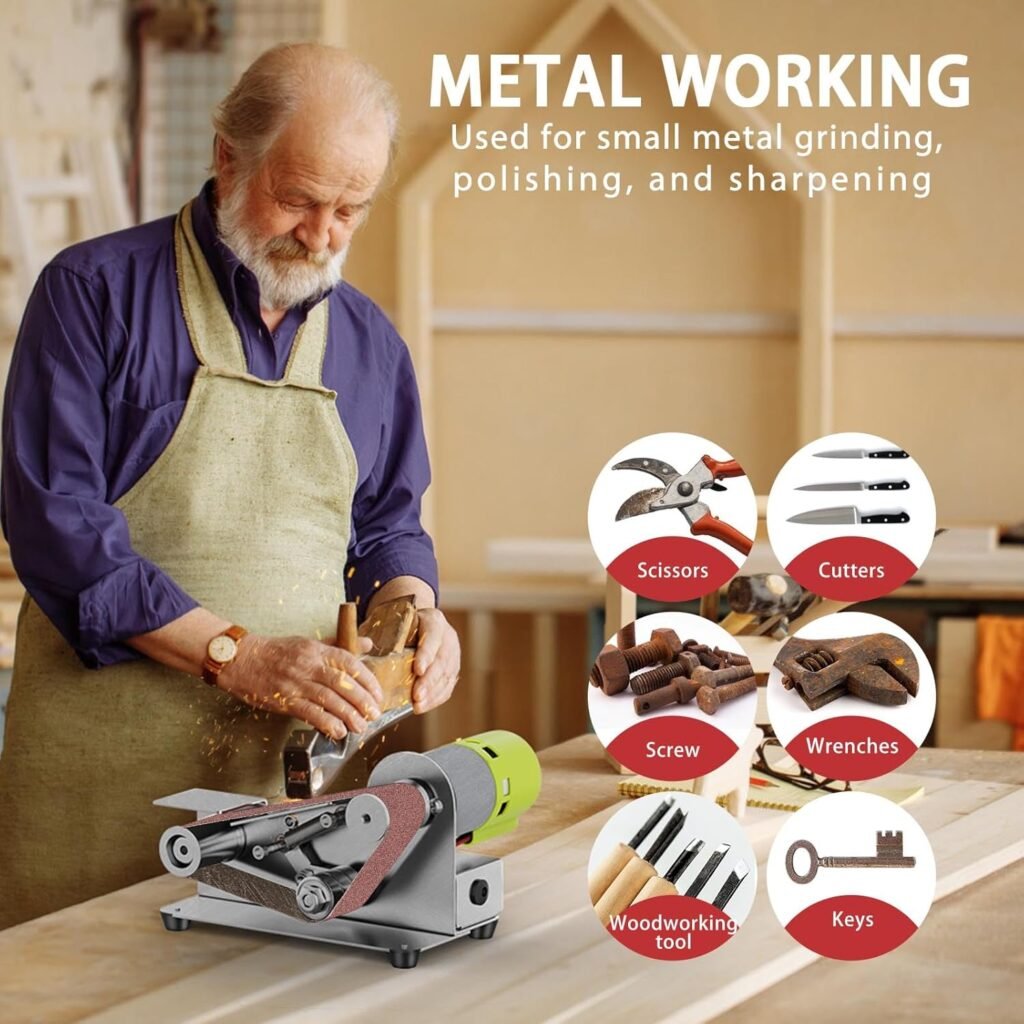
A belt sander uses a continuous loop of abrasive belt driven over two rollers. It removes stock aggressively and quickly, which makes it ideal for heavy jobs rather than delicate finishing. Think of it as the demolition crew of your sanding lineup.
Use it to level glued up panels, flatten cupped boards, strip old paint or varnish, and round over rough edges. It also shines at trimming doors and squaring stock fast. For final polishing you switch to a random orbital sander.
Getting Set Up Safely
Clamp your workpiece down before you touch the trigger. A belt sander grabs wood and can throw a loose board across the room. Secure work means controlled work.
Put on safety glasses and a dust mask rated for fine particles. Connect a dust bag or shop vacuum to the port to keep the surface and your lungs clear. Tie back loose clothing and remove anything that could catch the belt.
Check that the belt is centered and tracking straight before each session. Most sanders have a tracking knob you adjust while the belt spins freely. A belt that drifts to one side will fray and snap.
Choosing the Right Grit
Grit selection controls both speed and finish quality. Coarse grits cut fast but leave deep scratches, while fine grits smooth slowly. The trick is to work through the range in order rather than skipping ahead.
For stripping paint or flattening rough lumber, start with 40 to 60 grit. Move to 80 to 100 grit for general smoothing once the surface is level. Finish at 120 grit before handing the piece over to an orbital sander.
How to Use a Belt Sander Step by Step
Step 1. Start the sander in the air, away from the wood, and let it reach full speed. Lower it onto the surface gently while it is already moving. Lead with the rear of the belt so the tool settles flat.
Step 2. Move with the grain in long, overlapping passes. Keep the sander flat and never tilt it onto one edge. Tilting digs a trench that takes ages to sand out.
Step 3. Let the weight of the tool provide the pressure. Pushing down does not speed things up, it just bogs the motor and burns the wood. Your hands guide direction only.
Step 4. Keep the sander in constant motion at a steady walking pace. Pausing in one spot creates a hollow within seconds. Overlap each pass by about half the belt width for an even cut.
Step 5. Lift the sander off the surface before you release the trigger. Set it down only after the belt has fully stopped. This protects both the workpiece and the belt.
Pro Tips and Techniques
Mark the surface with light pencil scribbles before sanding flat. When all the pencil disappears evenly, you know the surface is level. This trick removes guesswork from leveling panels.
For wide boards, sand at a slight diagonal first to knock down high spots, then finish straight with the grain. On veneer, switch to a fine belt and feather your passes since the layer is thin. Always test your technique on scrap before the real piece.
Clamp two scrap boards either side of a narrow workpiece to create a wider, stable platform. This stops the sander from rocking and rounding your edges. A flat reference surface is your best friend.
Common Mistakes to Avoid
The biggest error is sanding across the grain, which leaves scratches that show through stain. The second is leaning on the tool and stalling it in one place. Both create damage that is slow and frustrating to repair.
Beginners also forget to empty the dust bag, which chokes airflow and clogs the belt. A loaded belt glazes over and stops cutting. Clean often and your belts last far longer.
Keeping Your Belt Sander in Shape
A well kept sander cuts cleaner and lasts for years. After each session, blow out the dust from the motor vents and wipe down the housing. Trapped dust is the main reason cheap sanders overheat and fail early.
Check the drive belt tension and the tracking adjustment every few uses. Store belts flat or hanging so they keep their shape and do not crease. A creased belt thumps as it spins and leaves marks on your work.
Replace the platen graphite pad if you notice scoring or drag under the belt. This cheap part protects both the belt and your finish. A few minutes of upkeep saves you from buying a new tool too soon.
Belt Sander or Orbital Sander
Reach for the belt sander when you need to remove a lot of material fast. Reach for the orbital when you want a smooth, swirl free finish ready for stain. Most projects need both tools working in sequence.
A simple rule keeps your workflow clean and efficient. Flatten and shape with the belt sander, then refine and finish with the orbital. Following that order gives professional results every single time.
Need a Reliable Belt Sander?
A variable speed model with good dust collection makes every technique above easier to master.
Frequently Asked Questions
Can you use a belt sander on a table?
Yes, many models can be clamped upside down to create a stationary sanding station. Always check your manual to confirm the tool supports inverted mounting. This setup is excellent for shaping small parts.
Which direction should I sand?
Always sand with the grain of the wood, never across it. Cross grain sanding leaves visible scratches that ruin a stained finish. Keep your passes parallel to the grain lines.
How much pressure should I apply?
Apply almost none and let the tool’s weight do the cutting. Extra pressure burns the wood and overheats the motor. Guide the sander, do not force it.
Is a belt sander good for finishing?
No, it is a stock removal tool rather than a finishing tool. Use it to flatten and smooth, then switch to a random orbital sander for the final polish. That two tool combination gives the best results.
How often should I change the belt?
Change the belt once it stops cutting freely or looks glazed and shiny. A dull belt creates heat and burns the surface. Quality belts pay for themselves in time saved.
Master these fundamentals and a belt sander becomes one of the most useful tools in your shop. Start coarse, keep moving, finish fine, and respect the grain every time.
Also Read On:
How to Use a Car Code Reader: Step-by-Step Guide (2026)

![Ten[10] Must-Have Tools for Every Homeowner](https://toolexpertreviews.com/wp-content/uploads/2026/05/fe5cb696-aff8-4d41-87db-df3f84b08dbf-768x702.jpg)