Best Miter Saw for Trim and Framing in 2026: 5 Expert Picks
Finding the best miter saw for trim and framing is tricky because the two jobs pull in opposite directions. Framing wants raw capacity to chop 2x10s and 4x4s all day. Trim wants a saw that holds a dead-square cut and handles tall baseboard and crown without fuss.
This guide compares five saws from DeWalt, Bosch, Makita, and Milwaukee using manufacturer spec sheets, independent pro reviews, and owner feedback. Every pick below can handle both jobs, but each one leans toward a different kind of buyer.
We independently evaluate every recommendation. If you buy through our links, we may earn a commission at no extra cost to you.
Quick Verdict
- Best Overall: DeWalt DWS780, the 12-inch sliding saw that cuts 2×14 framing lumber and 7-1/2 inch nested crown.
- Best for Small Shops: Bosch GCM12SD, whose Axial-Glide arm lets it sit almost against a wall.
- Best 10-Inch for Trim: Makita LS1019L, a lighter saw with 12-inch-class crown capacity.
- Best Cordless: Milwaukee M18 FUEL 2739-20, rated for up to 330 cuts per charge.
- Best Budget Framing Saw: DeWalt DWS715, a 36-pound 12-inch chop saw with 14 positive stops.
Why the Right Miter Saw Matters: The Numbers
A miter saw feels safer than a table saw, but it still sends thousands of people to the emergency room. Data from the U.S. National Electronic Injury Surveillance System, summarized by the Woodworkers Guild of America, puts miter saw injuries at an estimated 6,800 per year. Table saws lead with roughly 39,750 a year, band saws follow at about 3,550, and radial arm saws at around 350.
Run those four figures together and miter saws account for roughly 1 in 7 of the injuries. Most happen to the hand holding the stock, which is why clamps, good lighting, and a clear cut line indicator are safety features, not extras. You can browse the raw injury data yourself through the CPSC NEISS database.
Buying Guide: How to Choose a Miter Saw for Trim and Framing
1. Blade Size: 10-Inch or 12-Inch?
A 12-inch saw gives you more depth and width, which matters when you are cutting 4×4 posts or wide joists. A 10-inch saw is lighter, its blades cost less, and it usually spins with less runout for finer trim cuts. If framing is more than half your work, go 12-inch.
2. Sliding vs. Non-Sliding
Sliding rails let the blade travel through wide boards, so a sliding 12-inch saw can crosscut a 2×14 in one pass. A non-sliding chop saw is lighter, simpler, and more accurate out of the box, but it tops out around a 2×8. Framers ripping through stair stringers or wide headers should pay for the slide.
3. Single vs. Dual Bevel
A dual-bevel saw tilts both left and right, so you never have to flip long trim boards end for end. That saves real time on crown and baseboard runs with opposing corners. For pure framing, a single bevel saw is perfectly fine.
4. Vertical Capacity for Baseboard and Crown
Check two numbers on the spec sheet: nested crown capacity and vertical baseboard capacity. Modern homes often use 5-1/4 inch base and 5 to 7 inch crown. A saw that cannot stand those pieces upright forces you into slower compound cuts laid flat.
5. Cut Line Indicator
Shadow line systems like DeWalt XPS and Milwaukee Shadow Cut Line cast the blade’s own shadow onto the workpiece, so they never drift out of calibration. Lasers like Makita’s are adjustable to either side of the blade but need occasional tuning. Either is a big upgrade over guessing from the blade teeth.
6. Dust Collection and Footprint
Interior trim work means cutting inside finished rooms, so dust capture matters. Also measure your bench depth, because traditional slide rails can need close to 30 inches of clearance behind the saw. Glide arm and forward-rail designs fix that problem.
Specs Comparison Table
| Saw | Blade | Type | Max Crosscut at 90° | Nested Crown | Best For |
|---|---|---|---|---|---|
| DeWalt DWS780 | 12 in | Sliding, dual bevel | 2×14 | 7-1/2 in | All-round pros |
| Bosch GCM12SD | 12 in | Glide arm, dual bevel | 14 in | 6-1/2 in | Tight shops |
| Makita LS1019L | 10 in | Sliding, dual bevel | 12 in | 6-5/8 in | Trim carpenters |
| Milwaukee 2739-20 | 12 in | Cordless sliding, dual bevel | 12-inch class | 12-inch class | Jobsite mobility |
| DeWalt DWS715 | 12 in | Chop saw, single bevel | 2×8 | Not listed | Budget framing |
Want to line two of these up feature by feature? Use our side-by-side tool comparison.
The 5 Best Miter Saws for Trim and Framing
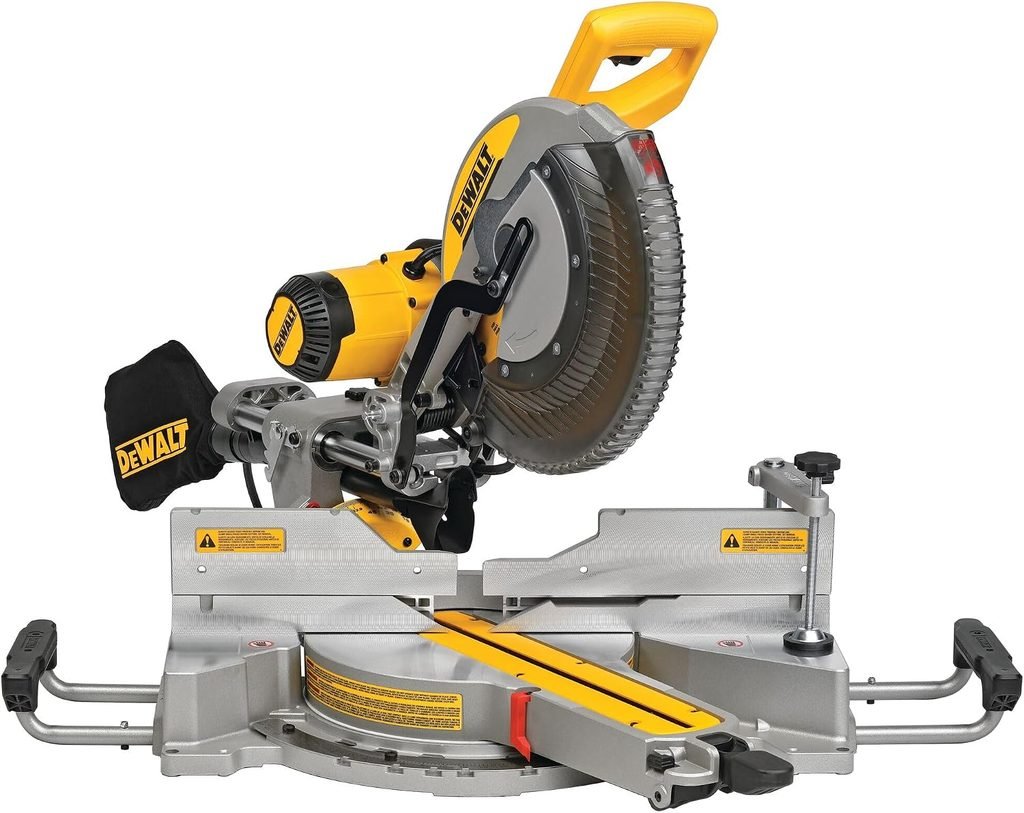
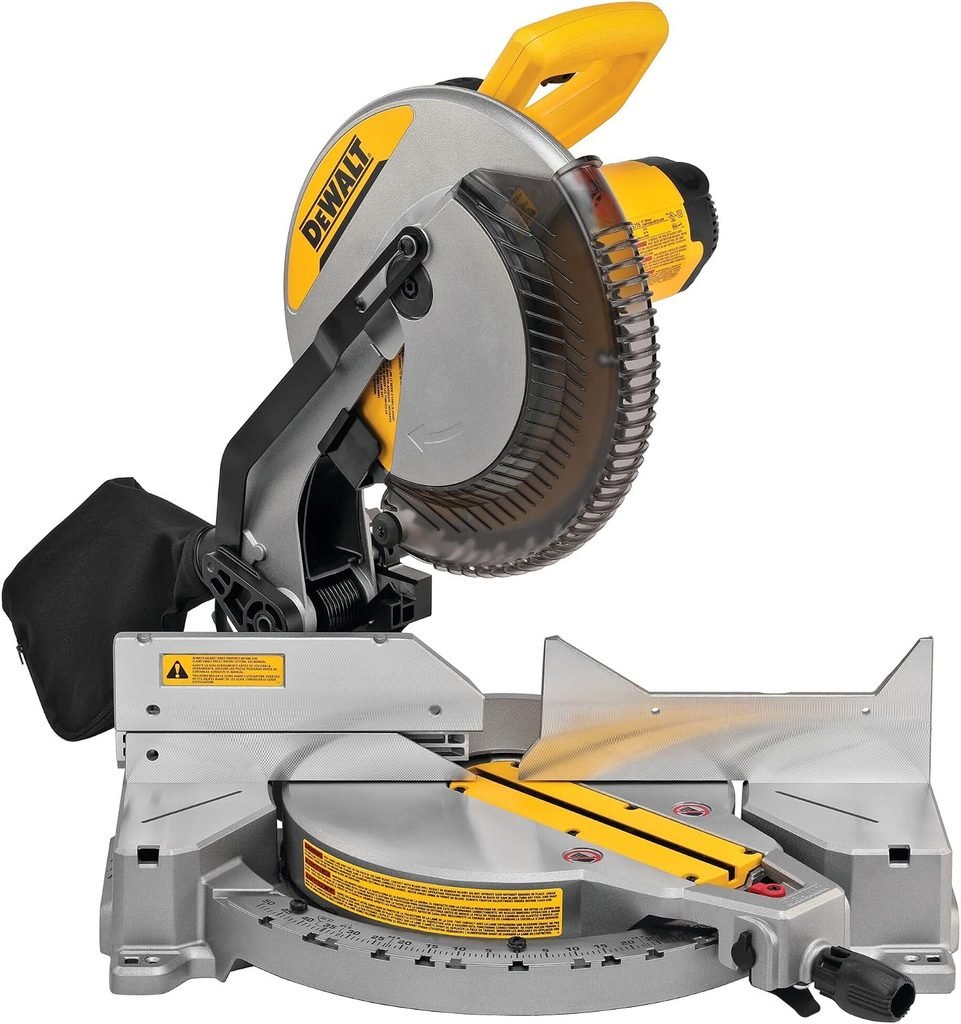
1. DeWalt DWS780: Best Overall
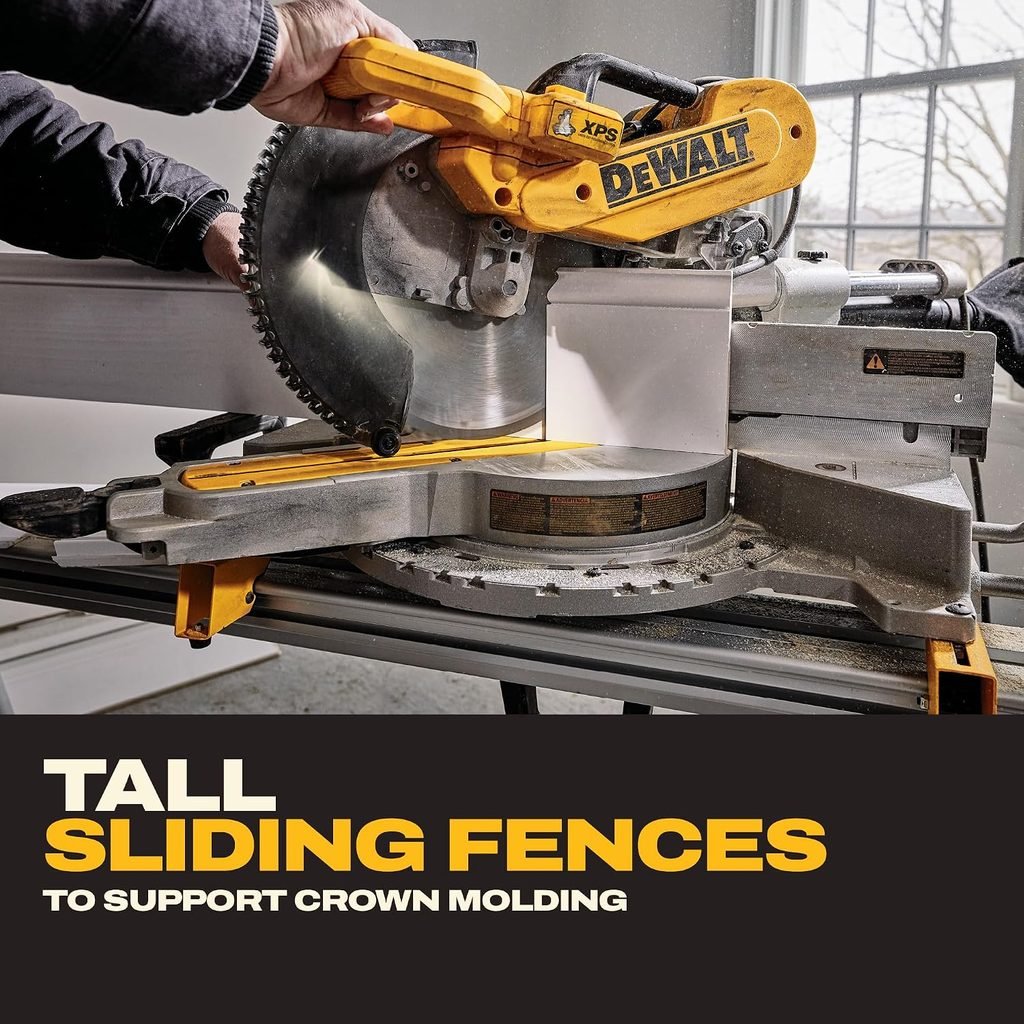
The DWS780 is the saw most framing crews and finish carpenters already own, and the spec sheet explains why. According to DeWalt, it cuts 2×14 lumber at 90° and 2×10 at 45°, while its tall sliding fences hold 7-1/2 inch crown nested and 6-3/4 inch base standing up. That covers nearly every board you will meet on a residential job.
The XPS shadow line is the real trim feature. It shows exactly where the blade will land without any laser to recalibrate, and DeWalt rates the dust system at capturing over 75% of the dust it produces.
| Motor | 15 amp, 3,800 RPM |
| Miter Range | 50° left, 60° right, 10 positive stops |
| Capacity | 2×14 at 90°, 2×10 at 45° |
| Warranty | 3 years limited |
Pros
- Huge framing capacity
- XPS line never drifts
- Tall fences for crown
Cons
- Rear rails need wall clearance
- Heavy to carry alone
Score: 9.4/10. If you only buy one saw for both framing and trim, buy this one.
2. Bosch GCM12SD: Best for Small Shops
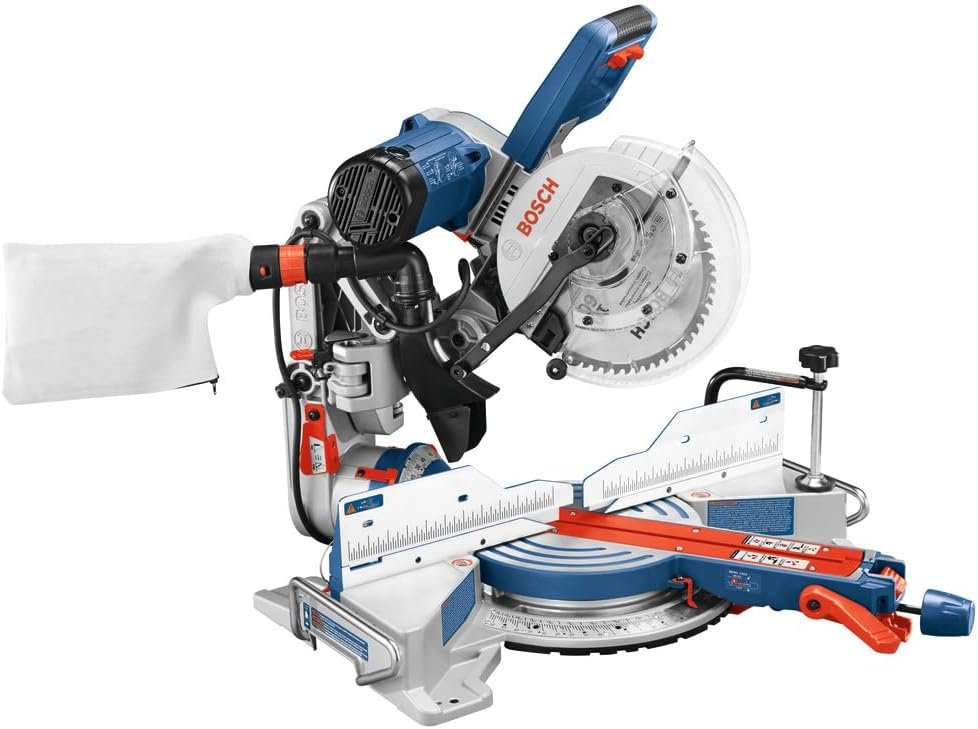
Bosch replaced sliding rails with a hinged Axial-Glide arm, so the saw needs almost no space behind it. In a garage or a tight condo remodel, that alone can decide the purchase. The glide action also stays smooth for years because there are no rails to collect sawdust.
A Journal of Light Construction review confirmed a 14-inch crosscut and 6-1/2 inch nested crown, and praised the front-mounted bevel lock. Bosch also adds bevel detents at 33.9°, the exact angle for cutting standard crown laid flat.
| Motor | 15 amp, 4,000 RPM |
| Bevel Range | 47° left and right |
| Capacity | 14 in at 90°, 6-1/2 in nested crown |
| Weight | About 88 lbs |
Pros
- Sits close to a wall
- Silky glide action
- All controls up front
Cons
- Heaviest saw here
- Premium price tier
Score: 9.2/10. The most refined trim saw in this list, as long as you are not carrying it up stairs every day.
3. Makita LS1019L: Best 10-Inch Saw for Trim
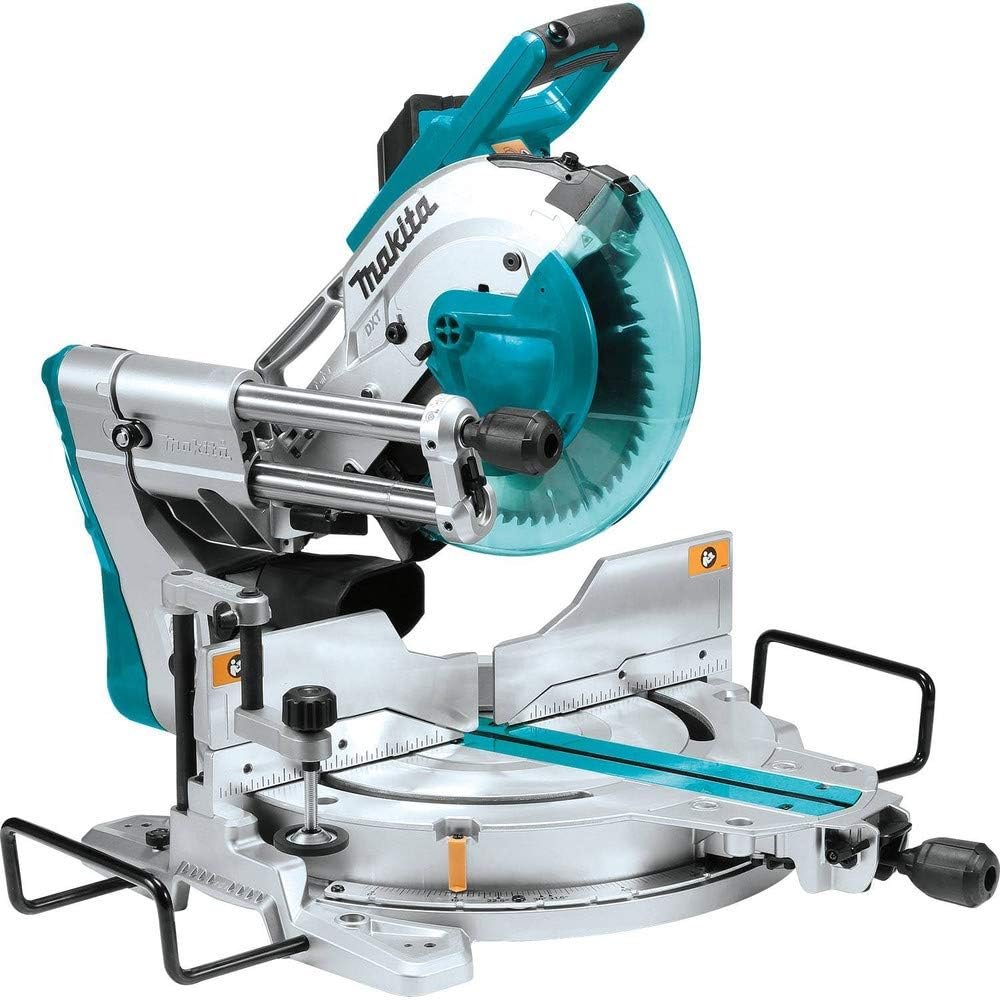
The LS1019L proves a 10-inch saw can keep up with 12-inch models on molding. Makita rates it for 6-5/8 inch nested crown and 5-1/4 inch vertical base, and calls that the largest capacity in its class. It also crosscuts a 4×12 at 90°.
Its rails sit forward, so the saw runs flush against a wall. At 57.9 lbs with a direct-drive motor and no belts to slip, it is a natural fit for trim carpenters who move between rooms all day.
| Motor | 15 amp direct drive, 3,200 RPM, soft start |
| Miter / Bevel | 60° left and right / 48° left and right |
| Cut Line | Adjustable laser, works with blade stopped |
| Weight | 57.9 lbs |
Pros
- 12-inch crown capacity
- Wall-flush footprint
- Cheaper 10-inch blades
Cons
- Laser needs occasional tuning
- Less depth for 4x posts
Score: 9.0/10. Best pick if trim is your main job and framing is occasional.
4. Milwaukee M18 FUEL 2739-20: Best Cordless
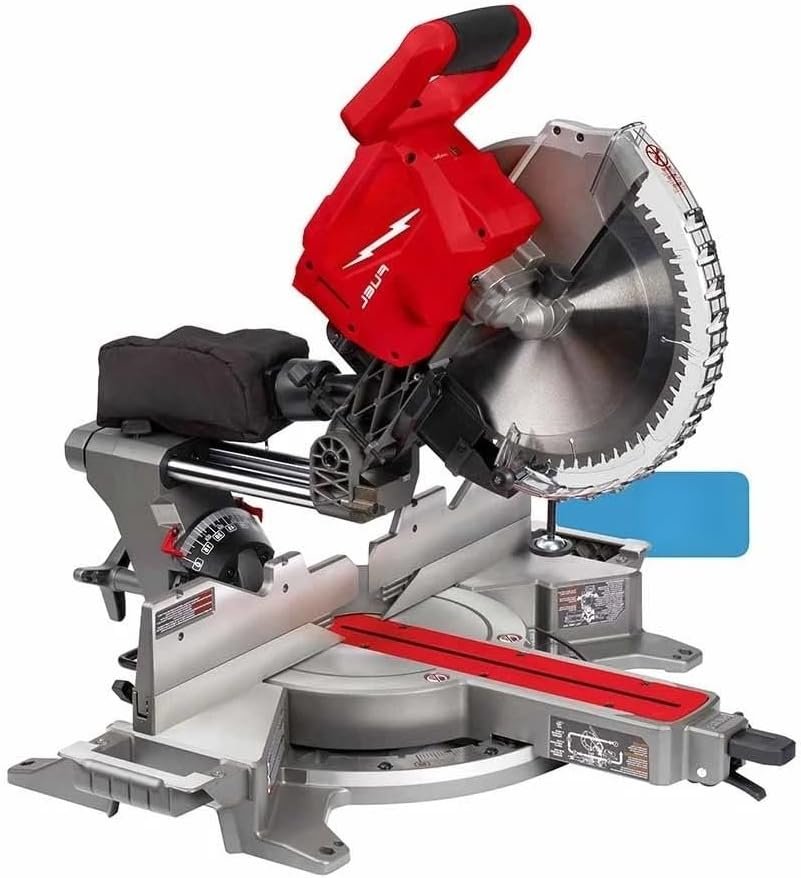
Cordless used to mean a small 7-1/4 inch saw, but this one carries full 12-inch sliding capacity. Milwaukee says it matches a 15 amp corded saw, weighs up to 15% less than rival saws, and delivers up to 330 cuts per charge on an HD12.0 battery.
For framers working on lots without power, that removes a generator and an extension cord from the setup. If you already run M18 tools, see our Milwaukee M18 FUEL review for how the platform holds up.
| Power | M18 brushless, 15 amp corded equivalent |
| Runtime | Up to 330 cuts per HD12.0 charge |
| Cut Line | Shadow Cut Line LED |
| Kit Note | 2739-20 is tool only, battery sold separately |
Pros
- No cord, full capacity
- Shadow line accuracy
- Side carry handles
Cons
- Large batteries add cost
- Locked to M18 platform
Score: 8.9/10. The smart choice for crews already invested in M18 batteries.
5. DeWalt DWS715: Best Budget Framing Saw
Not every framer needs a slide. The DWS715 is a 12-inch chop saw that weighs about 36 lbs, spins at 4,000 RPM, and cuts a 2×8 at 90° or a 2×6 at 45°, per DeWalt’s specs. That handles studs, plates, and most blocking.
Its 14 positive stops on a stainless detent plate keep repeat cuts accurate. It will also cut 5-1/2 inch base standing up, which is enough for basic trim in most homes.
| Motor | 15 amp, 4,000 RPM |
| Bevel | 48° left, 3° right |
| Capacity | 2×8 at 90°, 2×6 at 45° |
| Weight | About 36 lbs |
Pros
- Light and portable
- Lowest price tier
- Simple and durable
Cons
- No slide for wide boards
- Single bevel only
Score: 8.4/10. A tough, affordable framing saw that can still handle simple trim.
Final Scores at a Glance
| Rank | Saw | Award | Score |
|---|---|---|---|
| 1 | DeWalt DWS780 | Best Overall | 9.4 |
| 2 | Bosch GCM12SD | Best for Small Shops | 9.2 |
| 3 | Makita LS1019L | Best 10-Inch for Trim | 9.0 |
| 4 | Milwaukee 2739-20 | Best Cordless | 8.9 |
| 5 | DeWalt DWS715 | Best Budget | 8.4 |
Miter Saw Safety Tips for Trim and Framing
Keep your hands at least six inches from the blade path and use the included clamp on short pieces. Let the blade reach full speed before cutting, and let it stop fully before lifting it out of the kerf.
Wear eye protection on every cut, since trim offcuts can fly. Our guide to the best anti-fog safety glasses covers pairs that stay clear in dusty rooms, and our work gloves guide helps with handling rough framing lumber. Never wear loose gloves while the blade is actually spinning.
Planning a full trim or deck project? Our project tool checklist lists every tool you will need beyond the saw.
Frequently Asked Questions
What is the best miter saw for trim and framing?
The DeWalt DWS780 is the best all-round choice. It cuts 2×14 framing lumber and stands 7-1/2 inch crown and 6-3/4 inch base against its fences.
Is a 10-inch miter saw big enough for framing?
A 10-inch sliding saw like the Makita LS1019L can crosscut a 4×12 at 90°, so it handles most framing. A 12-inch saw is still better for deep cuts in posts and thick beams.
Do I need a sliding miter saw?
You need a slide if you regularly cut boards wider than about 8 inches. For studs, plates, and narrow trim, a non-sliding chop saw is lighter and cheaper.
Is a dual bevel miter saw worth it for trim?
Yes, if you install a lot of crown or baseboard. Tilting both directions means you never flip long pieces, which saves time and reduces errors.
Are cordless miter saws powerful enough for framing?
Modern 12-inch cordless saws like the Milwaukee M18 FUEL 2739-20 are rated to match 15 amp corded saws. The main tradeoff is buying large batteries to keep up with a full day of cuts.
Ready to Pick Your Saw?
For most people building and trimming out their own projects, the DeWalt DWS780 is the safest bet. If trim is most of your work and you move between rooms all day, choose the lighter Makita LS1019L instead.See the DWS780 on Amazon
Also Read On:
>>>Best Borescope Inspection Camera for 2026: 6 Top Picks Compared
>>>How to Store Lithium Tool Batteries in Winter: 7 Steps to Protect Your Packs
>>>Best OBD2 Scanners for Home Mechanics: 5 Top Picks for 2026