Best Voltage Tester for Generator Hookup: Verify Dead Circuits First
Picking the right voltage tester for generator hookup is the difference between a safe backfeed-free connection and a service call you never wanted to make. Before a single generator cord goes anywhere near your panel or transfer switch, you need proof that the circuit is dead. A tester you trust gives you that proof in seconds.
I am a licensed electrical engineer, and this is the check I refuse to skip. Below are five testers I would put in a homeowner or contractor bag for storm season, ranked by how well they confirm an absence of voltage under real conditions.
This post contains affiliate links. We earn a commission when you purchase through our links at no extra cost to you. We only recommend products we’ve personally tested and use ourselves.
Quick Verdict: Our Top Picks
- Best overall: Klein Tools NCVT-3P, dual range plus a work light where you need it
- Best for panel and transfer switch work: Fluke T6-1000 Pro
- Best two-pole confirmation: Fluke T5-1000
- Best solenoid tester: Ideal Vol-Con Elite 61-076
- Best budget pick: Sperry Instruments ET6210
Why a Dead Circuit Check Comes Before Any Generator Connection
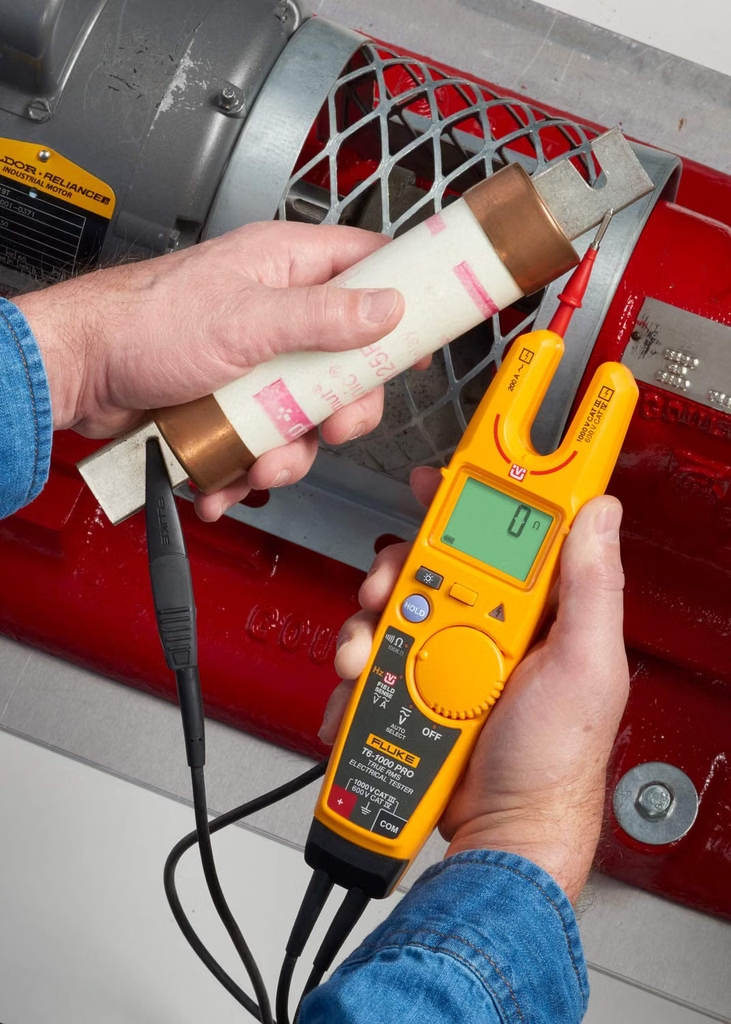
A portable generator connected to a circuit that is still energized creates two hazards at once. Utility power arriving on one side and generator power on the other can damage the generator, and backfeed can push voltage onto lines that a utility crew believes are dead. Confirming zero volts is the step that removes both risks.
The same check matters at the interlock kit, the inlet box, and the branch circuits you plan to run. Breakers can be mislabeled, and a switched breaker is not the same as a verified dead conductor. Your tester is what turns an assumption into a fact.
How to Choose a Voltage Tester for Generator Hookup
Non-Contact, Two-Pole, or Solenoid
Non-contact pens sense an electric field through insulation and are ideal for a fast first sweep. Two-pole testers touch both conductors and give a far more reliable answer because they draw a small load. Solenoid testers add a vibrating or mechanical indication that survives a dead battery.
For generator work, carry at least one non-contact pen and one two-pole tester. The pen finds the hot quickly, and the two-pole confirms it is genuinely gone. Relying on a pen alone is the most common mistake I see.
Voltage Range and Category Rating
Residential generator hookups involve 120V and 240V circuits, so any tester you choose should comfortably cover both. Look for a CAT III 600V rating as a minimum, and CAT IV 600V if you will work at the service entrance or meter base. The category rating describes how much transient energy the tester can survive without failing dangerously.
Ghost Voltage Rejection
Long runs of cable next to energized conductors can induce a phantom reading that looks like live voltage. A low-impedance tester bleeds that induced charge away and shows you the truth. This feature is worth paying for when you are trying to prove a conductor is dead.
Self-Test, Visibility, and Build
A tester that cannot prove it still works is a tester you cannot trust. Choose a model with a self-test function, a bright indicator, and an audible tone for noisy conditions. Storm work often means rain, mud, and darkness, so a drop rating and a built-in light both earn their keep.
Voltage Tester Comparison Table
| Model | Type | Range | Safety Rating | Best For |
|---|---|---|---|---|
| Klein NCVT-3P | Non-contact | 12V to 1000V AC | CAT IV 1000V | Fast first sweep |
| Fluke T6-1000 Pro | Open fork | Up to 1000V AC/DC | CAT IV 600V | Panel and transfer switch |
| Fluke T5-1000 | Two-pole | Up to 1000V AC/DC | CAT IV 600V | Proving dead |
| Ideal Vol-Con Elite | Solenoid | 12V to 600V AC/DC | CAT IV 600V | Loud, tactile confirmation |
| Sperry ET6210 | Two-pole | 120V to 600V AC/DC | CAT III 600V | Budget backup |
The Five Best Voltage Testers Reviewed
1. Klein Tools NCVT-3P: Best Overall
The NCVT-3P is the pen I reach for first at an inlet box or a generator cord end. Dual range sensing lets you switch between low voltage signalling and standard branch circuits, so you are not guessing at what tripped the indicator. The built-in flashlight is not a gimmick when you are working a panel by headlamp during an outage.
Detection is clear, with both a colour-coded light and an audible tone. Self-test on power up tells you the unit is alive before you trust it. As a first sweep tool it is hard to beat at this price level.
- Pros: Dual range, bright work light, CAT IV rating, self-test on startup
- Cons: Non-contact only, so it should never be your final confirmation
- Score: 9.4 out of 10
2. Fluke T6-1000 Pro: Best for Panel and Transfer Switch Work
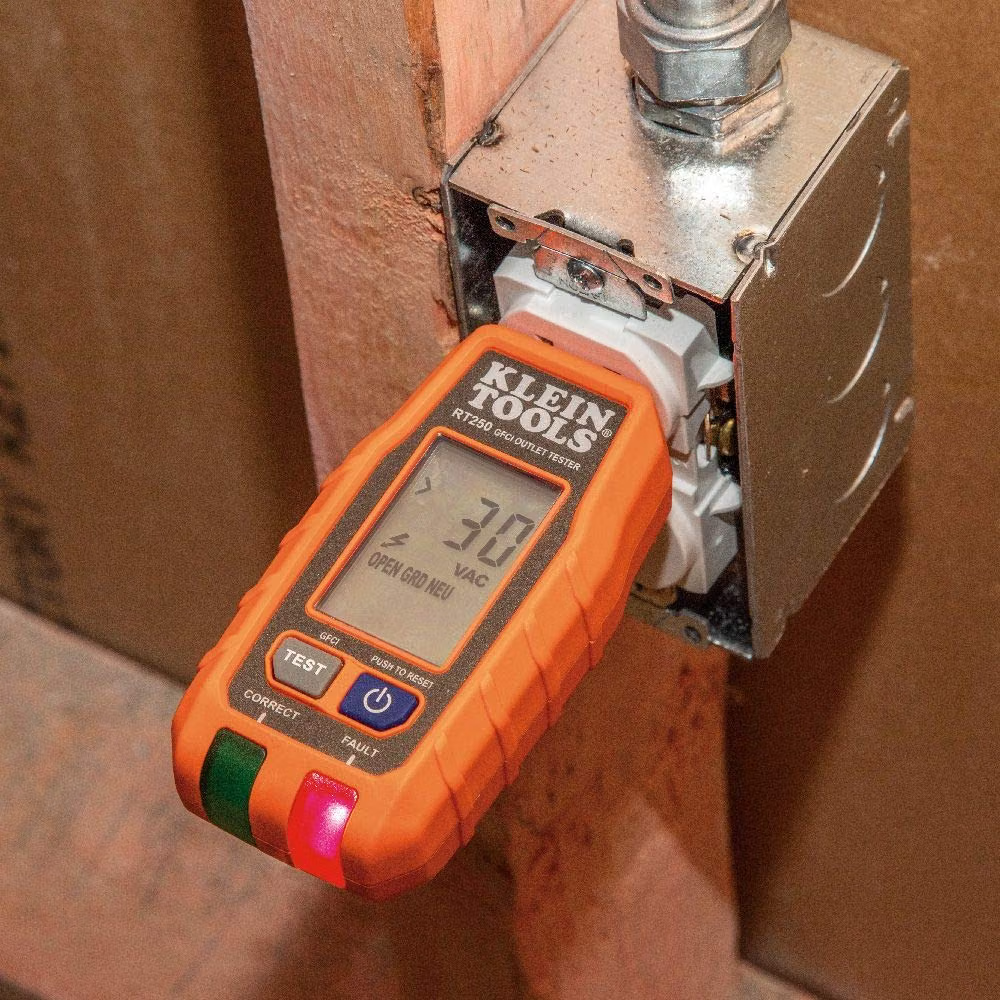
The T6-1000 Pro reads voltage through its open fork without touching a bare conductor, which is a genuine advantage in a crowded load centre. You can slide the fork over an insulated wire and get a voltage figure rather than a simple hot or not indication. That number matters when you are checking both legs of a 240V feed.
It also measures current up to a useful working range, so it doubles as a troubleshooting tool once the generator is running. Build quality is what you expect from Fluke. It is the priciest pick here, and it earns that for anyone doing this work regularly.
- Pros: Reads actual voltage without probing, current measurement, excellent durability
- Cons: Highest cost in this roundup, larger than a pocket pen
- Score: 9.2 out of 10
3. Fluke T5-1000: Best Two-Pole Confirmation Tester
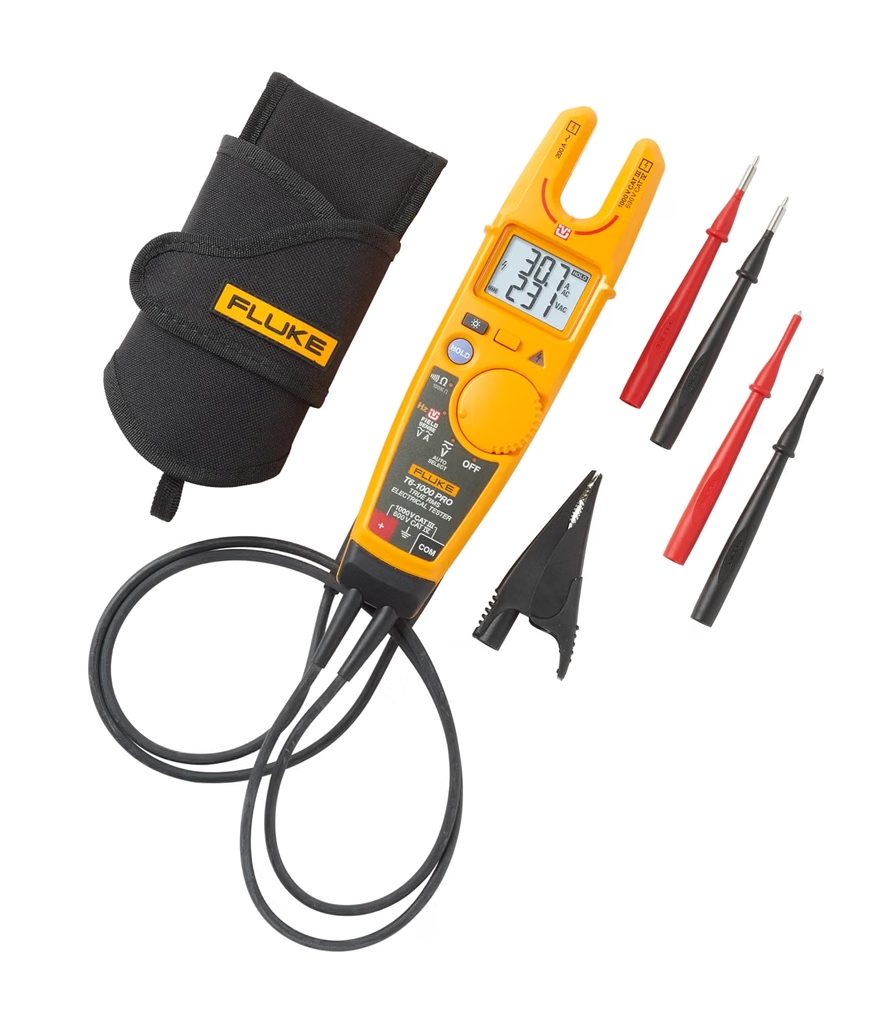
When I want a definitive answer on whether a conductor is dead, this is the tester that gives it. The two-pole design draws a small load, which drains ghost voltage and stops false positives. Readings are clear on the digital display, and the OpenJaw feature lets you check current without breaking the circuit.
It handles both AC and DC, so it covers your generator output and any battery-side checks. The leads store neatly in the body, which sounds minor until you are working one-handed. This is the tester I would hand a homeowner who wants to do the job properly once.
- Pros: Low impedance, rejects phantom voltage, continuity and current in one unit
- Cons: No backlit display, slower than a pen for a quick sweep
- Score: 8.9 out of 10
4. Ideal Vol-Con Elite 61-076: Best Solenoid Tester
Solenoid testers give you something a digital display cannot: a physical vibration you can feel through your glove. The Vol-Con Elite pairs that tactile response with a digital readout, so you get both confirmation methods in one hand. In a loud, wet, poorly lit crawlspace that redundancy is worth a lot.
Because the solenoid indication does not depend on the battery, a flat cell will not quietly leave you with a tester that reads zero on a live wire. That single characteristic is why many utility crews still carry one. It is heavier than the alternatives here.
- Pros: Vibrating indication, battery-independent solenoid, strong ghost voltage rejection
- Cons: Bulky, heavier than a two-pole digital tester
- Score: 8.6 out of 10
5. Sperry Instruments ET6210: Best Budget Pick
If your budget only stretches to one two-pole tester, this is a sensible place to start. It covers the 120V and 240V ranges a home generator hookup needs, with clear LED indication at each step. Build quality is basic but the function is honest.
There is no digital readout, so you get voltage bands rather than exact figures. For a simple dead or live decision that is genuinely enough. Pair it with a non-contact pen and you have a workable two-tool kit.
- Pros: Very affordable, simple LED voltage bands, no calibration fuss
- Cons: No exact voltage reading, lower category rating than the others
- Score: 8.2 out of 10
How to Prove a Circuit Is Dead: The Live, Dead, Live Method
Buying a good tester is only half the job. The method below is the standard professional practice and takes about thirty seconds.
- Test your tester on a circuit you know is live, such as a receptacle on an unaffected branch.
- Test the circuit you intend to work on, checking hot to neutral, hot to ground, and both legs where applicable.
- Return to the known live source and confirm the tester still responds correctly.
If step three fails, your reading in step two proved nothing at all. Repeat the sequence with a second tester before touching any conductor.
Scored Summary
| Model | Award | Score |
|---|---|---|
| Klein Tools NCVT-3P | Best Overall | 9.4 |
| Fluke T6-1000 Pro | Best for Panels | 9.2 |
| Fluke T5-1000 | Best Two-Pole | 8.9 |
| Ideal Vol-Con Elite | Best Solenoid | 8.6 |
| Sperry ET6210 | Best Budget | 8.2 |
Frequently Asked Questions
Is a non-contact tester enough before a generator hookup?
No. A non-contact pen is excellent for finding voltage but can miss it through thick insulation or inside a metal raceway. Always confirm with a two-pole or solenoid tester before you touch a conductor.
What voltage rating do I need for a home generator connection?
A tester covering 120V and 240V AC handles almost every residential hookup. Choose CAT III 600V as a floor, and CAT IV 600V if you go near the meter or service entrance.
What is ghost voltage and why does it matter here?
Ghost voltage is a small induced reading picked up from nearby energized cables running in parallel. A low-impedance tester loads the circuit slightly and makes that false reading collapse to zero.
Can I use a multimeter instead?
A multimeter will read voltage accurately, but most consumer models are high impedance and show phantom readings. A dedicated tester is faster, tougher, and purpose-built for a dead circuit check.
Do I still need to test if I switched the main breaker off?
Yes, every single time. Breakers can be mislabeled, they can fail closed, and lugs ahead of the main stay energized regardless. Verification is the only thing that makes the circuit safe.
Final Word
If you buy one tool from this list, make it the Klein Tools NCVT-3P for everyday sweeps and add a two-pole tester as soon as your budget allows. For anyone connecting a generator more than once a season, the Fluke T5-1000 is the confirmation tester worth owning. The right voltage tester for generator hookup pays for itself the first time it stops you from working a circuit you assumed was dead.
Compare Voltage Testers on Amazon
Also Read On:
Best Portable Generators for Home Backup Power in 2026
Best Anti Fog Safety Glasses for Job Sites: 6 Pairs That Stay Crystal Clear
How to Test a Circuit Breaker With a Multimeter in 6 Safe Steps