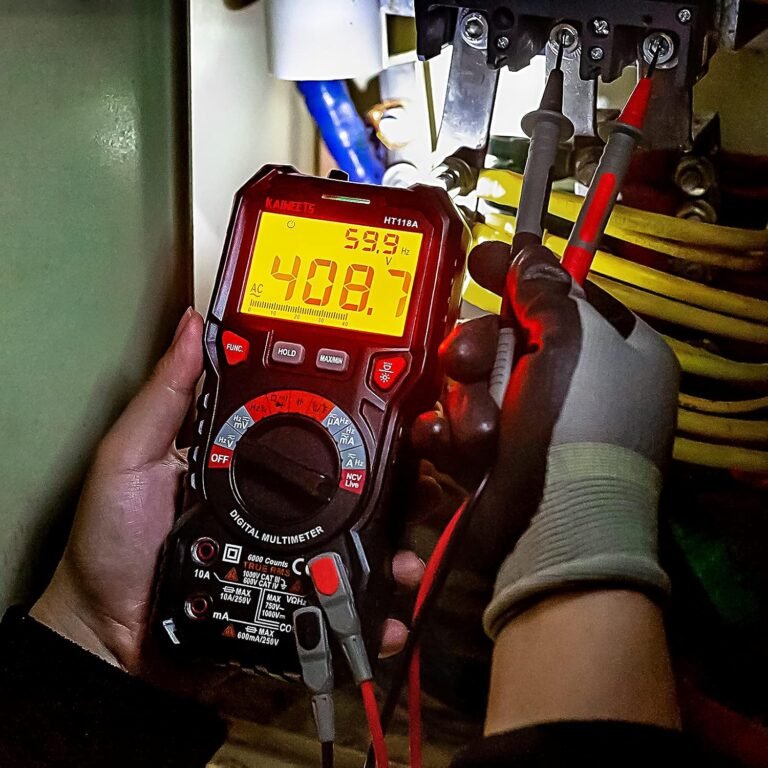
Clamp Meter vs Multimeter: Which One Do You Need?
The Short Answer
- Buy a multimeter if you mainly test voltage, continuity, resistance, batteries, or small electronics.
- Buy a clamp meter if you need to measure current above 10 amps on live wiring, such as HVAC units, panels, generators, or motors.
- Own just one tool? A True RMS clamp meter with test leads covers the most ground for home electrical work.
Shopping for a tester and stuck on the clamp meter vs multimeter question? You are not alone, because these two tools look similar on paper but behave very differently on a live circuit, and this guide shows you which one fits the work you actually do.
Getting it right matters.A good meter helps you find overloaded circuits, weak breakers, and loose connections before they become emergencies.
This post contains affiliate links. We earn a commission when you purchase through our links at no extra cost to you. We only recommend products we’ve personally tested and use ourselves.
What Is a Multimeter?
A digital multimeter (DMM) is the general practitioner of electrical testing. It measures AC and DC voltage, resistance, continuity, and current through two test leads.
The catch is current. To measure amps, a multimeter must become part of the circuit, which means shutting off power, disconnecting a wire, and routing the current through the meter. Most handheld models top out at 10 amps through a fused input, which rules out many real appliance and HVAC loads.
Where multimeters shine is precision at low levels. Fluke lists a basic DC voltage accuracy of 0.05 percent for its 87V industrial multimeter. A milliamp range also makes a DMM the right tool for tracking down parasitic battery drain in a car or checking a sensor on a circuit board.
What Is a Clamp Meter?
A clamp meter measures current without touching bare copper. You open the hinged jaws, close them around a single conductor, and the meter reads the magnetic field created by the current flowing through that wire. There is no shutdown, no cut wire, and no broken circuit.
Two sensor types exist. Basic models use a current transformer that reads AC only, while AC/DC models use a Hall effect sensor that also reads DC current from solar arrays, battery banks, and vehicles. Always check which type you are buying.
Most modern clamp meters also include test lead jacks for voltage, resistance, and continuity. That makes them a hybrid tool, although their voltage and low current accuracy usually sits a step below a dedicated DMM. For example, Fluke rates the AC current accuracy of its 323 clamp meter at 2 percent plus 5 digits.
Clamp Meter vs Multimeter: Key Differences at a Glance
| Feature | Multimeter | Clamp Meter |
|---|---|---|
| How it measures current | In series through test leads, so the circuit must be opened | Jaws around one conductor, no contact needed |
| Typical current limit | 10 A fused input on most handheld models | 400 A to 600 A on common models |
| Milliamp readings | Excellent | Limited on most models |
| Voltage and resistance accuracy | Higher | Good enough for most field work |
| Live current testing | Not practical | Designed for it |
| Best for | Electronics, automotive, controls, diagnostics | HVAC, panels, motors, generators, load checks |
| Relative price | Budget to premium | Mid-range to premium |
Which One Do You Need? Match the Tool to Your Work
Homeowners and DIYers
If you mostly check outlets, swap light fixtures, and test batteries, a quality multimeter handles it. If you also want to see whether a space heater is overloading a circuit or how many amps your well pump draws, step up to a clamp meter with test leads. Our Project Tool Checklist shows which testers each common home project needs.
HVAC Technicians
A clamp meter is essential here. Compressor and blower amp draw is one of the fastest ways to spot failing capacitors, locked rotors, and charge problems. Look for inrush current capture, since motor startup spikes are where many faults hide.
Automotive and Solar Owners
You need DC current, so an AC-only clamp cannot check alternator output or a solar string. Choose an AC/DC clamp meter for high current work. Keep a multimeter for milliamp level parasitic drain testing, where clamp jaws lose resolution.
Electronics Hobbyists
Stick with a multimeter. Circuit board work rarely exceeds a few amps, and you will value the resolution, diode test, and fine milliamp ranges far more than clamp jaws.
Professional Electricians
Most carry both. The clamp meter handles load balancing, panel surveys, and live feeder troubleshooting, while the multimeter covers precise voltage checks and control wiring. If you connect generators or work near service equipment, add a dedicated tester from our voltage tester for generator hookup guide for fast verification.
Safety Ratings Matter More Than Features
Electricity remains one of the deadliest jobsite hazards. Every meter you consider should carry an IEC 61010 measurement category (CAT) rating verified by an independent lab.
- CAT II: plug-in appliances and receptacle circuits.
- CAT III: distribution panels, feeders, and fixed equipment such as HVAC units and motors.
- CAT IV: the service entrance, utility meter, and outdoor supply lines.
For home panel work, treat CAT III 600V as your minimum. Match the rest of your kit to the job too, including gloves and eye protection from our safety gear guides.
Best Clamp Meters and Multimeters to Buy
These four picks cover every use case above. Scores reflect manufacturer specifications, safety ratings, feature value, and verified buyer feedback.
Best Overall Clamp Meter
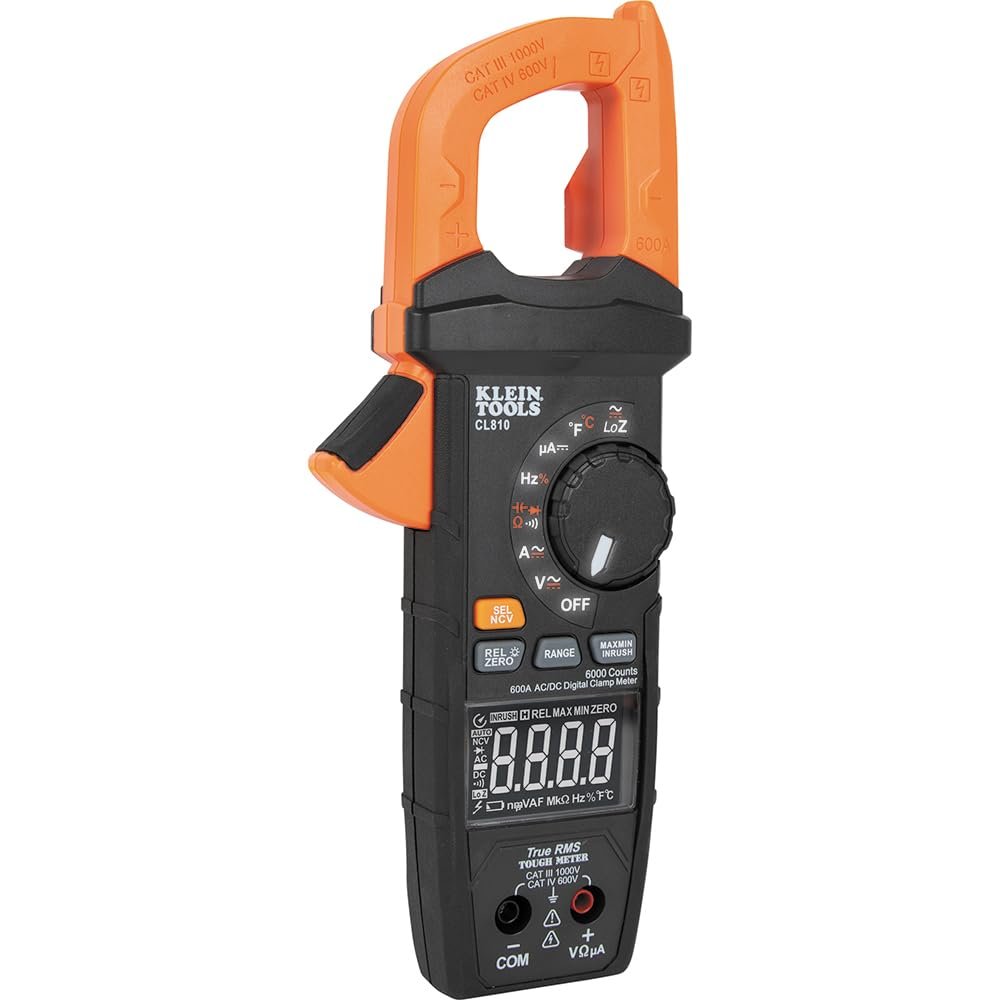
1. Klein Tools CL810 Clamp Meter
| Current | 600 A AC/DC |
| Voltage | 1000 V AC/DC |
| Safety rating | CAT IV 600V, CAT III 1000V |
| Extras | LoZ mode, inrush, non-contact voltage, thermocouple, worklight |
| Durability | 6.6 ft (2 m) drop rated, IP40 |
The Klein CL810 is the clamp meter I would hand most readers. It reads both AC and DC current to 600 amps, captures inrush, and uses a low impedance mode to clear ghost voltage from your readings. Browse more Klein Tools reviews if you like the brand.
Pros
- AC and DC current covers HVAC, solar, and automotive
- Dual CAT IV 600V and CAT III 1000V rating
- Inrush capture for motor startup diagnosis
Cons
- Bulkier than slim AC-only clamps
- Milliamp accuracy still trails a DMM
Shop Klein CL810 Price on Amazon
Best Compact AC Clamp Meter
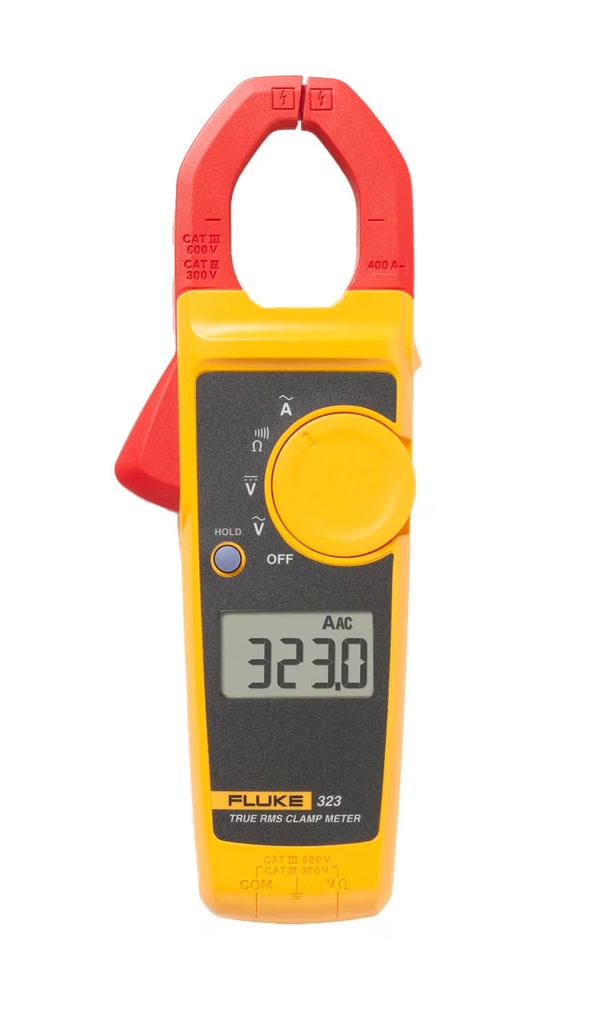
2. Fluke 323 True RMS Clamp Meter
| Current | 400 A AC |
| Voltage | 600 V AC/DC |
| Safety rating | CAT IV 300V, CAT III 600V |
| Extras | True RMS, continuity, data hold, backlight |
| Warranty | 2 years |
The Fluke 323 keeps things simple. Its slim jaw slips between crowded conductors in residential and light commercial panels, and True RMS keeps readings honest on LED drivers and variable speed equipment. It measures AC current only, so skip it if you work on DC systems.
Pros
- Slim jaw fits tight panels
- Fluke build quality and 2-year warranty
- Simple dial with a short learning curve
Cons
- No DC current measurement
- Limited resistance range
Check Fluke 323 Price on Amazon
Best Multimeter for Electricians and DIYers
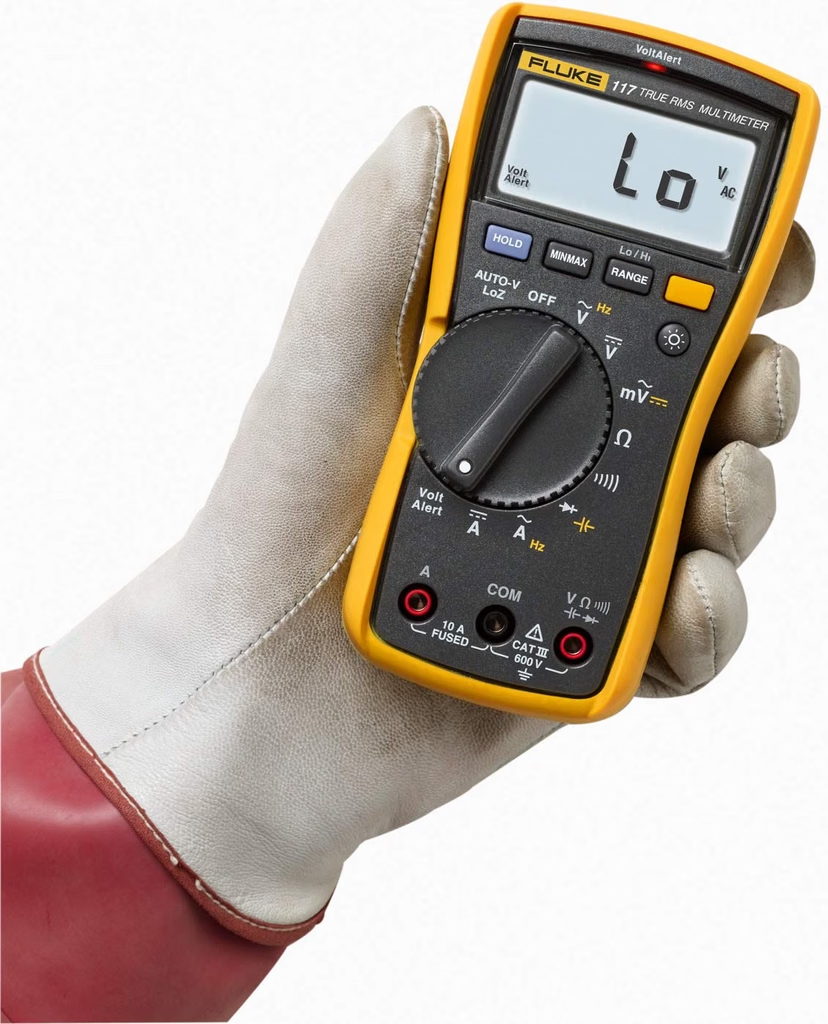
3. Fluke 117 Electrician’s Multimeter
| Voltage | 600 V AC/DC |
| Current | 10 A |
| Safety rating | CAT III 600V |
| Extras | VoltAlert non-contact detection, AutoV/LoZ, capacitance, frequency |
| Display | 6,000 count, backlit |
The Fluke 117 is built for electricians who want a meter they can run one-handed. Built-in VoltAlert flags live wiring before you touch a probe, and AutoV/LoZ stops ghost voltage from fooling you on long cable runs.
Pros
- Non-contact voltage detection built in
- LoZ mode prevents false readings
- Compact and easy to use one-handed
Cons
- 10 A current limit
- No CAT IV rating
Check Fluke 117 Price on Amazon
Best Precision Multimeter
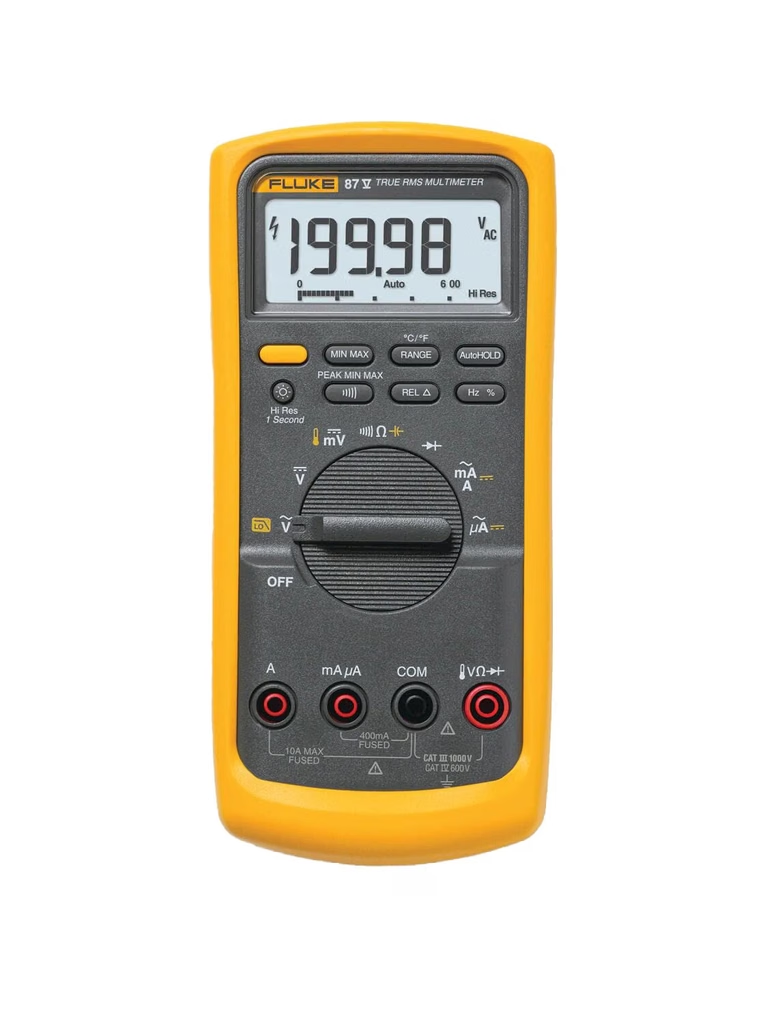
4. Fluke 87V Industrial Multimeter
| Voltage | 1000 V AC/DC |
| Current | 10 A |
| Safety rating | CAT IV 600V, CAT III 1000V |
| Extras | Low-pass filter for drives, 250 microsecond peak capture, temperature |
| Display | 6,000 or 20,000 count, switchable |
The Fluke 87V is the industrial standard for good reason. Its low-pass filter gives accurate readings on variable frequency drives, peak capture catches glitches as brief as 250 microseconds, and the 20,000 count mode reveals small voltage drift. It sits at the premium end of the market, so it makes the most sense for industrial and controls work.
Pros
- Highest accuracy and resolution on this list
- Dual CAT IV 600V and CAT III 1000V rating
- Built for motor drive troubleshooting
Cons
- Premium price
- No non-contact voltage detection
Check Fluke 87V Price on Amazon
Scored Summary
| Tool | Type | Best For | Score |
|---|---|---|---|
| Fluke 87V | Multimeter | Industrial and drive work | 9.4/10 |
| Klein Tools CL810 | AC/DC clamp meter | All-round HVAC, solar, and home use | 9.3/10 |
| Fluke 117 | Multimeter | Electricians and serious DIYers | 9.1/10 |
| Fluke 323 | AC clamp meter | Compact residential panel checks | 8.7/10 |
Frequently Asked Questions
Can a clamp meter replace a multimeter?
For most home and HVAC work, yes, as long as the clamp meter has test lead inputs. It will not match a multimeter for milliamp readings or fine electronics work, so hobbyists and automotive diagnosticians should still own a DMM.Why does my clamp meter read zero on an extension cord?
The jaws must surround a single conductor. In a cord, the hot and neutral carry equal current in opposite directions, so their magnetic fields cancel out. Use a line splitter accessory or clamp one conductor at a time.Is a clamp meter accurate enough?
Yes for load current. Quality models typically land within about 2 percent on AC current, which is plenty for diagnosing motors, heaters, and branch circuits. For precise voltage or low current readings, a multimeter is more accurate.Do I need a True RMS meter?
Yes if you test modern equipment. LED drivers, variable speed motors, and electronics distort the AC waveform, and average-responding meters can misread those loads. True RMS meters calculate the real effective value.What CAT rating do I need for a home electrical panel?
Choose at least CAT III 600V for panel and feeder work. If you test at the service entrance or meter base, a CAT IV rated tool adds a larger safety margin against voltage spikes.
Still Deciding Between Two Testers?
Put any two tools head to head with our Side-by-Side Tool Comparison, or browse more picks in our electrical tool reviews.Compare Tools Side by Side
Also read >>>
Best Garage Heaters for a Cold Workshop
Best Voltage Tester for Generator Hookup: Verify Dead Circuits First
How to Test a Circuit Breaker With a Multimeter in 6 Safe Steps