Best Thermal Imaging Camera for Electrical Inspection (2026): 6 Expert Picks
Picking the right thermal imaging camera for electrical inspection lets you find a loose lug or overloaded breaker before it turns into a burned panel. Heat is the earliest warning sign most electrical faults give you. A good thermal camera shows that heat in seconds, without touching anything.
I compared six cameras that electricians actually buy, from pocket scanners to full inspection tools. Each pick below is scored on image detail, measurement range, durability, and how easily it turns findings into a report.
This post contains affiliate links. We earn a commission when you purchase through our links at no extra cost to you. We only recommend products we’ve personally tested and use ourselves.
Why Thermal Inspection Matters: The Numbers
- Residential building fires caused by electrical malfunction.
- Deaths from those electrical malfunction fires the same year
- billions in property losses from residential electrical fires
*Maximum gap between infrared scans of electrical equipment.
The reports that inflation-adjusted losses from these fires rose 28% between 2014 and 2023. On the commercial side, the 2023 edition of NFPA 70B turned infrared scanning from a recommendation into a requirement. Equipment in poor condition must now be scanned at least every six months, according to Fluke’s NFPA 70B guide.
Quick Verdict
Best overall: FLIR E8 Pro. Its 320 x 240 sensor gives you the detail to pinpoint a single hot terminal in a crowded panel.
Best value: Topdon TC005. You get high resolution and a full-shift battery at a mid-range price.
Best budget: FLIR TG165-X. It is a big step up from a spot infrared thermometer for quick service calls.
How to Choose a Thermal Imaging Camera for Electrical Inspection
1. Thermal Resolution
Resolution is the number of temperature points the camera measures. More pixels mean you can separate one breaker from its neighbor and stand farther from live parts. A 320 x 240 camera measures 76,800 points, about seven times more than a 120 x 90 camera at 10,800.
2. Thermal Sensitivity (NETD)
NETD tells you the smallest temperature difference a camera can detect, and lower is better. A camera rated under 50 mK picks up early heating that a 100 mK camera can blur out. This matters because loose connections often start only a few degrees warm.
3. Temperature Range
A maximum of 400°C (752°F) covers residential panels, disconnects, and motors. Industrial switchgear and failing high-current connections justify a 550°C ceiling.
4. Delta T Tools and Reporting
Electrical faults are judged by temperature difference, not absolute temperature. NETA guidelines summarized by Eaton call for immediate action when similar components under similar load differ by more than 15°C (27°F). Cameras with built-in Delta T tools and cloud upload save real time on every report.
5. Image Blending
FLIR MSX and Fluke IR-Fusion lay visible details over the thermal image. That lets you read breaker labels and circuit numbers right in the photo you send to the client.
Safety note: A thermal camera never replaces proper testing or PPE. Always confirm a dead circuit with a reliable voltage tester and work with insulated screwdrivers and rated eye protection.
3 Tips for Accurate Electrical Thermal Scans
Scan under load. A loose connection only heats up when current flows through it. Many thermographers aim for at least 40% of normal load before trusting a clean image.
Compare like with like. Check Phase A against Phase B and Phase C on the same breaker or disconnect. One connection running noticeably hotter than its partners is the pattern that points to a real fault.
Watch shiny metal. Bare copper, aluminum busbars, and stainless covers reflect heat from lights and even your own body. Change your viewing angle or aim at a painted or insulated surface nearby for a truer reading.
Thermal Imaging Camera Comparison Table
| Camera | Thermal Pixels | Max Temp | Best For | Score |
|---|---|---|---|---|
| FLIR E8 Pro | 76,800 | 550°C / 1022°F | Commercial and industrial panels | 9.4 |
| Topdon TC005 | 49,152 | 550°C / 1022°F | Contractors on a budget | 8.9 |
| Fluke TiS20+ MAX | 10,800 | 400°C / 752°F | Rough jobsites | 8.6 |
| FLIR C5 | 19,200 | 400°C / 752°F | Everyday carry | 8.5 |
| Klein Tools TI270 | Over 10,000 | 400°C / 752°F | Residential service work | 8.1 |
| FLIR TG165-X | 4,800 | 300°C / 572°F | Quick checks | 7.8 |
The 6 Best Thermal Imaging Cameras for Electrical Inspection
Best Overall
1. FLIR E8 Pro
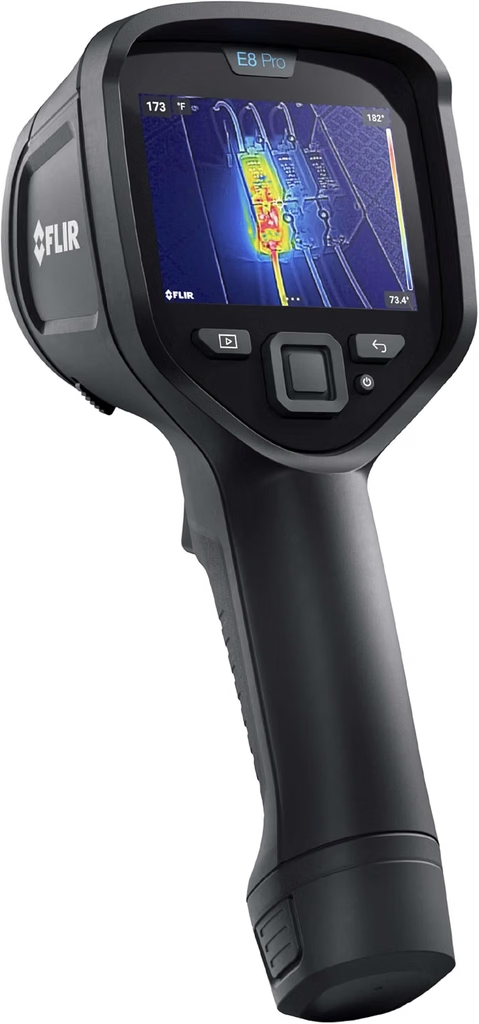
The E8 Pro is the camera I would hand to anyone running regular panel or switchgear inspections. Its 320 x 240 detector and MSX blending make individual lugs and breaker labels easy to read. Built-in Delta T tools line up with NFPA 70B style reporting, so findings are ready for a client report.
| Resolution | 320 x 240 (76,800 pixels) |
| Sensitivity | Under 50 mK |
| Range | -20 to 550°C (-4 to 1022°F) |
| Extras | 5 MP camera, MSX, 3.5-inch touchscreen, Wi-Fi to FLIR Ignite |
| Durability | 2 m drop rated, spare battery included |
Pros
- Sharpest image in this roundup
- Delta T tools built in
- Swappable battery for long days
Cons
- Premium price tier
- Fixed focus limits very close work
Score: 9.4/10. The best investment for electricians who sell inspection services.
Best Value
2. Topdon TC005
The TC005 delivers features that usually cost far more. Its 256 x 192 sensor and sub 40 mK sensitivity catch subtle hot spots, and fusion mode helps identify the exact component. Battery life of up to 12 hours easily covers a full shift.
| Resolution | 256 x 192 (49,152 pixels) |
| Sensitivity | Under 40 mK |
| Range | -20 to 550°C (-4 to 1022°F) |
| Extras | 2 MP camera, fusion and picture-in-picture, 2.8-inch screen |
| Durability | IP54, up to 12 hour battery |
Pros
- High resolution for the money
- Excellent battery life
- Wide temperature range
Cons
- Reporting software is basic
- Smaller screen
Score: 8.9/10. The smartest buy for independent contractors.
Most Rugged
3. Fluke TiS20+ MAX
Fluke built the TiS20+ MAX for crews who are hard on tools. It survives a 2 m drop, carries an IP54 rating, and runs about five hours per charge. Asset tagging sorts images automatically when you scan a QR code on the equipment.
| Resolution | 120 x 90 (10,800 pixels) |
| Sensitivity | 60 mK |
| Range | -20 to 400°C (-4 to 752°F) |
| Extras | IR-Fusion, 3.5-inch touchscreen, Fluke Connect Wi-Fi |
| Durability | 2 m drop, IP54 |
Pros
- Tough Fluke build quality
- Asset tagging saves office time
- Pairs with other Fluke Connect tools
Cons
- Lowest resolution among full-size cameras here
- Buy the MAX, since the base model stops at 150°C
Score: 8.6/10. Ideal for plant maintenance teams already using Fluke meters.
Best Pocket Camera
4. FLIR C5
The C5 slips into a shirt pocket, so it is always on hand when a breaker feels warm. You still get MSX blending, a 5 MP camera, and cloud upload. Its 160 x 120 sensor handles residential and light commercial panels well.
| Resolution | 160 x 120 (19,200 pixels) |
| Sensitivity | Under 70 mK |
| Range | -20 to 400°C (-4 to 752°F) |
| Extras | 5 MP camera, MSX, 3.5-inch touchscreen, Wi-Fi |
| Durability | 2 m drop, IP54, up to 4 hour battery |
Pros
- Truly pocket sized
- MSX makes labels readable
- Easy cloud sharing
Cons
- Not detailed enough for distant switchgear
- Shorter battery life
Score: 8.5/10. The best camera to carry on every service call.
Best for Residential Service
5. Klein Tools TI270
Klein designed the TI270 for electricians who want a simple, rugged imager without extra menus. It offers over 10,000 pixels, adjustable emissivity, and high and low temperature alarms. Wi-Fi sends images to the Klein app for quick sharing with homeowners.
| Resolution | Over 10,000 pixels |
| Range | -20 to 400°C (-4 to 752°F) |
| Emissivity | Adjustable, 0.01 to 0.99 |
| Extras | Wi-Fi app transfer, 3 color palettes, USB-C charging |
| Durability | 2 m drop protection |
Pros
- Very easy to learn
- Temperature alarms speed up scans
- USB-C charging
Cons
- No visible image blending
- Limited reporting tools
Score: 8.1/10. A dependable, no-fuss choice for residential electricians.
Best Budget
6. FLIR TG165-X
If you still use a spot infrared thermometer, the TG165-X is an easy upgrade. It shows the whole heat pattern first, so you measure the hottest point instead of guessing. The 80 x 60 sensor is fine for fuses, relays, and single connections.
| Resolution | 80 x 60 (4,800 pixels) |
| Range | -25 to 300°C (-13 to 572°F) |
| Extras | MSX, Bullseye laser targeting |
| Form | One-handed pistol grip |
Pros
- Lowest price in this roundup
- MSX at an entry-level cost
- Fast one-handed use
Cons
- Too little detail for formal reports
- Lower maximum temperature
Score: 7.8/10. Great for troubleshooting, not for full inspection programs.
Final Scores at a Glance
| Rank | Camera | Award | Score |
|---|---|---|---|
| 1 | FLIR E8 Pro | Best Overall | 9.4 |
| 2 | Topdon TC005 | Best Value | 8.9 |
| 3 | Fluke TiS20+ MAX | Most Rugged | 8.6 |
| 4 | FLIR C5 | Best Pocket Camera | 8.5 |
| 5 | Klein Tools TI270 | Best for Residential Service | 8.1 |
| 6 | FLIR TG165-X | Best Budget | 7.8 |
Frequently Asked Questions
What resolution do I need for electrical inspection?
For home panels, 160 x 120 is a workable minimum. For commercial panels and switchgear, aim for 256 x 192 or 320 x 240 so you can inspect from a safer distance.
Is a thermal camera better than an infrared thermometer?
Yes, for finding faults. A thermometer reads one spot, while a thermal camera shows the entire heat pattern so you never miss the real hot point.
How often should electrical equipment be scanned?
NFPA 70B (2023) requires infrared thermography at intervals not exceeding 12 months. Equipment in poor condition needs a scan at least every six months.
What temperature difference signals a problem?
Under NETA guidelines, a difference of 4 to 15°C between similar components indicates a probable deficiency. Anything above 15°C calls for immediate repair.
Does a thermal camera replace a voltage tester?
No. A thermal camera finds heat, but it cannot confirm a circuit is dead. Always verify with a voltage tester and wear the PPE your task requires.
Ready to Choose Your Thermal Camera?
For most electricians, the FLIR E8 Pro is the camera that pays for itself through inspection work. If budget comes first, the Topdon TC005 gives you the most detail per dollar.
Still weighing options? Use our side-by-side tool comparison or the project tool checklist to plan your kit.See the FLIR E8 Pro on Amazon
Also read >>> Clamp Meter vs Multimeter: Which One Do You Need?
Best Soldering Irons 2026: Don’t Buy Before You Read This
Best Digital Multimeter for Electricians and DIY Use in 2026