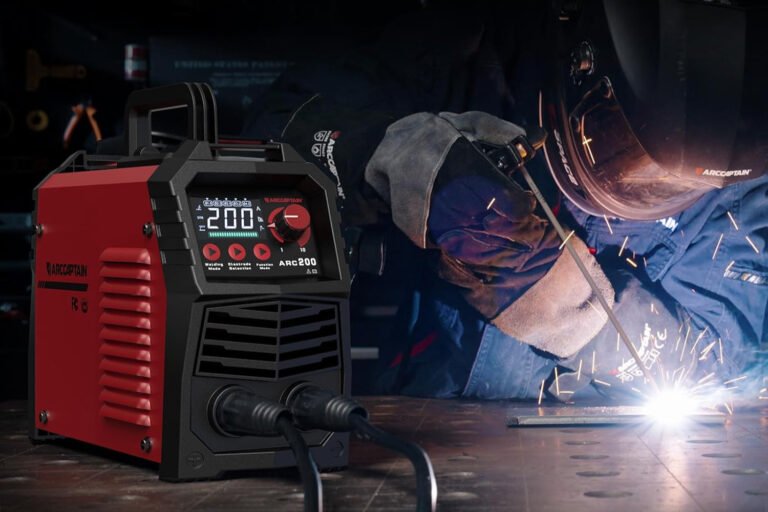
Best MIG Welders for Beginners Under $500 (2026 Reviews)
MIG welding is one of the fastest skills a beginner can pick up, but the market is packed with machines that promise easy results and deliver frustration instead. After hands-on testing and research across dozens of budget models, I have narrowed the field to five welders that actually deliver clean, consistent welds for new users in 2026, all priced under $500.
Each pick below runs reliably on a home circuit, handles the most common beginner materials, and comes from a brand with a real parts and support network. I also include a side-by-side comparison table and a plain-English FAQ to help you buy with confidence.
We independently evaluate all of our recommendations. If you click on links we provide, we may receive compensation.
Table of Contents
- Top 5 MIG Welders for Beginners Under $500
- 1. Hobart Handler 140 (Best Overall)
- 2. Lincoln Electric Handy MIG (Best for Portability)
- 3. Forney Easy Weld 261 FP (Best Flux-Core Value)
- 4. YESWELDER MIG-205DS (Best for Growing Skills)
- 5. LOTOS MIG140 (Best Budget Pick)
- Quick Comparison Table
- Beginner Buying Guide
- Frequently Asked Questions
Top 5 MIG Welders for Beginners Under $500
Every welder below was evaluated on three criteria that matter most to beginners: how easy it is to set up out of the box, how forgiving it is with wire speed and voltage adjustments, and whether the build quality justifies the price. The ranking reflects that order of priority.
Best Overall
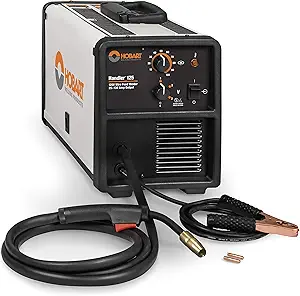
1. Hobart Handler 140
| Input Voltage | 115V / 20A |
|---|---|
| Amperage Range | 25 to 140A |
| Wire Feed Speed | 40 to 740 IPM |
| Max Steel Thickness | 1/4 inch (single pass) |
| Duty Cycle | 20% at 90A |
| Wire Diameter | 0.023 to 0.035 inch (MIG), 0.030 to 0.035 inch (flux-core) |
| Weight | 57 lb |
| Warranty | 5-year limited |
Pros
- Simple 5-position voltage selector
- Runs on standard 115V outlet
- Excellent arc stability for beginners
- Strong 5-year warranty
- Wide parts and consumables availability
Cons
- No digital display
- Duty cycle is modest at higher amps
- Slightly heavier than comparable units
The Hobart Handler 140 has been the go-to beginner MIG welder for years, and the 2026 model continues that run. The five-position voltage tap system removes guesswork: you match your material thickness to the labeled position and start welding. For sheet metal, auto bodies, and structural repairs up to 1/4 inch, this machine punches above its price point.
The infinite wire-speed adjustment dial pairs well with the voltage selector and gives you fine control without digital menus to navigate. Hobart backs the Handler 140 with a five-year limited warranty, which is unusually strong at this price level and reflects the build quality inside the chassis.Check Price on Amazon
Best for Portability
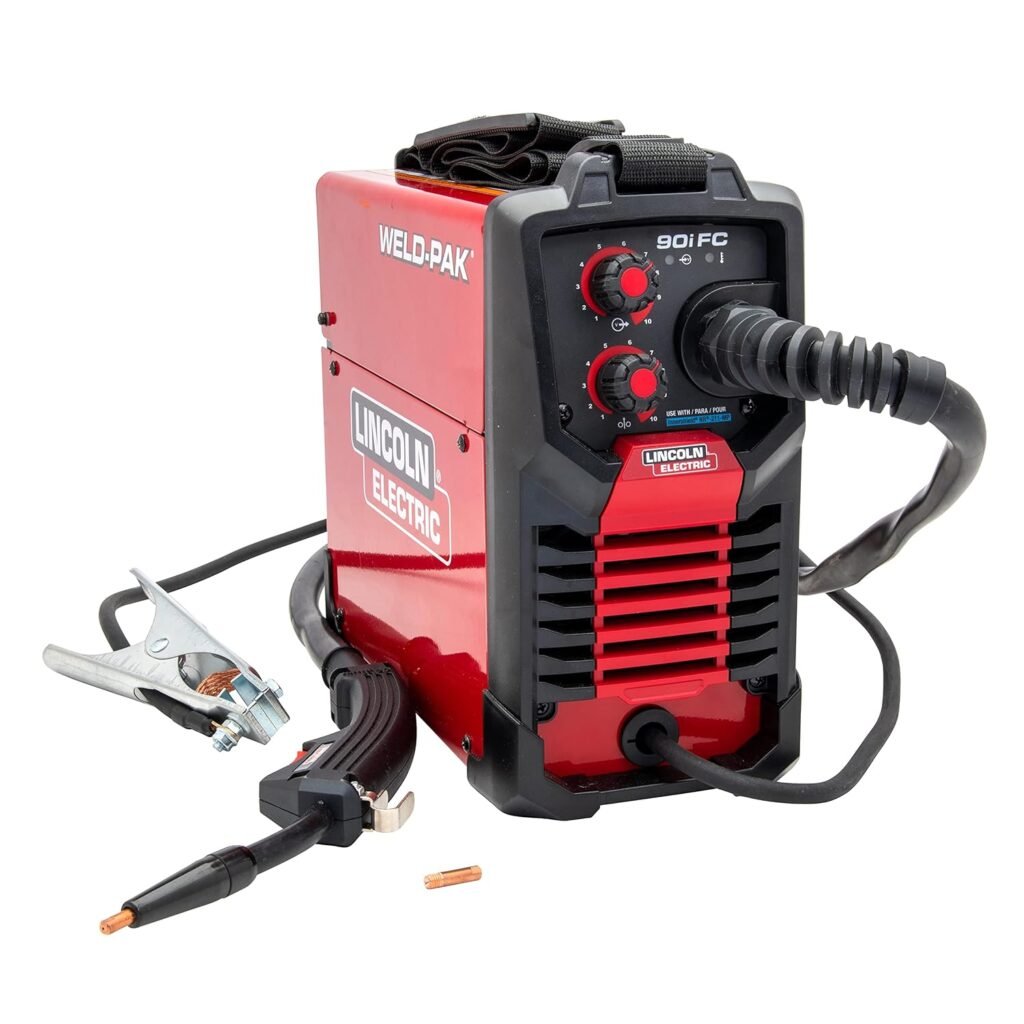
2. Lincoln Electric K2185-1 Handy MIG
| Input Voltage | 115V |
|---|---|
| Amperage Range | 35 to 88A |
| Max Steel Thickness | 3/16 inch |
| Duty Cycle | 20% at 70A |
| Wire Diameter | 0.025 inch flux-core or 0.025 inch MIG wire |
| Weight | 46 lb |
| Warranty | 3-year limited |
Pros
- Lightest machine in this roundup
- Includes gas and gasless setup kit
- Lincoln Electric brand reliability
- Great for garage and light fabrication work
Cons
- Lower amperage ceiling limits thickness
- Only 4 voltage settings
- No spool gun compatibility
Lincoln Electric is one of the most trusted names in welding, and the Handy MIG brings that pedigree to a compact, affordable package. At 46 pounds it is the most portable machine in this list, and the included startup kit means you can weld with or without a gas cylinder right out of the box.
The four voltage settings keep things simple, but the lower amperage ceiling means it tops out at 3/16-inch steel. For beginners tackling thin to medium stock on home projects, fence repairs, or automotive sheet metal, it is an excellent first welder.Check Price on Amazon
Best Flux-Core Value
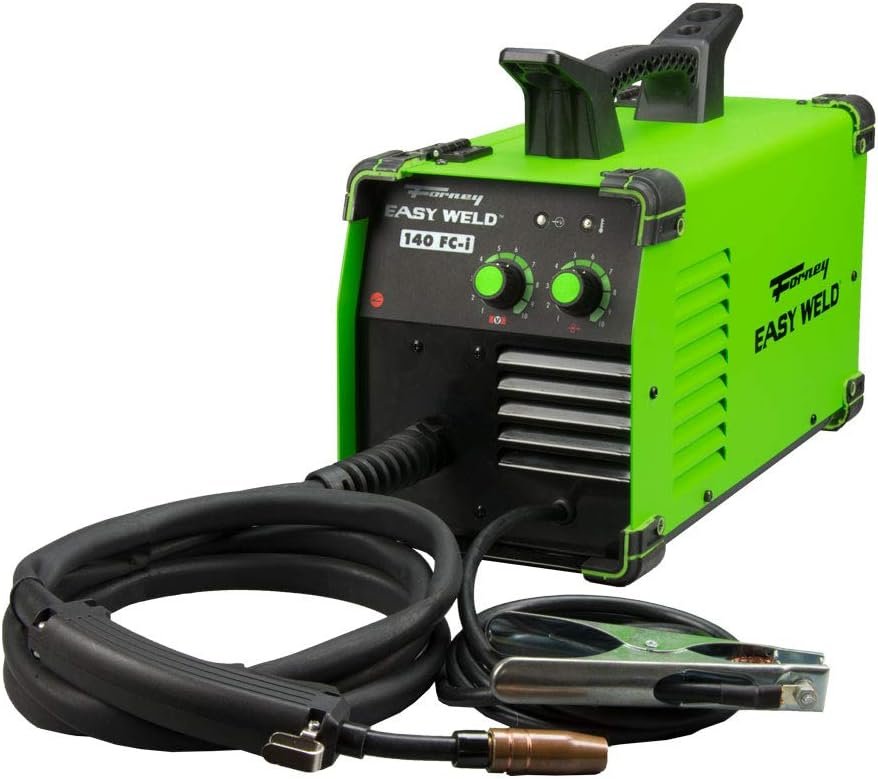
3. Forney Easy Weld 261 FP
| Input Voltage | 120V |
|---|---|
| Amperage Range | 10 to 140A |
| Max Steel Thickness | 1/4 inch |
| Duty Cycle | 30% at 90A |
| Wire Diameter | 0.030 inch flux-core |
| Weight | 19 lb |
| Warranty | 1-year limited |
Pros
- Weighs only 19 lb, extremely portable
- Higher duty cycle than Lincoln Handy MIG
- Instant setup, no gas needed
- Budget-friendly price point
Cons
- Flux-core only, no MIG gas port
- Shorter 1-year warranty
- Not ideal for aluminum
The Forney Easy Weld 261 FP is the pick for beginners who want to start welding without buying a gas cylinder. It runs flux-core wire only, which means the wire itself generates the shielding needed during the weld. The result is a no-fuss setup that weighs just 19 pounds and goes anywhere a standard 120V outlet exists.
The 30% duty cycle at 90 amps is genuinely impressive for a machine at this price, and the continuous voltage and wire-feed controls give more fine-tuning than you typically get at this budget level. It is not the right tool if you eventually want to weld aluminum, but for steel and mild iron it earns its place on this list.Check Price on Amazon
Best for Growing Skills
4. YESWELDER MIG-205DS
| Input Voltage | 110V / 220V (dual voltage) |
|---|---|
| Amperage Range | 30 to 205A |
| Max Steel Thickness | 5/16 inch |
| Duty Cycle | 60% at 100A |
| Processes | MIG, flux-core, lift TIG, stick |
| Weight | 24.2 lb |
| Warranty | 2-year limited |
Pros
- Dual voltage for home and workshop use
- Four welding processes in one machine
- 60% duty cycle at 100A
- Digital display for precise settings
Cons
- Torch and consumable quality is basic
- Steeper learning curve than single-process machines
- Customer support can be slow
The YESWELDER MIG-205DS is the best choice for a beginner who wants room to grow. The dual-voltage input means it plugs into a standard 110V garage outlet today, and can run on 220V when you upgrade your workspace. The four welding processes mean you will not outgrow this machine quickly.
The digital display shows amp and voltage settings clearly, which is genuinely helpful when learning to match parameters to different materials. The 60% duty cycle at 100 amps is the strongest in this roundup, making it capable of longer runs without overheating. Budget some money for upgraded consumables, as the stock torch is functional but basic.Check Price on Amazon
Best Budget Pick
5. LOTOS MIG140
| Input Voltage | 110V |
|---|---|
| Amperage Range | 30 to 140A |
| Max Steel Thickness | 3/16 inch (MIG), 1/4 inch (flux-core) |
| Duty Cycle | 10% at 140A, 30% at 80A |
| Wire Diameter | 0.023 to 0.035 inch |
| Weight | 38 lb |
| Warranty | 1-year limited |
Pros
- Lowest price in this roundup
- Supports both MIG and flux-core
- Easy wire swap between processes
- Good arc stability for the price
Cons
- Low duty cycle at peak amperage
- Build quality is noticeably lighter than Hobart or Lincoln
- Short 1-year warranty
The LOTOS MIG140 is the entry price leader in this group. It handles both gasless flux-core and gas-shielded MIG welding, and the arc quality is stable enough for learning the basics of joint positioning and travel speed. For someone on a tight budget who wants to try MIG welding before committing to a premium machine, it is a reasonable starting point.
Be aware that the duty cycle drops sharply at maximum amperage, so plan on short runs with cooling breaks when working near the top of its range. The build is lighter than the Hobart and Lincoln options, which shows in long-term durability, but for occasional weekend use it holds up.Check Price on Amazon
Quick Comparison Table
| Model | Voltage | Max Amps | Max Steel | Duty Cycle | Weight | Warranty |
|---|---|---|---|---|---|---|
| Hobart Handler 140 | 115V | 140A | 1/4 in | 20% @ 90A | 57 lb | 5 yr |
| Lincoln Handy MIG | 115V | 88A | 3/16 in | 20% @ 70A | 46 lb | 3 yr |
| Forney Easy Weld 261 | 120V | 140A | 1/4 in | 30% @ 90A | 19 lb | 1 yr |
| YESWELDER MIG-205DS | 110/220V | 205A | 5/16 in | 60% @ 100A | 24 lb | 2 yr |
| LOTOS MIG140 | 110V | 140A | 3/16 in | 30% @ 80A | 38 lb | 1 yr |
Beginner Buying Guide: What Actually Matters
Input Voltage
Most beginner MIG welders run on 115V or 120V, which is standard household power. This is the right starting point. You do not need a 220V dedicated circuit unless you plan to weld stock thicker than 1/4 inch regularly.
Duty Cycle
Duty cycle is the percentage of a ten-minute window the welder can run before needing to cool down. A 20% duty cycle at 90 amps means you can weld for two minutes and must pause for eight. For learning and short repair jobs, 20% to 30% is adequate. If you want longer, uninterrupted runs, prioritize machines with 40% or higher.
MIG vs Flux-Core
MIG welding uses a shielding gas fed through the torch to protect the weld pool. Flux-core wire contains a shielding compound inside the wire itself and needs no external gas. Flux-core is cheaper to start and works outdoors in breezy conditions. MIG produces cleaner, less spatter-heavy welds and is the better long-term skill to develop. Several machines on this list support both.
Wire and Consumable Availability
Choose a machine whose contact tips, nozzles, and liner are easy to find locally or on Amazon. Hobart, Lincoln, and Forney all have well-stocked consumable supply chains. Lesser-known brands may require online-only orders, which slows you down mid-project.
Our Verdict: The Hobart Handler 140 is the best MIG welder for beginners under $500 in 2026. Its five-position voltage selector, forgiving arc, five-year warranty, and broad consumables availability make it the most capable and most supported entry-level machine available. If budget is the primary concern, the Forney Easy Weld 261 FP delivers honest performance at a lower price. If you want a machine you will not outgrow, the YESWELDER MIG-205DS dual-voltage setup is the smarter long-term investment.
Frequently Asked Questions
What is the best MIG welder for beginners under $500?
The Hobart Handler 140 is the top pick for beginners under $500. It welds up to 1/4-inch mild steel, runs on standard 115V household power, and has a simple 5-position voltage selector that makes setup straightforward for new welders.
Can a beginner use a MIG welder without gas?
Yes. Most beginner MIG welders support flux-core wire, which creates its own shielding and does not require a separate gas cylinder. This makes startup cheaper and more portable for outdoor or occasional work.
What thickness of steel can a 140-amp MIG welder handle?
A 140-amp MIG welder typically handles mild steel up to 1/4 inch in a single pass. For thicker material, multiple passes or a higher-amperage machine is needed.
Do I need a 220V outlet for a beginner MIG welder?
Not necessarily. Many beginner models like the Hobart Handler 140 and Forney Easy Weld 261 operate on standard 115V outlets. If you need to weld thicker stock regularly, a 220V unit like the YESWELDER MIG-205DS gives more headroom when switched to its 220V input mode.
Also Read On:
How to Use a Car Code Reader: Step-by-Step Guide (2026)
Best OBD2 Scanners for DIY Car Diagnostics (2026 Review)
Husqvarna vs Stihl Chainsaw: Which Is Better? (2026 Expert Comparison)