Best Cordless Impact Wrench for Lug Nuts in 2026
Choosing a cordless impact wrench for lug nuts is mostly a question of matching breakaway torque to the worst fastener you are ever likely to meet. A clean lug nut on a daily driver takes almost nothing to remove. A ten year old nut that has been seated by a shop gun and then baked through five winters is a different animal entirely.
This guide breaks down what the torque numbers really mean, then walks through five models I would recommend without hesitation. Every specification quoted here comes straight from the manufacturer.
This post contains affiliate links. We earn a commission when you purchase through our links at no extra cost to you. We only recommend products we’ve personally tested and use ourselves.
The Short Answer
- Best overall: Milwaukee M18 FUEL 2962-20 Mid-Torque. Enough power for rusted lugs, light enough to hold overhead, and an auto shut-off mode that stops at 35 ft-lbs.
- Best for seized and rusted lugs: DeWalt DCF900B. Rated 1,400 ft-lbs of breakaway torque.
- Best value: Ryobi PBLIW01. Rated 1,170 ft-lbs breakaway on a battery platform most DIYers already own.
- Best for trucks and fleet work: Milwaukee 2767-20 High Torque.
- Best compact pick for the trunk: DeWalt DCF894B.
How Much Torque Do You Actually Need for Lug Nuts?
This is where most buyers overspend or underbuy. The honest answer is that tightening and loosening are two completely different jobs with two completely different torque requirements.
The tightening number is surprisingly low
Ingersoll Rand puts the general torque requirement for passenger cars and light trucks at 80 to 100 ft-lbs. Half ton and three quarter ton trucks climb from there, and heavy duty applications climb further still. For most people reading this, 100 ft-lbs is the ceiling.
That matters because a 650 ft-lb tool delivers roughly six to eight times more torque than a passenger car lug nut is specified to take. Power is not the constraint on the tightening side. Control is.
The loosening number is what you are really buying
Breakaway torque, sometimes called nut-busting torque, is the reverse figure. It is the number that decides whether you stand there listening to your impact hammer away at a corroded nut or whether it snaps free in two seconds.
Rust, overtightening by tire shops, and dissimilar metal corrosion between an aluminum wheel and a steel nut all inflate the force needed. A nut specified at 100 ft-lbs can easily demand three to four times that to break loose after a few seasons of road salt.
The rule most people get wrong
Tire Rack is blunt about this. They do not recommend using impact guns or torque sticks for final tightening, because impact guns can damage hardware and wheel finishes, and because you cannot verify the result afterwards.
The workflow that professionals follow is simple. Use the impact wrench to remove nuts and to run them back down finger tight, then finish with a click type torque wrench to the manufacturer specification. Tire Rack also advises re-torquing new wheels after the first 50 to 100 driving miles.
Kevin Rohlwing of the Tire Industry Association has made the same point in industry training guidance for years. A torque wrench is not optional equipment.
Drive Size, Weight, and the Features That Matter
Stick with 1/2 inch drive
A 1/2 inch square drive is the standard for automotive wheel work and matches the impact socket sets you will find everywhere. A 3/8 inch compact wrench is handy in an engine bay but comes up short on a truck lug that has never been off.
Weight decides whether you enjoy using it
High torque models commonly run 7 to 8 pounds with a battery. Mid torque models land closer to 5 pounds. If your tool lives in a trunk or gets held at awkward angles, that two to three pound difference is felt on every single fastener.
Auto shut-off and assist modes are genuinely useful
Milwaukee’s 4-Mode Drive Control includes an auto shut-off setting that applies no more than 35 ft-lbs, which is close to perfect for seating nuts before the torque wrench comes out. Ryobi’s Auto Mode and DeWalt’s Precision Wrench do a similar job. These modes also slow the motor once a nut breaks loose so it does not spin off and land in the gravel.
Friction ring or pin detent
A friction ring lets you swap sockets one handed, which is faster for wheel work. A pin detent holds the socket more securely and makes more sense if you work overhead or at height. For lug nuts, the friction ring wins.
Specification Comparison at a Glance
| Model | Breakaway Torque | Fastening Torque | Weight | Best For |
|---|---|---|---|---|
| Milwaukee 2962-20 | 650 ft-lbs | 550 ft-lbs | 5.1 lbs with 5.0Ah | Best overall |
| DeWalt DCF900B | 1,400 ft-lbs | 1,030 ft-lbs | Approx 7.5 lbs | Seized and rusted lugs |
| Ryobi PBLIW01 | 1,170 ft-lbs | 700 ft-lbs | Approx 7 lbs | Best value |
| Milwaukee 2767-20 | 1,400 ft-lbs | 1,000 ft-lbs | Approx 7.4 lbs | Trucks and fleet work |
| DeWalt DCF894B | 600 ft-lbs | 330 ft-lbs | Approx 4.7 lbs | Compact trunk kit |
1. Milwaukee M18 FUEL 2962-20 Mid-Torque
Best Overall
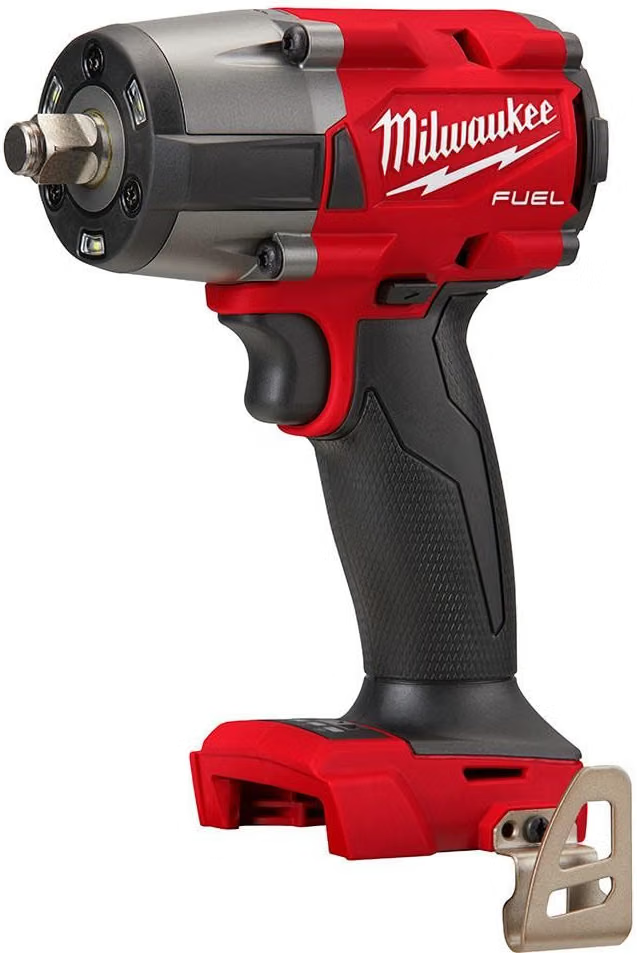
This is the tool I recommend to nine out of ten people asking about lug nuts. Milwaukee rates it at 650 ft-lbs of nut-busting torque while keeping the package to 5.1 pounds with a 5.0Ah battery and just 6.0 inches in length.
That torque figure clears rusted passenger car and light truck lugs comfortably. The weight is the reason it beats the bigger guns for this specific job.
| Drive | 1/2 inch with friction ring |
|---|---|
| Breakaway torque | 650 ft-lbs |
| Speed | 0 to 2,575 RPM |
| Impact rate | 0 to 3,100 IPM |
| Length | 6.0 inches |
| Warranty | 5 years tool, 3 years battery |
Pros
- Best power to weight ratio in this roundup
- Auto shut-off mode caps at 35 ft-lbs for seating nuts
- Bolt removal control prevents dropped fasteners
- Tri-LED ring lights the socket, not the floor
- Six inch head reaches into cramped wheel wells
Cons
- Not enough for heavy truck or agricultural lugs
- Sold as a bare tool at the common listing
- M18 batteries are a premium investment to start
Verdict: 9.4 / 10. The right amount of power in a package you can actually hold at arm’s length for four wheels straight.
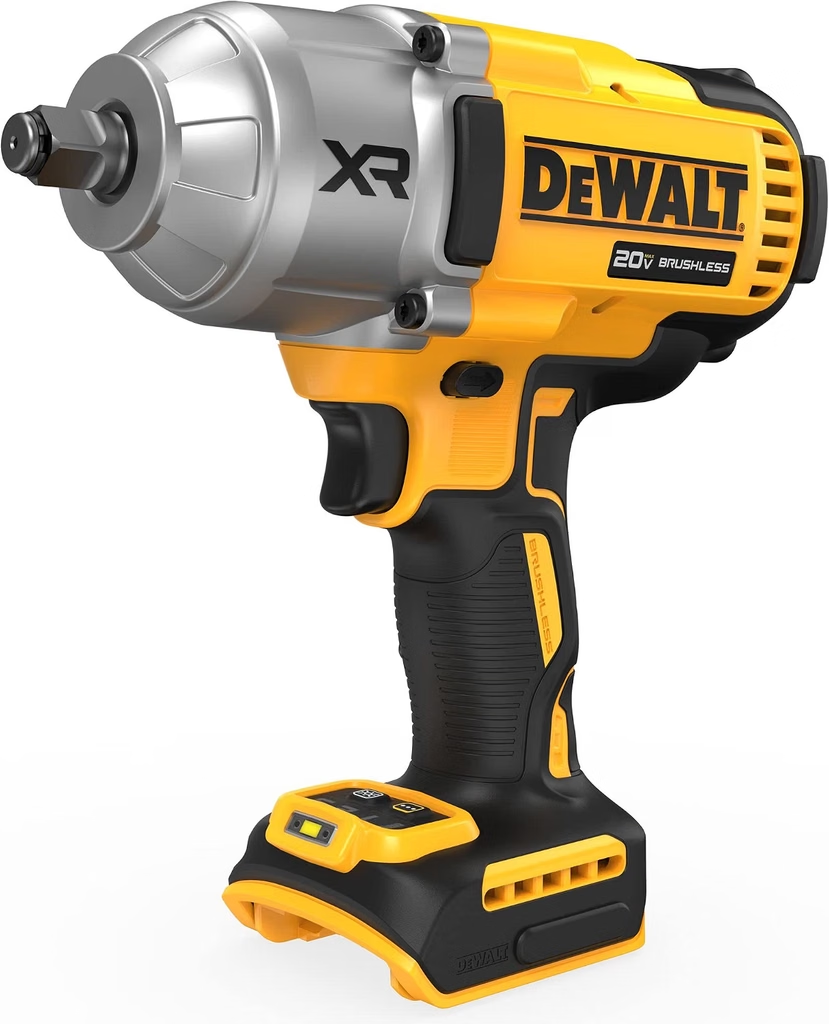
2. DeWalt DCF900B 20V MAX XR High Torque
Best for Seized Lugs
If you live in the salt belt or work on vehicles nobody has touched in a decade, this is the one. DeWalt rates the DCF900 at 1,030 ft-lbs of fastening torque and 1,400 ft-lbs of breakaway torque.
That is a substantial jump over the DCF899 it replaced, which delivered 700 ft-lbs fastening and 1,200 ft-lbs reverse. The extra reverse torque is exactly what a fused nut demands.
| Drive | 1/2 inch, hog ring or detent pin versions |
|---|---|
| Breakaway torque | 1,400 ft-lbs |
| Fastening torque | 1,030 ft-lbs |
| Speed modes | Three plus Precision Wrench |
| Platform | 20V MAX and FLEXVOLT compatible |
Pros
- Top tier breakaway torque for stubborn fasteners
- Precision Wrench mode slows the motor on breakaway
- Runs on the widely owned 20V MAX platform
- Handles suspension and axle bolts, not just lugs
Cons
- Heavy and long compared to a mid torque tool
- Easy to overtighten if you use it for final torque
- Overkill for anyone with a modern passenger car
Verdict: 9.2 / 10. Buy it for the rust, not for the convenience.
3. Ryobi ONE+ HP PBLIW01 Brushless 4-Mode
Best Value
Ryobi rates this one at 1,170 ft-lbs of breakaway torque and 700 ft-lbs of fastening torque, with impacts running up to 2,800 IPM. Those are numbers that were exclusive to premium brands only a few years ago.
The four mode control board gives you low, medium, and high speeds plus an Auto Mode that prevents overtightening forward and controls removal in reverse. Ryobi backs it with a three year warranty.
| Drive | 1/2 inch with friction ring |
|---|---|
| Breakaway torque | 1,170 ft-lbs |
| Fastening torque | 700 ft-lbs |
| Impact rate | 0 to 2,800 IPM |
| Speeds | 900 / 1,400 / 2,100 RPM plus Auto |
| Warranty | 3 years |
Pros
- Premium torque figures at a homeowner price
- Fits the ONE+ battery platform many DIYers already own
- Auto Mode is a real overtightening safeguard
- Die cast gear case, Tri-Beam LED worklights
Cons
- Heavier and bulkier than the mid torque Milwaukee
- Shorter warranty than Milwaukee or DeWalt
- Less refined trigger feel under light load
Verdict: 9.0 / 10. The smartest buy if you are not already locked into a professional battery system.
4. Milwaukee M18 FUEL 2767-20 High Torque
Best for Trucks
The 2767-20 has been the shop standard for years, rated at 1,000 ft-lbs of fastening torque and 1,400 ft-lbs of nut-busting torque. If you run a three quarter ton truck, a trailer, or a small fleet, this is the safe answer.
Four mode Drive Control gives you real speed selection instead of a single brutal setting. The M18 platform also means one battery system covers your other Milwaukee M18 FUEL tools.
| Drive | 1/2 inch with friction ring |
|---|---|
| Nut-busting torque | 1,400 ft-lbs |
| Fastening torque | 1,000 ft-lbs |
| Control | 4-Mode Drive Control |
| Warranty | 5 years tool |
Pros
- Proven track record in professional shops
- Handles heavy truck and trailer lugs without complaint
- Four mode control tames it for lighter work
- Excellent parts and service network
Cons
- Noticeably heavier than the 2962-20
- Longer head struggles in tight wheel wells
- More tool than a passenger car owner needs
Verdict: 9.1 / 10. The workhorse choice when lug nuts are only part of what you are breaking loose.
5. DeWalt DCF894B 20V MAX XR Mid-Range
Best Compact Pick
Rated at 330 ft-lbs of fastening torque and 600 ft-lbs of breakaway torque, the DCF894B is the lightest genuinely capable option here. At roughly 4.7 pounds bare it is the one that actually stays in the trunk.
Three speed settings plus Precision Wrench control let you dial it back for seating nuts. It will not conquer a decade of Michigan road salt, but it will change a flat on any modern car.
| Drive | 1/2 inch, detent pin or hog ring |
|---|---|
| Breakaway torque | 600 ft-lbs |
| Fastening torque | 330 ft-lbs |
| Control | 3 speed plus Precision Wrench |
| Platform | 20V MAX |
Pros
- Light enough to keep in a vehicle permanently
- Precision Wrench reduces overtightening risk
- Plenty of torque for ordinary passenger car lugs
- Compact head fits alloy wheel pockets easily
Cons
- Falls short on badly corroded truck lugs
- Not suited to suspension or crankshaft bolts
- Bare tool only at most listings
Verdict: 8.7 / 10. The emergency kit choice, and honestly enough tool for a lot of people.
Scored Summary
| Model | Power | Handling | Control | Value | Overall |
|---|---|---|---|---|---|
| Milwaukee 2962-20 | 9.0 | 9.8 | 9.6 | 9.0 | 9.4 |
| DeWalt DCF900B | 9.9 | 8.4 | 9.2 | 9.0 | 9.2 |
| Milwaukee 2767-20 | 9.8 | 8.5 | 9.4 | 8.8 | 9.1 |
| Ryobi PBLIW01 | 9.5 | 8.3 | 8.9 | 9.8 | 9.0 |
| DeWalt DCF894B | 7.8 | 9.6 | 9.0 | 9.0 | 8.7 |
Frequently Asked Questions
How much torque does a cordless impact wrench need for lug nuts?
For removal, aim for at least 400 ft-lbs of breakaway torque on passenger cars and 600 ft-lbs or more if you deal with rust or trucks. Tightening only requires 80 to 100 ft-lbs on most passenger vehicles and light trucks.
Can I tighten lug nuts with an impact wrench?
You can seat them, but you should not finish with one. Tire Rack advises against impact guns and torque sticks for final tightening because they can damage hardware and prevent verification with a click type torque wrench.
Is 1/2 inch drive the right size for lug nuts?
Yes. A 1/2 inch square drive matches standard impact socket sets and handles automotive wheel hardware. A 3/8 inch compact wrench is useful in engine bays but underpowered for stubborn truck lugs.
Do I still need a torque wrench if I own an impact wrench?
Yes, and it is not optional. The Tire Industry Association has long advised that lug nuts be finished with a torque wrench, and new wheels should be re-torqued after the first 50 to 100 driving miles.
Why do manufacturer torque ratings vary so much between brands?
Ratings are measured under ideal lab conditions with fully charged batteries and sustained impacting. Real world output is usually lower, and brands differ in how conservative their published figures are, so treat ratings as comparative rather than absolute.
Which One Should You Buy?
If you want one recommendation and no more deliberation, take the Milwaukee 2962-20. It has the power for rusted lugs and the weight for real comfort, and the auto shut-off mode fits the correct workflow perfectly.
If rust is your enemy, take the DeWalt DCF900B. If budget is the deciding factor, the Ryobi PBLIW01 is remarkable for the money.
Whichever you pick, pair it with a quality impact socket set and a click type torque wrench. Then check the project tool checklist to make sure nothing else is missing from your kit, or run a side by side tool comparison before you commit.
Still weighing categories? Our guides to cordless drills, angle grinders, and work gloves cover the rest of the garage.
Not sure if this category is right for you? Take the tool finder quiz and get a 60 second recommendation based on the jobs you actually do.
Also Read On: >>> Best Torque Wrenches for Accurate Fastening