Best Air Compressors for Home Garage(2026)
Finding the best air compressors for home garage use comes down to matching tank size, noise level, and CFM output to the tools you actually run. A compressor that is perfect for airing up tires and running a nail gun will fall short when you switch to a impact wrench or a spray gun. I tested and compared six models across price points to find the ones worth your money.
This guide covers what actually matters for a home garage, not just specific sheet numbers.
We independently evaluate all of our recommendations. If you click on links we provide, we may receive compensation.
Quick Verdict
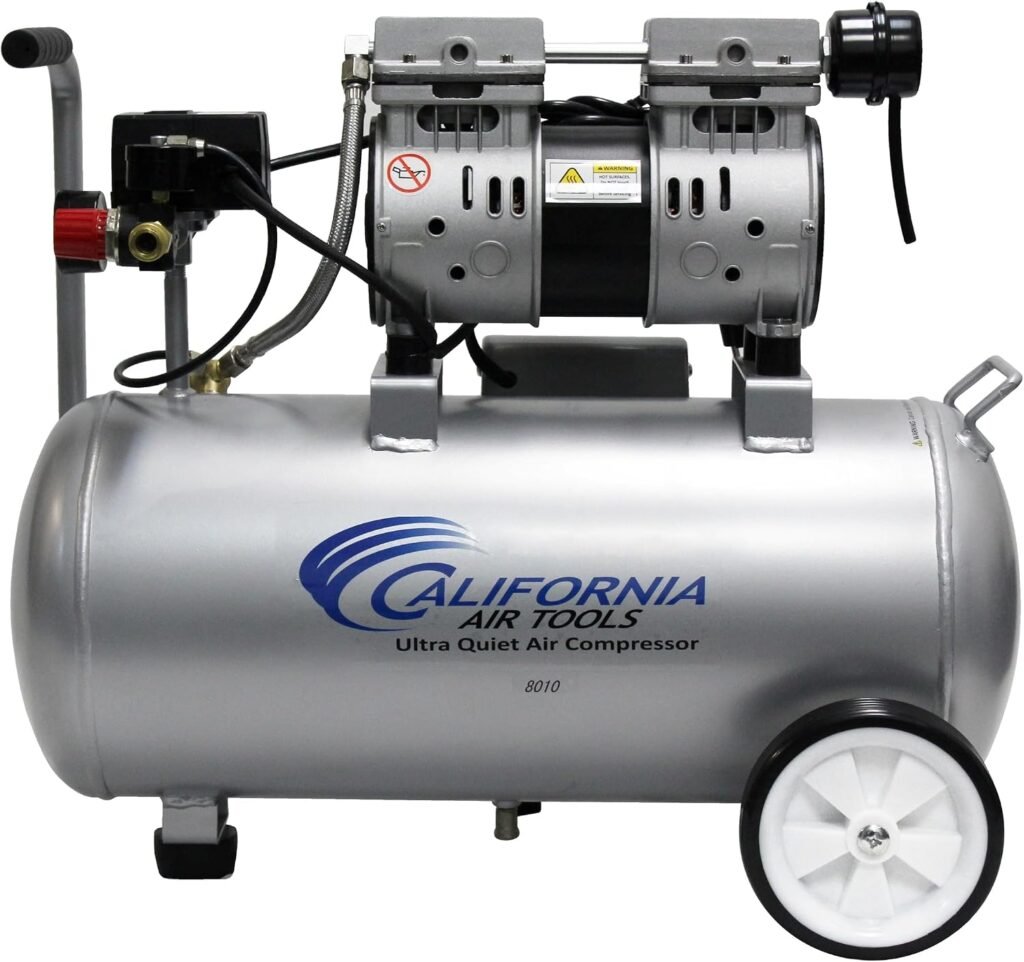
If you want the single best all around pick for a home garage, go with the California Air Tools 8010 Ultra Quiet. It balances low noise, a usable 8 gallon tank, and oil free convenience.
Need more air volume for spray work or impact tools, the Ingersoll Rand SS3F2-GM is the heavy duty option, and the PORTER-CABLE C2002-WK is the budget pick under 100 dollars.
How to Choose an Air Compressor for a Home Garage
Tank size determines how long you can run tools before the compressor has to catch up. A 6 gallon pancake tank is fine for brad nailers and quick tire fills. A 10 gallon or larger tank suits spray painting or extended impact wrench use.
CFM, or cubic feet per minute, tells you how much air the compressor can deliver at a given pressure. Nail guns and staplers need very little CFM, often under 1. Impact wrenches, sanders, and spray guns need 4 CFM or more at 90 PSI, so check tool requirements before buying.
Noise level matters more in a home garage than a commercial shop, especially if you share walls with neighbors or work early mornings. Standard compressors run 78 to 90 decibels, while ultra quiet models drop to 60 to 70 decibels.
Oil free compressors need less maintenance and start reliably in cold weather, which suits most home garage users. Oil lubricated units last longer under heavy continuous use and tend to run quieter per horsepower, making them a better fit for frequent power tool operation.
Comparison Table
| Model | Tank | CFM at 90 PSI | Noise | Score |
|---|---|---|---|---|
| California Air Tools 8010 | 8 gal | 2.2 | 60 dB | 9.4/10 |
| PORTER CABLE C2002 WK | 6 gal | 2.6 | 78 dB | 8.7/10 |
| Makita MAC2400 | 4.2 gal | 4.2 | 79 dB | 9.0/10 |
| California Air Tools 10020C | 10 gal | 4.65 (at 40 PSI) | 70 dB | 9.1/10 |
| DEWALT DWFP55126 | 6 gal | 2.6 | 75.5 dB | 8.8/10 |
| Ingersoll Rand SS3F2 GM | 60 gal | 14 | 82 dB | 9.3/10 |
1. California Air Tools 8010 Ultra Quiet, Best Overall
The 8010 runs at roughly 60 decibels, quiet enough to use indoors without waking the house. Its 8 gallon steel tank holds enough air for most trim, framing, and tire inflation tasks without constant cycling. The oil free pump needs no maintenance beyond periodic filter checks.
Pros
- Very low noise output
- Oil free, minimal upkeep
- Wheeled design for easy moving
Cons
- Lower CFM limits heavy tool use
- Higher price than basic pancake units
Verdict: 9.4/10. Best pick for general home garage work where noise is a real concern.
2. PORTER CABLE C2002 WK Pancake Compressor, Best Budget
This 6 gallon pancake unit delivers dependable performance for nailing and stapling at a price most beginners can justify. It reaches 150 PSI, which covers the needs of nearly every pneumatic hand tool. The stable base design prevents tipping on uneven garage floors.
Pros
- Low upfront cost
- Compact and stackable
- Reliable startup in most conditions
Cons
- Louder than premium models
- Small tank cycles often under load
Verdict: 8.7/10. Solid choice for anyone starting out with basic pneumatic tools.
3. Makita MAC2400 Big Bore, Best for Power Tools
The MAC2400 pushes 4.2 CFM at 90 PSI, enough headroom for impact wrenches, sanders, and continuous nailer use. Its oil lubricated pump runs cooler over long sessions and tends to outlast oil free competitors. The twin tank design also improves stability during transport.
Pros
- High CFM for its size
- Durable oil lubricated pump
- Fast recovery time
Cons
- Requires periodic oil changes
- Louder than oil free ultra quiet models
Verdict: 9.0/10. The right pick if your garage sees regular power tool use.
4. California Air Tools 10020C, Quietest Large Tank Option
The 10020C pairs a 10 gallon dual tank with a 70 decibel operating volume, rare for a compressor this size. It suits spray finishing and longer sanding sessions where a small tank would force frequent stops. The dual tank layout also improves pressure stability under load.
Pros
- Large tank with low noise
- Steady pressure delivery
- Oil free operation
Cons
- Bulkier footprint
- Premium price for the category
Verdict: 9.1/10. Ideal if you need both volume and quiet operation.
5. DEWALT DWFP55126, Best Portable Pick
This 6 gallon pancake compressor includes a heated motor housing that keeps it starting reliably in cold garages. It hits 165 PSI, which gives extra headroom for tools that require higher pressure. The lightweight build makes it easy to carry between job sites or garage bays.
Pros
- Cold weather reliable start
- High max pressure for its class
- Lightweight and portable
Cons
- Small tank for extended use
- Moderate noise level
Verdict: 8.8/10. A dependable grab and go option for garages that get cold.
6. Ingersoll Rand SS3F2 GM, Best Heavy Duty Option
Built for garages that run air tools constantly, this 60 gallon vertical unit delivers 14 CFM at 90 PSI, enough for impact wrenches, grinders, and paint spraying without pausing to recover pressure. The 5 horsepower motor and cast iron pump are built for long duty cycles. It takes up more floor space, so measure your garage before buying.
Pros
- Massive air volume and recovery
- Built for continuous heavy use
- Long service life
Cons
- Large footprint
- Not the quietest option
Verdict: 9.3/10. The choice for a garage that functions as a real home workshop.
Frequently Asked Questions
What size air compressor do I need for a home garage?
A 6 to 10 gallon tank covers most home garage needs, including nailing, inflation, and light power tool use. Move to 20 gallons or more only if you run high demand tools like impact wrenches or spray guns regularly.
Is an oil free or oil lubricated compressor better for a garage?
Oil free compressors suit occasional use and cold starts with less maintenance. Oil lubricated compressors handle sustained heavy use better and often last longer under daily load.
How loud is too loud for a home garage compressor?
Anything above 80 decibels becomes disruptive in a residential setting, especially near living spaces. Ultra quiet models in the 60 to 70 decibel range are worth the extra cost if noise is a concern.
Also Read On:
Best Plasma Cutters for Metal Fabrication in 2026