
Best Stand-Up Weeder and Loppers for Your Garden: 6 Expert Picks
This post contains affiliate links. We earn a commission when you purchase through our links at no extra cost to you.
Choosing the best stand-up weeder and loppers is the fastest way to make garden work easier on your body. A stand-up weeder pulls dandelions root and all while you stay upright, and a good pair of loppers cuts branches up to 2 inches thick without a ladder or a saw.
In this guide, we compare three stand-up weeders and three loppers that cover every yard and budget. You will see the specs, the strengths, the weak spots, and exactly which pair to buy together.
Quick Verdict: Our Top Picks
- Best Stand-Up Weeder Overall: Fiskars 4-Claw Stand-Up Weed Puller (339950)
- Best Value Stand-Up Weeder: Grampa’s Weeder, The Original Stand-Up Weed Puller
- Best Budget Stand-Up Weeder: Fiskars 3-Claw Stand-Up Weeder
- Best Lopper Overall: Fiskars PowerGear2 32-Inch Bypass Lopper
- Best Lopper for Dead Wood: TABOR TOOLS GG12A Compound Action Anvil Lopper
- Best Extendable Lopper: Corona ComfortGEL Extendable Bypass Lopper (SL 3364)
Best combo: the Fiskars 4-Claw weeder plus the Fiskars PowerGear2 lopper handle most routine yard cleanup between them.
Why a Stand-Up Weeder and Loppers Belong in Every Garden
Americans are spending more on their yards than ever. The National Gardening Survey 2026 reports that total U.S. lawn and garden spending hit an all-time high of $79.0 billion in 2025, up 13.5% from 2024.
Spending per household also climbed to a record $740, even though about 4.5 million households left gardening that year. The households that stayed are investing in better tools, and the same research shows search engines (42%) and video (31%) are now the top ways gardeners learn.
Weeds are the reason a stand-up weeder earns its place. Michigan State University Extension says an average dandelion plant produces about 15,000 seeds, with 150 to 200 seeds per flower and up to 10 flowers per plant.
Pulling the leaves is not enough. University of Minnesota Extension notes that dandelion taproots reach 6 inches to 2 feet deep, and that removing the entire taproot is essential when hand pulling.
Utah State University Extension adds that new plants can regrow from root sections as short as 1 inch. That is exactly why a claw-style weeder that grabs the whole root beats a quick yank by hand.
How to Choose the Best Stand-Up Weeder
1. Claw Count and Claw Material
Four claws grip a large taproot from every side, so they work best on dandelions, thistles, and plantain. Three claws cost less and suit smaller weeds in softer soil.
Look for serrated stainless steel or hardened steel claws. Serrations bite into the root instead of sliding off it.
2. Handle Length and Weight
Most stand-up weeders run 39 to 45 inches long. Taller gardeners should lean toward the longer end so they can work without hunching.
Weight matters more than you think, because you lift the tool after every single weed. Anything around 2.5 to 3 pounds is easy to carry around a yard for an hour.
3. Foot Platform and Eject Mechanism
A wide, reinforced foot pedal lets you use body weight to push the claws into firm ground. A built-in eject lever drops the weed into your bucket without bending down, which is the whole point of a stand-up tool.
4. Your Soil Type
Every stand-up weeder works best in slightly moist soil. In dry, compacted clay, water the area the day before or weed after a rain.
How to Choose the Best Loppers
1. Bypass vs Anvil Blades
Bypass loppers cut like scissors, with one blade sliding past the other. Iowa State University Extension says bypass types are usually preferred because they make cleaner cuts on living branches.
Anvil loppers press a sharp blade onto a flat surface, like a knife on a cutting board. They crush soft green stems, but they excel on dry, dead wood that would jam a bypass blade.
2. Cutting Capacity
Iowa State recommends hand pruners for branches up to 3/4 inch and a pruning saw for anything over about 1-3/4 inches. Loppers fill the gap in between, and most quality models are rated for 1.5 to 2 inches.
Treat the rated capacity as a maximum on soft wood, not a daily target. Forcing an oversized branch is the quickest way to bend a blade.
3. Leverage Systems
As an electrical engineer, I look at loppers the way I look at any mechanical system: how much output force do you get for each pound of input? Geared, compound action, and ratchet designs all multiply your force, so you cut thicker branches with less arm strain.
4. Handle Length and Reach
Longer handles add leverage and reach, but they also add weight. Extendable handles give you both options, short for control near the ground and long for branches overhead.
Planning a full yard cleanup this season? Our Project Tool Checklist lists the core tools for common outdoor jobs, so you can see where a weeder and loppers fit.
Stand-Up Weeder and Loppers Compared
| Tool | Type | Length | Key Spec | Best For |
|---|---|---|---|---|
| Fiskars 4-Claw Weeder | Stand-up weeder | 39 in. | 4 serrated stainless claws | Most lawns |
| Grampa’s Weeder | Stand-up weeder | About 43 to 45 in. | 4-claw steel head, bamboo shaft | Tall users, value |
| Fiskars 3-Claw Weeder | Stand-up weeder | 39 in. | 3 claws, easy-eject | Small yards |
| Fiskars PowerGear2 32″ | Bypass lopper | 32 in. | 2 in. cut capacity | Live branches |
| TABOR TOOLS GG12A | Anvil lopper | 30 in. | 2 in. cut, compound action | Dead wood |
| Corona SL 3364 | Bypass lopper | 28 to 35 in. | 1.5 in. cut, extendable | Overhead reach |
Best Stand-Up Weeders: Detailed Reviews
BEST STAND-UP WEEDER OVERALL
1. Fiskars 4-Claw Stand-Up Weed Puller (339950)
This is the stand-up weeder we would buy first. Four serrated stainless steel claws grab the weed and its root, and a lever on the handle ejects it into your bucket without bending.
Fiskars says its reinforced foot platform is 30% stronger, and a viewing window in the pedal shows exactly where the claws will land. Bob Vila’s testers also named it best overall after trying it in compacted clay and loose soil.
| Length | 39 in. |
| Claws | 4 serrated stainless steel |
| Shaft | Lightweight aluminum, offset handle |
| Weight | About 2.5 lb |
Pros
- Easy-eject keeps you upright
- Viewing window aids placement
- Light aluminum shaft
Cons
- Pulls up extra soil when wet
- Leaves small holes in turf
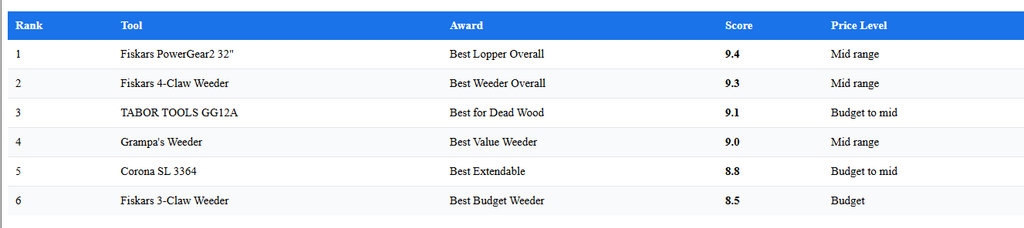
Verdict: 9.3/10. The most complete stand-up weeder for lawns full of dandelions and thistles.
BEST VALUE STAND-UP WEEDER
2. Grampa’s Weeder, The Original Stand-Up Weed Puller
Grampa’s Weeder was invented in Seattle in 1913, and the design has barely changed because it works. You center the steel claws over the weed, step down, then lean the bamboo handle toward the footpad to lever out the root.
Its longer shaft suits tall gardeners, and it weighs about 3 pounds. There is no eject lever, so you pull each weed off the claws by hand.
| Length | About 43 to 45 in. overall |
| Claws | 4-claw steel head |
| Shaft | Varnished bamboo |
| Weight | About 3 lb |
Pros
- Proven design for over a century
- Longest shaft in this guide
- Lower cost than Fiskars 4-Claw
Cons
- No eject mechanism
- Bamboo can flex in hard ground
Verdict: 9.0/10. A simple, durable weeder that tall gardeners will love.
BEST BUDGET STAND-UP WEEDER
3. Fiskars 3-Claw Stand-Up Weeder
The 3-Claw model keeps the same 39-inch handle and easy-eject lever as its bigger sibling at a lower price. It is a smart pick for small yards, raised beds, and gardeners who mostly fight young weeds.
With one less claw, it grips huge taproots less firmly. Weed after rain, and it handles most lawn weeds without trouble.
| Length | 39 in. |
| Claws | 3 steel claws |
| Eject | Handle-mounted easy-eject |
| Handle | Long ergonomic grip |
Pros
- Lowest cost of the three weeders
- Keeps the easy-eject lever
- Trusted Fiskars build
Cons
- Weaker grip on big taproots
- No viewing window
Verdict: 8.5/10. The easiest way into stand-up weeding without paying for features you may not need.
Best Loppers: Detailed Reviews
BEST LOPPER OVERALL
4. Fiskars PowerGear2 32-Inch Bypass Lopper
Fiskars says its patented PowerGear2 mechanism gives up to 3 times more power on every cut. The gears and cam focus that force in the middle of the branch, where the wood is thickest.
It cuts live branches up to 2 inches, and Fiskars reports it earned the Arthritis Foundation’s Ease of Use Commendation. The hardened bypass blade has a low-friction coating that resists sap and rust.
| Length | 32 in. |
| Cut Capacity | 2 in. |
| Blade | Hardened steel bypass, low-friction coating |
| Warranty | Fiskars lifetime warranty |
Pros
- Big leverage gain from gearing
- Clean cuts on live wood
- Replaceable blade
Cons
- Wide gear head in tight shrubs
- Not ideal for hard dead wood
Verdict: 9.4/10. The best all-round lopper for shrubs, roses, and fruit trees.
BEST LOPPER FOR DEAD WOOD
5. TABOR TOOLS GG12A Compound Action Anvil Lopper
If your yard has dead limbs, overgrown hedges, or woody stems to clear, this anvil lopper is built for it. Its compound action linkage multiplies your force, so 2-inch dry branches snap through cleanly.
The hardened carbon steel blade has a low-friction coating, and TABOR sells a replacement blade (GG12-1). Owners with weaker wrists often praise how little effort it takes.
| Length | 30 in. |
| Cut Capacity | 2 in. |
| Blade | Hardened carbon steel anvil |
| Weight | About 3.4 lb |
Pros
- Powerful compound action
- Excellent on dry, dead wood
- Replacement blades available
Cons
- Crushes soft green stems
- Cannot cut flush to the trunk
Verdict: 9.1/10. The cleanup lopper for dead wood that would stall a bypass blade.
BEST EXTENDABLE LOPPER
6. Corona ComfortGEL Extendable Bypass Lopper (SL 3364)
The Corona SL 3364 extends from 28 to 35 inches, so one tool handles low shrubs and branches above your head. Shorten it for control, then slide it out when you need reach.
Its non-stick dual arc bypass blade cuts green or dry branches up to 1-1/2 inches. ComfortGEL grips and Shock Guard bumpers soften the jolt at the end of each cut.
| Length | 28 to 35 in., extendable |
| Cut Capacity | 1-1/2 in. |
| Weight | 3.65 lb |
| Warranty | Lifetime |
Pros
- Adjustable reach
- Shock-absorbing bumpers
- Lifetime warranty
Cons
- Smallest cut capacity here
- Heaviest lopper in this guide
Verdict: 8.8/10. The flexible choice for gardeners who prune at every height.
Final Scores at a Glance
Torn between two finalists? Put them head to head with our Side-by-Side Tool Comparison tool.
Safety Tips for Weeding and Pruning
Garden tools send more people to the hospital than most homeowners expect. The Consumer Product Safety Commission has reported that about 230,000 people a year are treated in emergency rooms for injuries linked to lawn and garden tools.
Wear gloves and safety glasses when pruning, because snapped branches can whip back toward your face. Never stand on a ladder with loppers; switch to a pole pruner or pruning saw for high or thick limbs.
Here is a tip from my electrical work: low-voltage landscape lighting cable is often buried only a few inches deep along beds and paths. Before you drive weeder claws near a light fixture, trace where the cable runs so you do not nick the insulation.
Wipe sap off your lopper blades after each session and oil the pivot. Store everything dry, and our guide on how to choose the best rolling toolbox shows how to keep garden tools organized between jobs.
Frequently Asked Questions
Do stand-up weeders really work?
Yes, stand-up weeders work well on taprooted weeds like dandelions, thistles, and plantain, especially in moist soil. They remove the root instead of snapping it, which stops most weeds from regrowing.
What is the best stand-up weeder for clay soil?
The Fiskars 4-Claw Stand-Up Weed Puller is the best choice for clay because its reinforced foot platform lets you push hard into firm ground. Water dry clay the day before for the cleanest pulls.
Should I buy bypass or anvil loppers?
Buy bypass loppers if you prune mostly living shrubs, roses, and trees, because they make cleaner cuts. Choose anvil loppers for dead or dry wood, or own one of each if your yard has both.
How thick a branch can loppers cut?
Most quality loppers are rated for 1.5 to 2 inches. For anything thicker, use a pruning saw to avoid damaging the blade or tearing the branch.
Do stand-up weeders damage the lawn?
They leave a small hole where the root came out, which usually fills in within a few weeks. Press the soil back with your foot or sprinkle a little grass seed into larger holes.
Our Final Pick
For most gardens, the best stand-up weeder and loppers combo is the Fiskars 4-Claw Stand-Up Weed Puller paired with the Fiskars PowerGear2 32-Inch Bypass Lopper. Together they clear weeds and branches while keeping your back, knees, and wrists out of trouble.See the Fiskars 4-Claw WeederSee the Fiskars PowerGear2 Lopper
Not sure if this category is right for you? Take the tool finder quiz and get matched to the right tools for your project in under two minutes.
Also Read On:
>>>How To Choose The Best Rolling Toolbox for Your Needs
>>>Best Portable Power Stations for Power Outages in 2026: 6 Expert Picks
>>>Best Combination Wrench Sets for 2026: 6 Picks for Every Garage