Why OSHA Compliant Fall Protection Harnesses Are Not Optional
An OSHA compliant fall protection harness is not a nice extra you add when the budget allows. It is the single piece of gear standing between a worker and a fatal drop. Falls remain the leading cause of death in construction, and fall protection has topped the OSHA most cited violation list for more than a decade.
Most harness failures are not equipment failures. They are decisions. Somebody skipped the inspection, reused a harness that had already arrested a fall, or clipped into an anchor never rated to hold a falling body.
We independently evaluate all of our recommendations. If you click on links we provide, we may receive compensation.
The Short Answer
If you work above six feet in construction or above four feet in general industry, a full body harness that meets ANSI Z359.11 is legally required, not optional.
Body belts have been banned for fall arrest since 1998. A compliant system needs three parts working together: anchorage, full body harness, and a connector such as a shock absorbing lanyard or self retracting lifeline.
What OSHA Actually Requires at Height
The trigger height depends on the industry you fall under, and this catches a lot of crews out. General industry sits under 29 CFR 1910.28 and requires protection at four feet above a lower level. Construction sits under 29 CFR 1926.501 and sets the line at six feet.
Shipyard work triggers at five feet and longshoring at eight feet. Scaffold work under 1926.451 requires protection above ten feet, while steel erection under 1926.760 generally starts at fifteen feet. Work above dangerous equipment requires protection regardless of height.
The regulation does not stop at the harness itself. Anchorages used for personal fall arrest must support at least 5,000 pounds per attached worker, or be designed with a safety factor of two under the supervision of a qualified person. That number rules out most guardrails, conduit, and vent stacks.
The Performance Limits That Define Compliance
OSHA 1926.502(d) sets hard numbers your system has to respect. Maximum arresting force on the body is capped at 1,800 pounds when using a full body harness. Free fall distance is limited to six feet and deceleration distance to three and a half feet.
There is also a rescue clause that most sites overlook. Employers must provide for prompt rescue or ensure workers can rescue themselves. A suspended worker can develop suspension trauma within minutes, so a plan that starts with calling the fire department is not a plan.
Why the Harness Itself Is Never Optional
The old body belt concentrated all arresting force into the abdomen, and workers were documented slipping straight out of belts during real falls. That is why OSHA banned them for fall arrest.
A full body harness spreads arrest forces across the thighs, pelvis, chest, and shoulders. It keeps the spine upright after the fall so blood flow and breathing continue while rescue is arranged. Nothing else on the market does that job.
The financial case is just as blunt. Fall protection citations run into tens of thousands of dollars per instance, and willful or repeat violations climb well past six figures. That does not include workers compensation exposure, insurance loading, or losing your prequalification with a general contractor.
How to Read a Harness Label Before You Buy
Every compliant harness carries permanent labels showing the manufacturer, model, capacity range, date of manufacture, and the standards it meets. Look for ANSI Z359.11 for general use full body harnesses. If a listing does not name the standard, treat that silence as a red flag.
Check the capacity range against your heaviest worker in full gear including tools. Standard harnesses cover roughly 130 to 310 pounds, while ANSI Z359.11 also recognizes a heavier range up to 420 pounds.
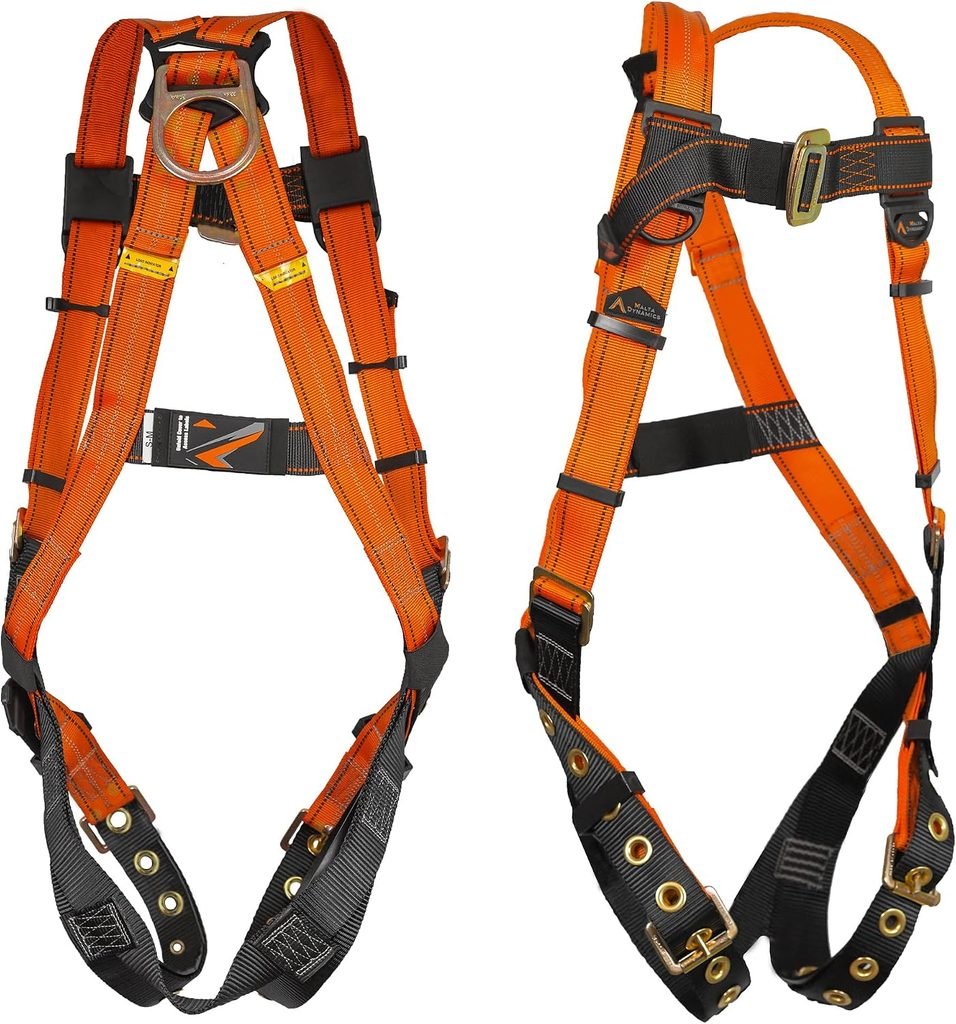
D ring placement determines what the harness can legally do. A dorsal D ring is the only correct attachment point for fall arrest. Side D rings are for work positioning only, front D rings are for ladder climbing or controlled descent, and shoulder D rings are for rescue retrieval.
Harness Classes Compared
| Configuration | D Rings | Best Use | Watch For |
|---|---|---|---|
| Basic fall arrest | Dorsal only | Roofing, general construction | No positioning capability |
| Positioning | Dorsal plus side | Rebar, formwork, utility poles | Side rings never for arrest |
| Climbing | Dorsal plus sternal | Ladder safety systems, towers | Needs compatible cable sleeve |
| Confined space | Dorsal plus shoulder | Tanks, vaults, manholes | Requires retrieval winch |
Three Compliant Setups Worth Considering
1. Entry Level Construction Kit
A universal fit harness bundled with a shock absorbing lanyard and a reusable roof anchor covers most residential and light commercial work. Kits cost less than buying the three pieces separately and guarantee the connectors match.
2. Roofing Specific Bucket Kit
Roofing kits pair a harness with a vertical lifeline, rope grab, and reusable anchor in a carry bucket. The bucket keeps webbing off wet decking and away from solvents. Check the lifeline covers your ridge to eave distance.
3. Premium Harness With Self Retracting Lifeline
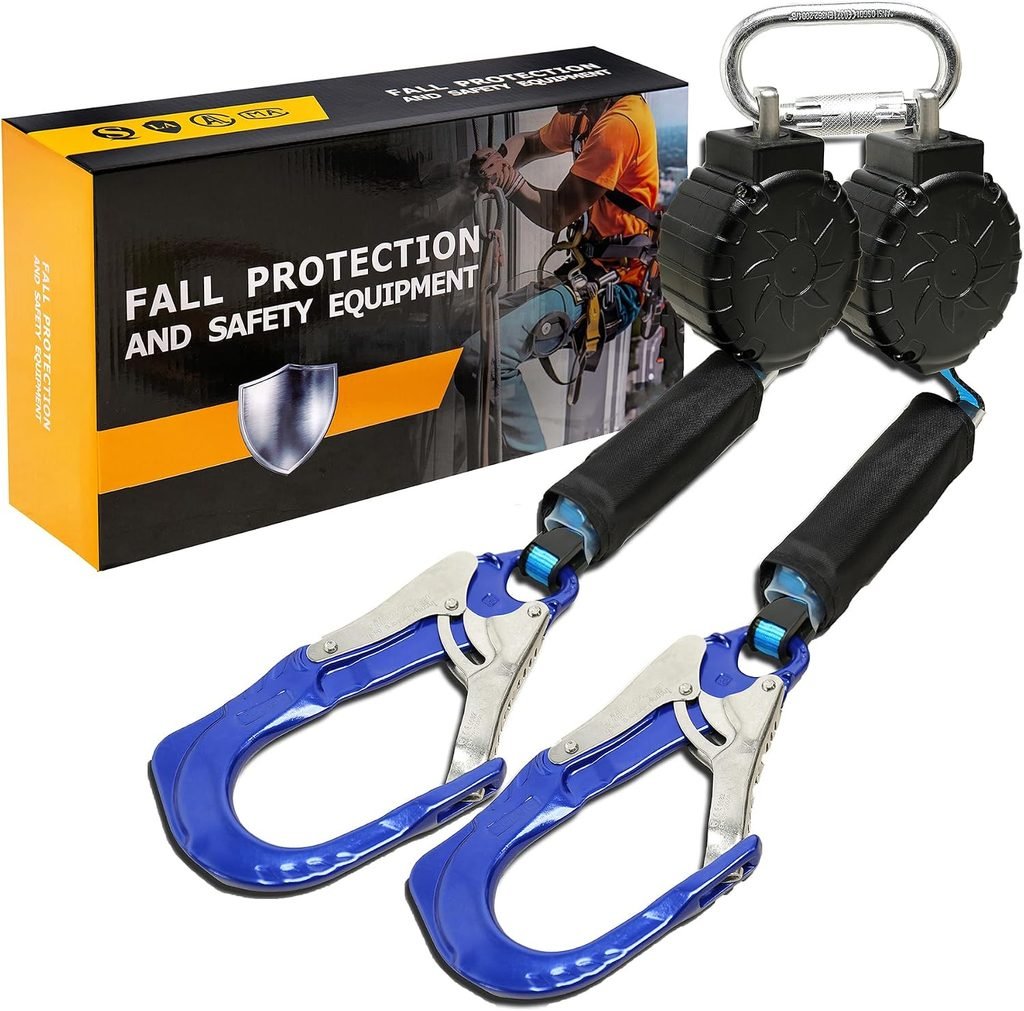
A self retracting lifeline shortens free fall sharply compared to a six foot lanyard, which matters on low clearance work where you could otherwise strike a lower level. Pair it with a padded harness using quick connect buckles. Expect a clear step up in cost.
Fit and Inspection: The Part Crews Skip
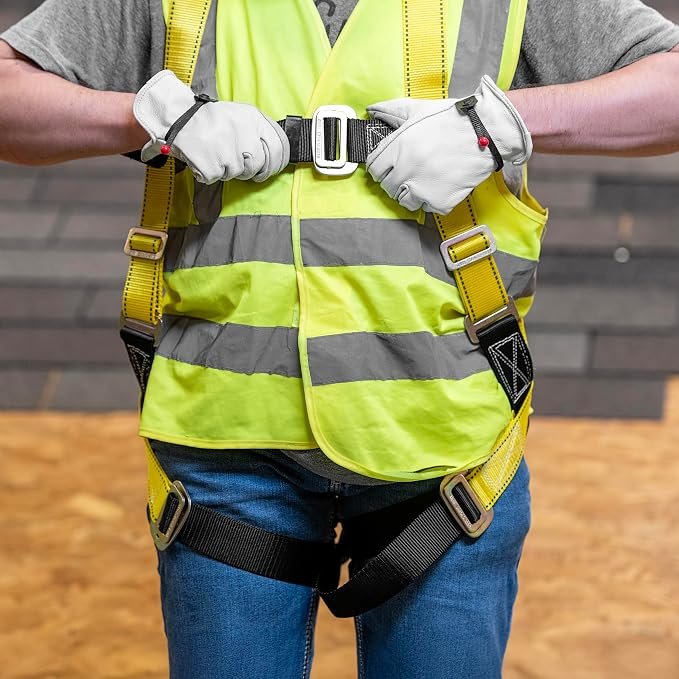
A correctly fitted harness has the dorsal D ring sitting between the shoulder blades, chest strap across the mid chest, and leg straps snug enough that you can slide a flat hand underneath but no more. A loose harness lets your body travel further during arrest and shifts force to the wrong places.
Inspect before every use. Run the webbing through your hands looking for cuts, fraying, burns, chemical staining, or discoloration from ultraviolet exposure. Check stitching for pulled threads and hardware for cracks or corrosion.
If a harness has arrested a fall, it is finished. Remove it from service immediately and destroy it so nobody pulls it back out of the truck. A deployed shock absorber pack is your visual confirmation that the system did its job once and only once.
Frequently Asked Questions
Does OSHA require fall protection at six feet or four feet?
It depends on your industry. Construction work under 1926.501 requires protection at six feet above a lower level, while general industry under 1910.28 requires it at four feet. Shipyards trigger at five feet and longshoring at eight feet.
Can I use a body belt instead of a full body harness?
No. Body belts have been prohibited for fall arrest since 1998 because they concentrate arrest forces on the abdomen and workers can slip out of them. Belts may still be used for work positioning alongside a separate fall arrest system.
How long does a fall protection harness last?
There is no universal expiry date in the OSHA rule, so follow the manufacturer instructions, which commonly recommend five years from first use. Any harness that fails inspection or has arrested a fall must be retired immediately regardless of age.
What anchor strength does OSHA require?
Anchorages for personal fall arrest must support at least 5,000 pounds per attached worker. Alternatively they can be designed, installed, and used with a safety factor of at least two under the supervision of a qualified person.
Do I need a rescue plan if I already have a harness?
Yes. OSHA 1926.502(d)(20) requires employers to provide for prompt rescue or ensure workers can rescue themselves after a fall. Suspension trauma can develop quickly, so relying on emergency services alone is not adequate.
Buy the system, not just the harness. Anchorage, harness, and connector have to work together, and the weakest of the three sets your real level of protection.
Also Read On:
Best OSHA Compliant Fall Protection Harnesses for Working at Height
Respirator Fit Testing Mistakes: 5 Errors That Could Cost You in 2026
Steel Toe Work Boots: 5 Top-Rated Puncture Resistant Picks for 2026