Best Non-Contact Voltage Tester Pen in 2026: Top 5 Picks Reviewed
A reliable non-contact voltage tester pen is the cheapest insurance an electrician or DIYer can buy. It confirms a circuit is dead before you touch it, with no probes and no exposed metal. After years of jobsite use across 120V and 240V systems, these are the five testers I trust most.
The market is full of cheap pens that fail silently or false-trigger on ghost voltage. The wrong choice does not just waste money, it can give you false confidence at the worst moment. This guide cuts through the noise so you buy once and stay safe.
We independently evaluate all of our recommendations. If you click on links we provide, we may receive compensation.
Best Overall
Klein Tools NCVT-3P Dual-Range Voltage Tester
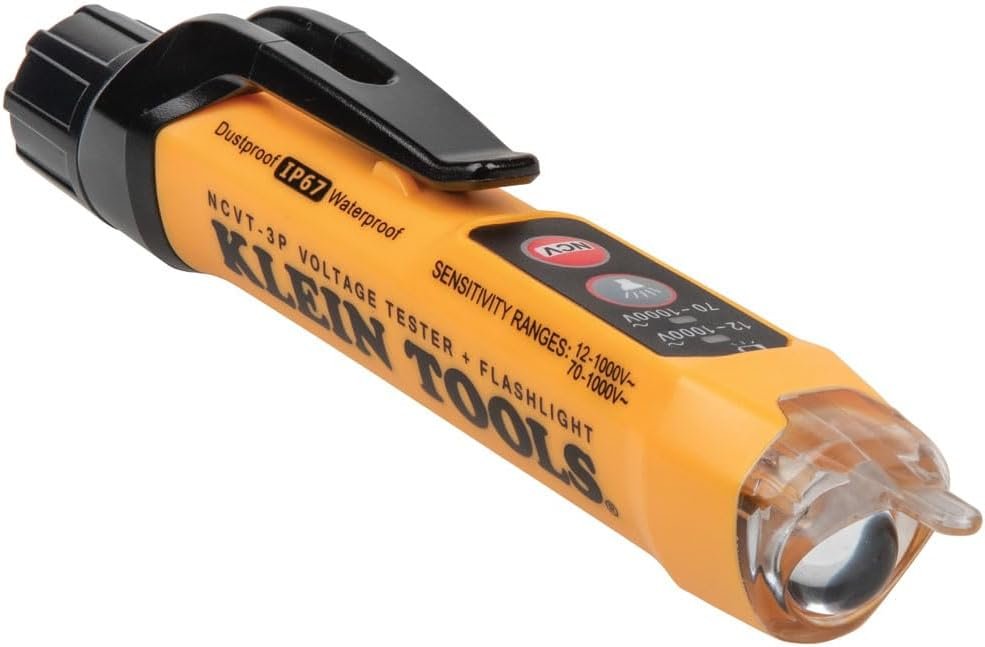
The NCVT-3P detects 12 to 1000V AC across two selectable ranges and carries a CAT IV 1000V safety rating. It survives a 6.6 ft drop, weighs just 2.5 oz, and packs an integrated flashlight for dark panels.
It signals voltage with both bright LEDs and an audible beep, so you never miss a live wire. For the price, reliability, and safety rating, nothing else comes close.Shop Now
How a non-contact voltage tester pen works
A non-contact voltage tester pen does not measure exact voltage. Instead, it senses the alternating electric field that surrounds any live AC conductor. When the tip enters that field, the internal sensor triggers a light and a beep.
This is why you never need to touch bare metal or strip a wire. You simply hold the tip near an outlet, cable, or breaker, and the pen warns you if voltage is present. That single feature prevents thousands of shocks every year.
The trade-off is that the pen only confirms presence, not absence with certainty. A dead reading should always be backed up by safe work habits, especially around neutral and shared circuits.
How to choose a non-contact voltage tester pen
The single most important spec is the voltage range. A good pen should cover at least 50 to 1000V AC, which spans household outlets in every country. Dual-range models that also read down to 12V are better for doorbells, thermostats, and irrigation wiring.
Next, look at the safety rating. A CAT IV 1000V rating means the tester is built to handle the energy at the service entrance, not just a wall socket. This matters most for professionals working near the meter or main panel.
Finally, weigh the alert system and extras. Dual visual and audible alarms are the minimum standard for safety. A flashlight, pocket clip, and self-test feature each earn their keep on real jobs.
Quick comparison table
| Model | Voltage Range | Safety Rating | Standout Feature |
|---|---|---|---|
| Klein NCVT-3P | 12 to 1000V AC | CAT IV 1000V | Dual range plus flashlight |
| Fluke 1AC II VoltAlert | 90 to 1000V AC | CAT IV 1000V | Voltbeat self-test |
| Klein NCVT-1P | 50 to 1000V AC | CAT IV 1000V | Simple and affordable |
| KAIWEETS LCD Tester | 12 to 1000V AC | CAT IV 1000V | LCD signal percentage |
| Sperry VD6504 | 50 to 600V AC | CAT III 600V | Adjustable sensitivity |
The 5 best non-contact voltage tester pens reviewed
1. Klein Tools NCVT-3P (Best Overall)

The NCVT-3P is the pen I reach for first. Its dual-range design lets you switch between 70 to 1000V for standard circuits and 12 to 1000V for sensitive low-voltage work. A clear LED bar shows which range is active, so you never second-guess a reading.
The integrated flashlight works independently of detection, which is genuinely useful inside a dark crawlspace. At 2.5 oz with a 6.6 ft drop rating, it is tough enough for daily site abuse.
Pros
- True dual-range detection
- CAT IV 1000V rated
- Built-in flashlight
- Loud beep and bright LEDs
Cons
- No LCD readout
- Slightly pricier than single-range pens
2. Fluke 1AC II VoltAlert (Best for Professionals)
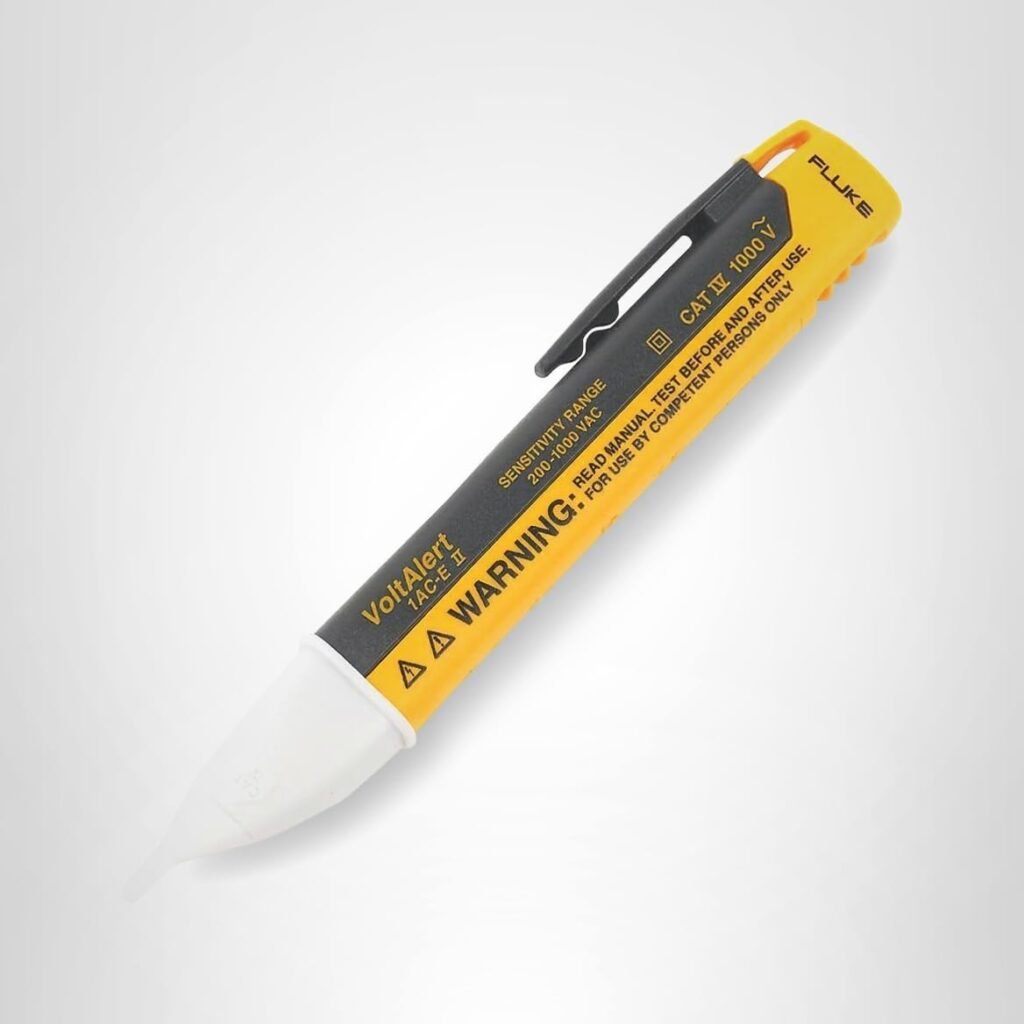
Fluke built its reputation on accuracy, and the 1AC II earns the trust. It detects 90 to 1000V AC and uses Voltbeat technology to self-test continuously, so a working tester confirms its own readiness.
The tip glows red and beeps the instant it senses voltage. It is pocket sized, rugged, and CAT IV 1000V rated for service-entrance work.
Pros
- Voltbeat continuous self-test
- Trusted Fluke build quality
- CAT IV 1000V rating
- Pocket sized and rugged
Cons
- No low-voltage (12V) mode
- Premium price
3. Klein Tools NCVT-1P (Best Budget)
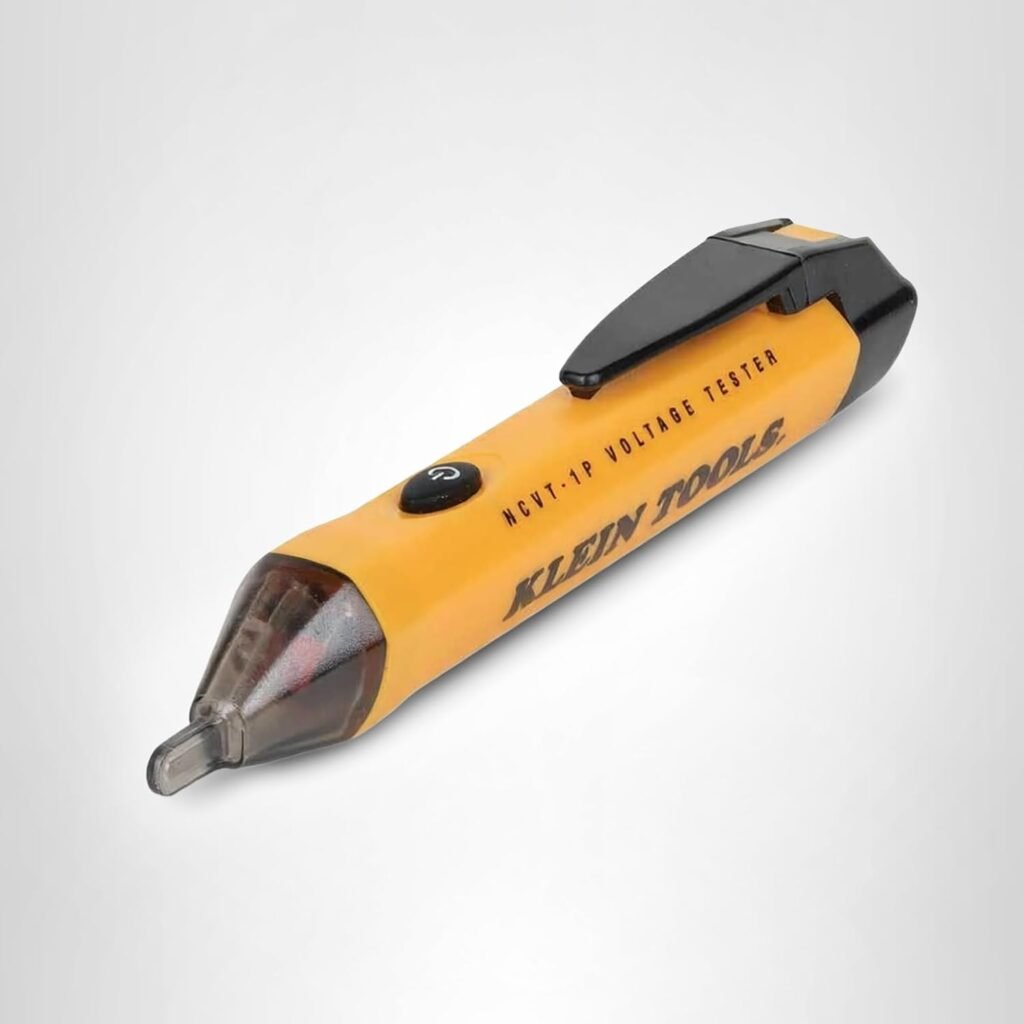
The NCVT-1P strips things back to the essentials and does them well. It detects 50 to 1000V AC with a flashing LED and audible alarm, plus a handy pocket clip.
There is no dual range or flashlight, but the core detection is reliable and CAT IV rated. For a backup pen or a first-time DIYer, it is hard to beat the value.
Pros
- Excellent value
- CAT IV 1000V rated
- Pocket clip included
- Lightweight and simple
Cons
- Single range only
- No flashlight
4. KAIWEETS Non-Contact Voltage Tester with LCD (Best Display)
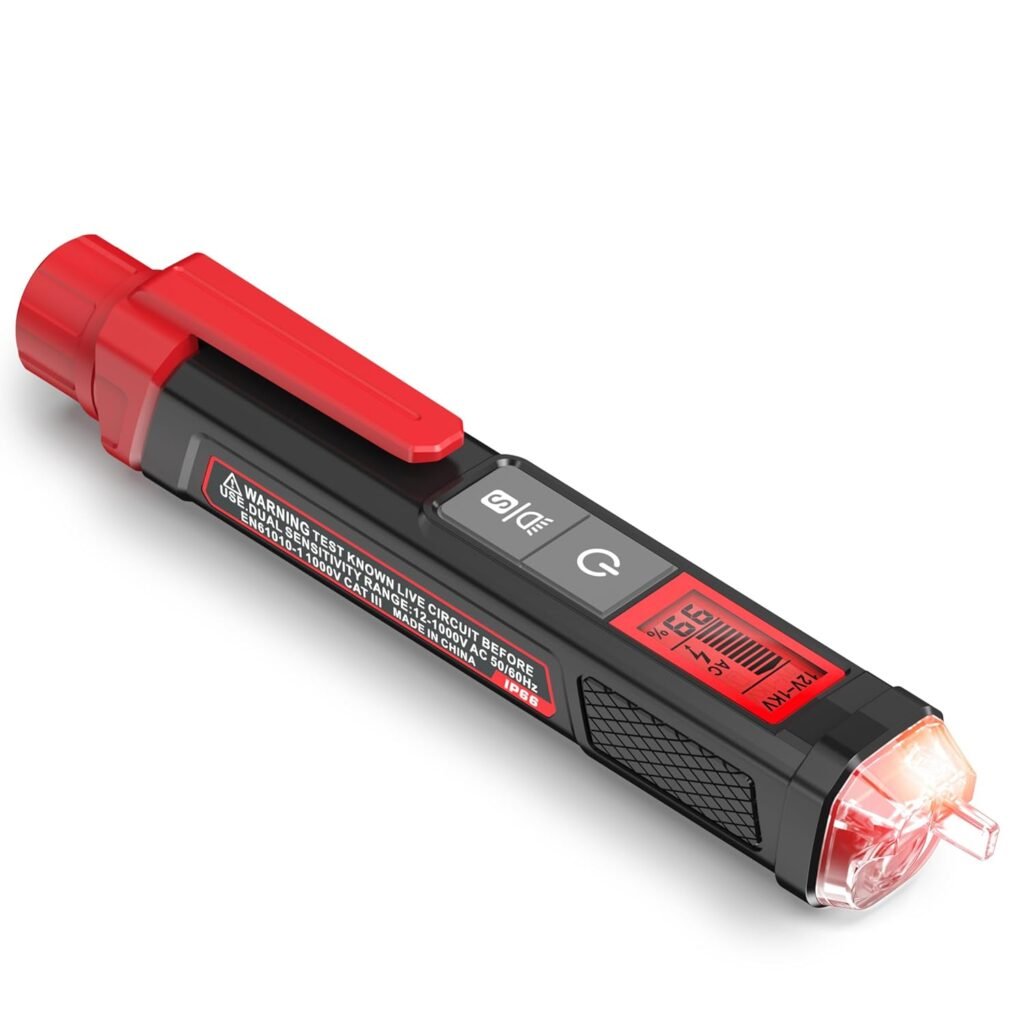
This KAIWEETS pen adds a small LCD that shows a signal-strength percentage as you approach a wire. That readout helps you trace a live conductor and pinpoint a break in a run.
It covers a dual range from 12 to 1000V AC and includes live and null wire identification. A built-in torch and buzzer round out a feature-rich package at a fair price.
Pros
- LCD signal percentage
- Wire breakpoint finder
- Dual range detection
- Affordable for the features
Cons
- Less proven brand longevity
- LCD adds bulk
5. Sperry Instruments VD6504 (Best Adjustable Sensitivity)
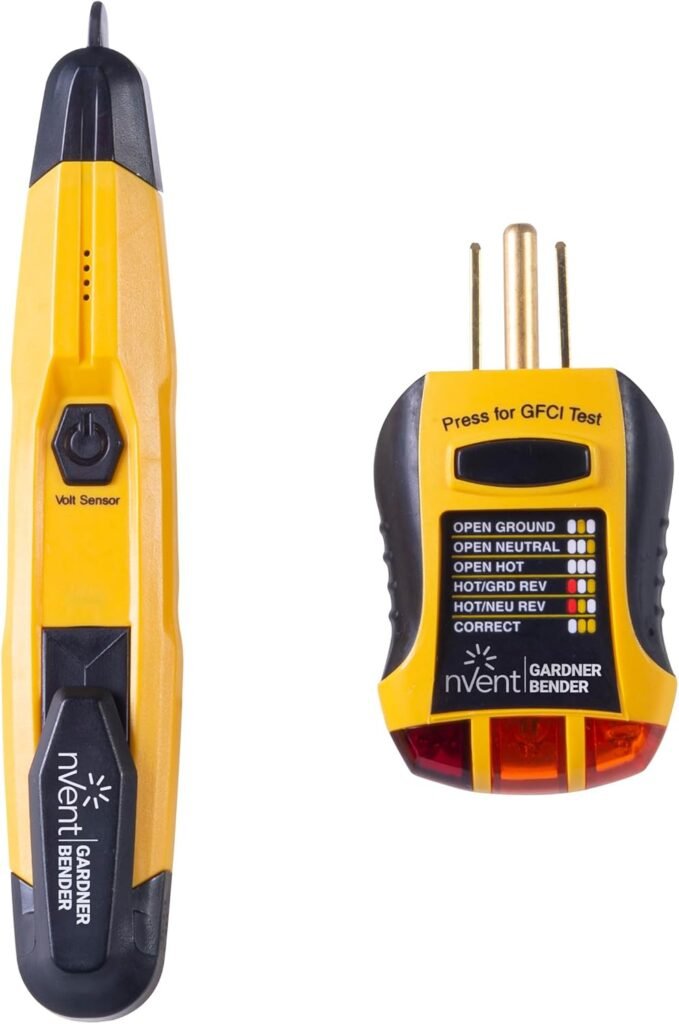
The Sperry VD6504 stands out for its adjustable sensitivity dial. You can dial detection up to find faint signals or down to isolate a single live wire in a crowded box.
It detects 50 to 600V AC, which covers most residential work worldwide. It is light, easy to use, and a smart pick for general home maintenance.
Pros
- Adjustable sensitivity
- Lightweight and portable
- Good for tracing wires
- Budget friendly
Cons
- Lower 600V ceiling
- CAT III rather than CAT IV
Final scores
| Model | Safety | Features | Value | Overall |
|---|---|---|---|---|
| Klein NCVT-3P | 9.5 | 9.0 | 9.0 | 9.3 |
| Fluke 1AC II | 9.5 | 8.5 | 8.0 | 9.0 |
| KAIWEETS LCD | 8.5 | 9.0 | 8.5 | 8.7 |
| Klein NCVT-1P | 9.0 | 7.0 | 9.5 | 8.5 |
| Sperry VD6504 | 8.0 | 8.0 | 8.5 | 8.2 |
The live, dead, live testing method
No tester is trustworthy until you prove it works. Before relying on any reading, follow the three-step method that every electrician learns.
First, test a circuit you know is live, such as a working outlet, and confirm the pen alerts. Second, test your target circuit and confirm it reads dead. Third, return to the known live source and confirm the pen still alerts.
If all three steps pass, you can trust the dead reading. This habit catches a flat battery or a faulty sensor before it puts you at risk. It takes ten seconds and has saved many lives.
Frequently asked questions
How accurate is a non-contact voltage tester pen?
These pens reliably confirm whether AC voltage is present, not the exact value. Always retest a known live source first to confirm the pen works, then test your target.
Can a non-contact tester detect DC voltage?
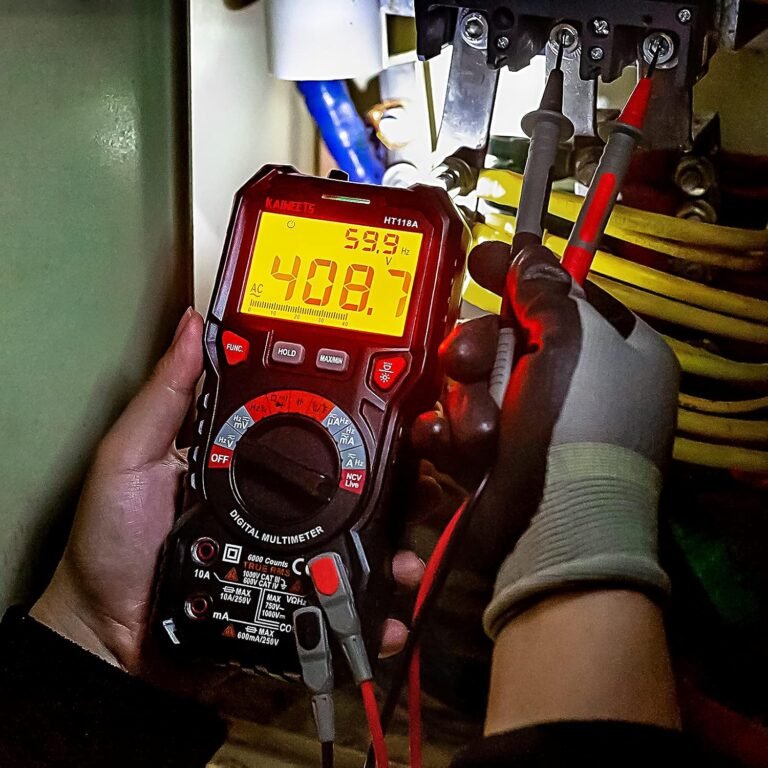
No. Non-contact pens sense the alternating electric field around AC conductors. For DC circuits like solar or battery work, you need a multimeter with probes.
Does it work on 240V systems outside the US?
Yes. Every pen here covers the 230 to 240V range used across the UK, Europe, Australia, and Kenya. Check the upper limit reaches 1000V for panel work.
Why does my tester sometimes beep on a dead wire?
That is usually ghost voltage from a nearby live conductor inducing a faint field. Use a lower sensitivity setting or confirm with a contact tester when in doubt.
Which one should you buy?
For most people, the Klein Tools NCVT-3P is the right call. It blends a top safety rating, dual ranges, and a flashlight into one durable pen. Professionals who want continuous self-testing should step up to the Fluke 1AC II.
Budget buyers are well served by the Klein NCVT-1P, while anyone tracing wires will appreciate the KAIWEETS display or the Sperry sensitivity dial. Whichever you choose, never skip the live, dead, live test before you start work.
Get the Klein NCVT-3P on Amazon
Also Read On:
Neiko 3-in-1 Wire Stripper Review: The Best Automatic Stripper for 2026