Heavy Duty Industrial First Aid Kits: 5 Best Picks for Demanding Worksites
Heavy duty industrial first aid kits are the difference between a logged near miss and a workforce incident that shuts down a shift. A factory floor, a welding bay, or a remote jobsite needs more than a household pouch. It needs ANSI graded contents, a rugged cabinet, and refills you can restock fast.
I have specified and restocked these kits across busy workshops for over a decade. Below are five globally available picks ranked for compliance, capacity, and build. Every recommendation is chosen to survive dust, knocks, and daily use.
To rank each kit I weighed four things that matter on a real floor. First, whether the contents meet a recognized standard for the risk level. Second, the rated headcount against typical shift sizes.
Third, how the cabinet or case holds up to grime, impact, and daily handling. Fourth, how easily a manager can audit and restock it without hunting for parts. Those four lenses shaped every score below.
We independently evaluate all of our recommendations. If you click on links we provide, we may receive compensation.
Top Pick Overall
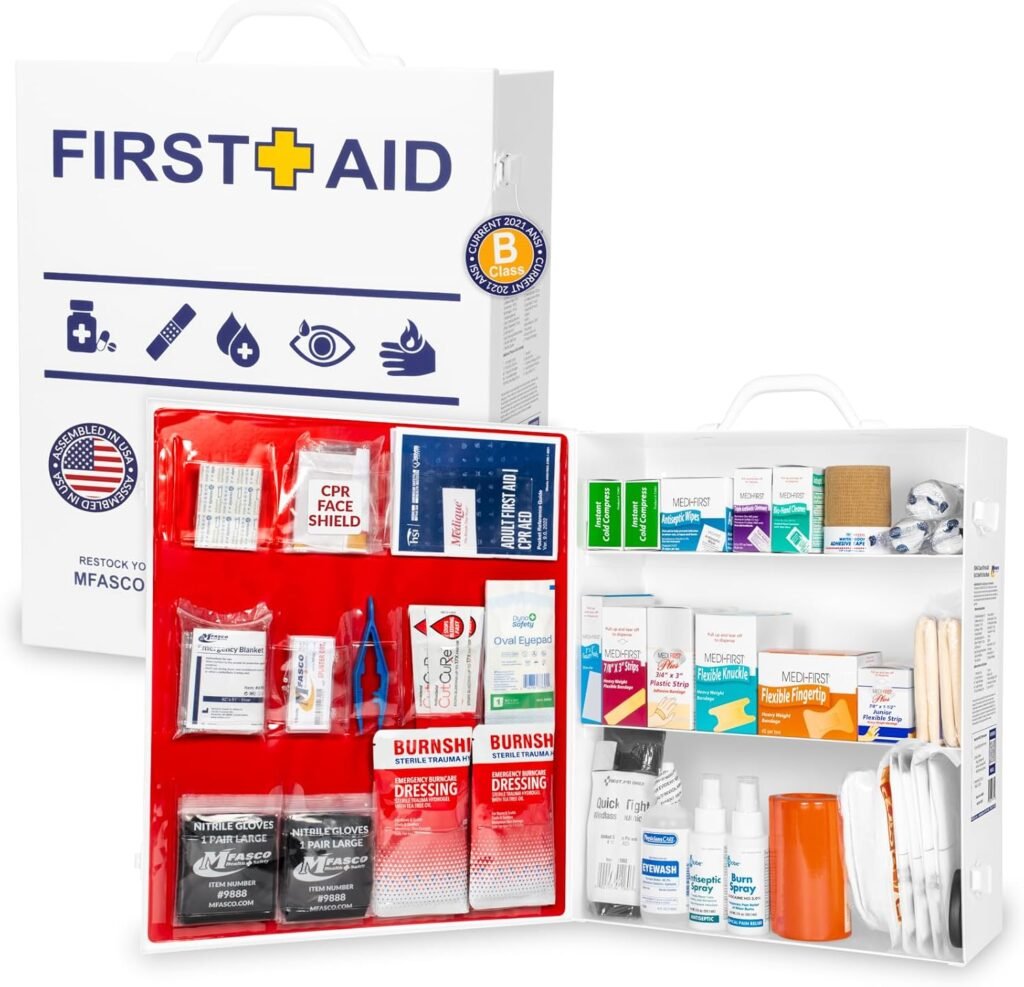
First Aid Only ANSI 2021 Class B Plus Metal Cabinet
Full Class B compliance for up to fifty people, a steel wall mount cabinet, and refill packs that ship worldwide. It hits the sweet spot of standard, capacity, and durability for most industrial sites.
How to Choose Heavy Duty Industrial First Aid Kits
The right kit starts with the standard your site must meet. After that you size for headcount, then judge the cabinet and the restock path. Get those four right and the rest is detail.
Match the compliance standard
In the United States, ANSI/ISEA Z308.1 sets Class A and Class B contents. Class B carries higher quantities for high risk environments like manufacturing and construction. UK and EU sites should look for BS 8599-1 graded kits instead.
Size the kit for your headcount
Most ratings list a person count, often twenty five, fifty, or one hundred. Pick a kit rated at or above your peak shift size. Undersizing leaves you raiding a kit mid incident, which is exactly when speed matters.
Judge the cabinet and seals
Steel cabinets resist crush damage and mount cleanly to a wall. Gasket sealed cases keep out dust, moisture, and shop grime. For mobile crews, a hard shell trauma case beats a soft pouch every time.
Check the refill path
A kit is only compliant when it is full. Choose brands that sell single item refills and full restock packs. Color coded compartments make monthly audits quick and obvious.
Plan for the worst case, not the average day
Light cuts and grazes are routine, but heavy industry also brings deep lacerations, burns, and crush injuries. Your kit should include trauma dressings, a tourniquet, and burn gel, not just plasters. Specifying for the worst case is what separates a real industrial kit from a token one.
Pair a fixed wall cabinet with a portable trauma case so cover follows the work. Train at least two responders per shift on where the gear lives. Speed of access matters as much as the contents themselves.
Quick Comparison Table
| Kit | Standard | Rated For | Build | Best For |
|---|---|---|---|---|
| First Aid Only Class B Plus | ANSI Class B | 50 people | Steel cabinet | Most sites overall |
| Honeywell North Bulk Cabinet | ANSI Class A | 75 people | Three shelf steel | Large plants |
| Medique Steel Cabinet Kit | ANSI Class A | 25 people | Compact steel | Value workhorse |
| Rapid Care 4 Shelf Kit | ANSI/OSHA | 100 people | Four shelf cabinet | High headcount |
| Lifeline Hard Shell Trauma Kit | Trauma focused | Mobile crew | Sealed hard case | Remote jobsites |
The 5 Best Heavy Duty Industrial First Aid Kits Reviewed
1. First Aid Only ANSI 2021 Class B Plus Metal Cabinet: Best Overall
This kit is built around the tougher Class B contents list, so quantities are sized for high risk work. The steel cabinet bolts to a wall and shrugs off knocks. Inside, labeled compartments make a monthly audit fast.
It covers up to fifty people, which suits most single shift industrial floors. Refill packs are widely stocked, so staying compliant is simple. For the blend of standard, capacity, and price, nothing beats it.
Pros
Full Class B compliance. Rugged steel cabinet. Easy to source refills.
Cons
Wall mount only. Heavier than portable cases.
2. Honeywell North Bulk First Aid Cabinet: Best for Large Plants
Honeywell North builds this for heavy traffic facilities that burn through supplies. The three shelf steel cabinet holds bulk quantities of the common consumables. That depth means fewer mid week restocks.
It serves around seventy five people comfortably, ideal for warehouses and processing plants. The brand reputation for jobsite gear carries through here. Expect a premium price for that capacity and name.
Pros
High bulk capacity. Trusted safety brand. Organized shelves.
Cons
Premium price. Large footprint on the wall.
3. Medique Steel Cabinet Kit: Best Value Workhorse
Medique focuses on no nonsense compliance at a fair price. The compact steel cabinet fits tight workshops and break rooms. It is rated for around twenty five people, which fits small crews well.
Contents lean toward the everyday cuts, burns, and scrapes of a working floor. Single item refills are cheap and easy to find. This is the kit I hand to clients who want value without cutting corners.
Pros
Strong value. Compact footprint. Cheap refills.
Cons
Lower capacity. Class A contents only.
4. Rapid Care 4 Shelf ANSI Kit: Best for High Headcount
When a site runs one hundred people, capacity is the whole game. This four shelf cabinet packs in the volume to match. Generous quantities mean a major incident will not drain it.
The layout groups items by shelf, so trained responders find gear fast. It targets ANSI and OSHA expectations for larger workforces. The trade off is a big cabinet that needs real wall space.
Pros
Huge capacity. Clear shelf layout. Strong value per piece.
Cons
Large footprint. Overkill for small teams.
5. Lifeline Hard Shell Trauma Kit: Best for Remote Crews
Field crews need a kit that travels and seals tight. This hard shell case keeps dust and moisture out on the move. The trauma focused contents cover serious bleeds, not just paper cuts.
It rides in a truck cab or clips to a mobile rig without spilling. The compact size means it complements, rather than replaces, a fixed cabinet. For remote and roaming teams it is the smart second kit.
Think of this as the kit that reaches the worker before help arrives. On a sprawling or off grid site, those first minutes decide the outcome. That makes its modest piece count an easy trade off.
Pros
Sealed hard case. Trauma ready. Truly portable.
Cons
Lower piece count. Not a full site solution.
Scored Verdict Summary
| Kit | Award | Score |
|---|---|---|
| First Aid Only Class B Plus | Best Overall | 9.5 |
| Honeywell North Bulk Cabinet | Best for Large Plants | 9.1 |
| Rapid Care 4 Shelf Kit | Best High Headcount | 8.9 |
| Medique Steel Cabinet Kit | Best Value | 8.8 |
| Lifeline Hard Shell Trauma Kit | Best for Remote Crews | 8.6 |
The scores reflect everyday industrial use, not lab conditions. For most readers the top pick is the safest single buy. Heavier sites and remote crews should layer a second kit to close the gaps.
Frequently Asked Questions
What makes a first aid kit heavy duty and industrial?
It combines a rugged cabinet or sealed case with ANSI Class B or bulk graded contents. The build resists dust and impact while the contents match high risk work. Household kits meet neither bar.
What is the difference between ANSI Class A and Class B?
Class A covers common minor injuries in lower risk settings. Class B carries larger quantities and extra items for high risk environments. Most manufacturing and construction sites should specify Class B.
How many people should one industrial kit cover?
Match the kit rating to your peak shift headcount, not your average. A site with fifty workers needs a fifty person rating at minimum. Add a portable trauma kit for roaming or remote crews.
How often should I restock and audit the kit?
Audit monthly and restock the moment any item runs low. Check expiry dates on ointments and sterile dressings every quarter. A kit is only compliant when it is full and in date.
Are these kits suitable outside the United States?
ANSI kits work well globally, but UK and EU sites often require BS 8599-1 graded kits. Always check your local workplace safety regulation first. The cabinet build and refill logic still apply everywhere.
Ready to outfit your worksite? The First Aid Only ANSI Class B Plus kit is the safest all round choice for most industrial floors.Check Today’s Price on Amazon
Also Read On:
High Visibility Safety Vests: 6 Best Hi-Vis Picks for 2026
How to Use an Angle Grinder for Carving: A Comprehensive Guide
This Hammer Drill Outperformed DeWalt, Makita, and More in Our Tests