Respirator Fit Testing Mistakes: 5 Errors That Could Cost You in 2026
The quick verdict
A respirator only protects you if it seals to your face, and a fit test is how you prove the seal works. The five mistakes below are the ones that silently void that protection, fail an OSHA check, and waste money on gear that was never going to fit. Fix them once and your mask actually does its job every shift.
Respirator fit testing sounds like paperwork, but it is the difference between clean air and a lungful of welding fume, silica dust, or paint vapor. Most people who get it wrong are not careless. They simply repeat the same handful of errors that look harmless and are not.
This guide walks through the five most common respirator fit testing mistakes, why each one matters, and the exact fix. It is written for DIYers, welders, woodworkers, painters, and small crews, not just big safety departments.
We independently evaluate all of our recommendations. If you click on links we provide, we may receive compensation.
Why a fit test is non-negotiable
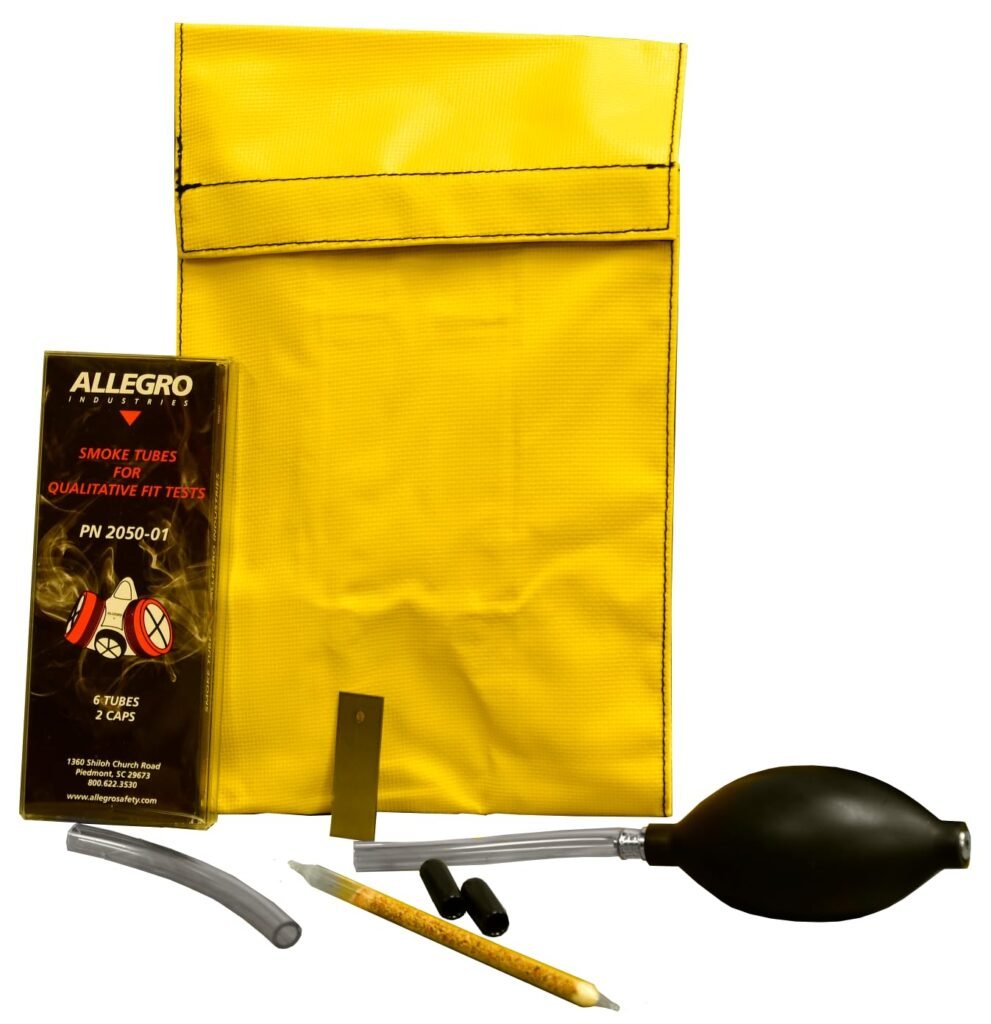
A tight-fitting respirator works by sealing against your skin so all the air you breathe passes through the filter. If the seal leaks, contaminated air takes the easy path around the edge and the rating on the box becomes meaningless. A fit test confirms that seal on your specific face with your specific mask.
In the United States this is governed by OSHA standard 29 CFR 1910.134, and respiratory protection is one of the most cited standards every year. Even if no inspector ever visits your garage, the physics are identical. A mask that fails a fit test is not protecting your lungs.
The cost of getting this wrong shows up in three ways. There is the health cost of inhaling fume or dust, the financial cost of buying gear that never sealed, and for businesses the regulatory cost of a citation. Each of the five mistakes below feeds at least one of those, and usually all three.
Mistake 1: Skipping the medical evaluation before you test
This is the single most cited part of the entire standard, and the most skipped. People grab a mask and start testing without ever checking whether it is safe to wear one.
Breathing through a respirator adds real strain. Conditions like asthma, heart problems, or claustrophobia can make a tight-fitting mask genuinely dangerous. The medical evaluation is meant to catch that before the mask goes on, not after.
The fix: Get a medical clearance first, then fit test, then wear. For workers this is required. For solo DIYers, a quick chat with your doctor before relying on a tight-fitting respirator is smart insurance.
Mistake 2: Testing over stubble or facial hair on the seal line
Facial hair is the most common reason a fit test fails, and it is completely avoidable. Even a day of stubble crossing the sealing surface breaks the seal and lets air leak past the filter.
This is not about a clean-shaven dress code. Hair where the rubber meets your skin physically holds the mask off your face. A neat beard outside the seal line is fine, but anything under the edge is a leak.
The fix: Shave the seal area before the test and before every use. If you will not shave, switch to a loose-fitting powered air-purifying respirator, which does not depend on a skin seal.
Mistake 3: Using the wrong test method for your respirator
There are two fit test types and they are not interchangeable. Qualitative testing relies on your sense of taste, using a sweet or bitter aerosol. Quantitative testing uses a machine to measure leakage as a number called a fit factor.
The rule that trips people up is simple. Qualitative testing is only valid for negative-pressure respirators that need a fit factor of 100 or less, such as N95s and half-face masks. A full-face respirator must pass a quantitative test, because it has to hit a fit factor of 500.
The fix: Use a qualitative taste-based kit for N95s and half-face masks. For full-face respirators, book a quantitative test with proper equipment. A taste test on a full-face mask is not valid.
A simple kit for at-home qualitative testing
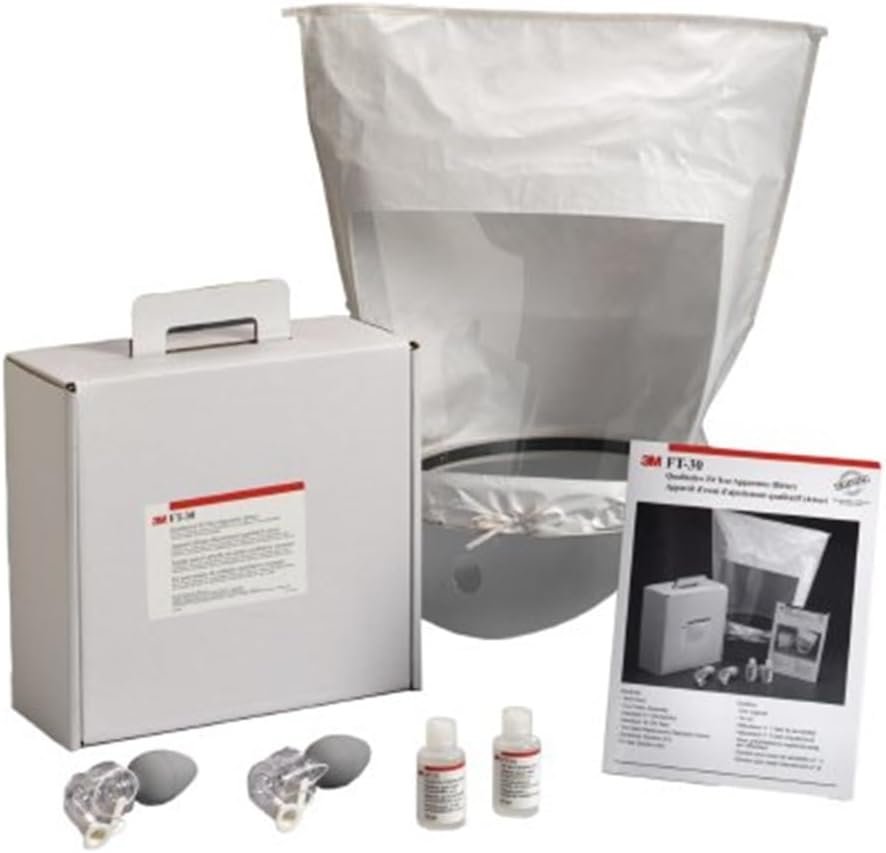
If you run an N95 or half-face mask for dusty or fume-heavy jobs, a qualitative kit lets you check the seal yourself. The 3M FT-30 bitter apparatus is the standard for taste-based testing and meets the OSHA Appendix A criteria.
3M FT-30 Qualitative Fit Test Kit (Bitter)
Includes hood, collar, two nebulizers, sensitivity solution, and bitter test solution. Works with any particulate respirator or gas and vapor respirator fitted with a particulate prefilter.
Mistake 4: Treating a fit test as a one-and-done event
A fit test is a snapshot of one face on one day, not a lifetime pass. Your face changes, and so does the seal that once worked perfectly.
A fit test must be repeated at least once a year, and sooner if anything changes the shape of your face. Significant weight change, dental work, facial surgery, or scarring can all break a seal that passed last spring.
The fix: Re-test annually and after any facial change or switch to a new mask model or size. Put a reminder on your calendar so it does not slip.
Mistake 5: Skipping the daily seal check and the records
Passing a fit test once does not mean every wear is sealed. A daily user seal check takes seconds and catches a bad don before you breathe a single hazardous particle.
Do a positive and negative pressure check every time you put the mask on. Cover the exhalation valve and exhale gently to feel for outward leaks, then cover the inlet and inhale to feel the mask pull in against your face.
For workplaces, the paperwork matters too. OSHA requires fit test records to be kept until the next test is done. Even as a solo operator, a dated note of which mask and size passed saves you from guessing later.
The fix: Build the seal check into your routine, the same way you check a blade guard. Keep a simple dated record of your last passing test.
Frequently asked questions
Do DIYers and homeowners legally need a fit test?
OSHA rules apply to employees, not to a homeowner working alone. The physics do not care, though, so the seal still has to be right for the mask to protect you.
Can you do a respirator fit test at home?
Yes, for N95 and half-face masks a qualitative taste-based kit works at home. Full-face respirators need a quantitative test on proper equipment, which usually means a provider.
How often should I re-do a fit test?
At least once a year, and again any time your face changes or you switch mask model or size. Weight change, dental work, and facial scarring are common triggers.
Does a beard really break the seal?
Any hair crossing the sealing surface holds the mask off your skin and lets air leak. A beard kept well outside the seal line is fine, but stubble on the edge is not.
Qualitative or quantitative: which test do I need?
Use qualitative for N95 and half-face masks that need a fit factor of 100 or less. Use quantitative for full-face respirators, which must reach a fit factor of 500.
The bottom line
None of these five mistakes are hard to fix, and that is exactly why they are worth fixing. Clear the medical step first, keep the seal line bare, match the test to the mask, re-test on a schedule, and check the seal every wear.
Do that and your respirator stops being a guess and starts being protection you can count on. Whether you weld, sand, paint, or cut, the mask is only as good as the seal behind it.
Also Read On:
PPE for Each Task: What Every Crew Needs (2026 Guide)
Best Oxygen Safety Monitor Picks: 5 O2 Sensors to Protect Your Lungs in 2026