Best Cut-Resistant and Impact Work Gloves: Top 5 Picks for 2026
Cut-resistant impact work gloves are the single best upgrade you can make for hands that meet sharp edges and heavy tools every day. The right pair stops lacerations from blades and sheet metal while padding your knuckles against pinch points and dropped loads. The wrong pair just slows you down.
I have spent a decade running power tools and hand tools through real DIY and trade work. This guide ranks the five best cut-resistant impact work gloves you can buy right now. Every pick balances ANSI cut rating, knuckle protection, dexterity, and value.
We independently evaluate all of our recommendations. If you click on links we provide, we may receive compensation.
Quick Verdict
The Mechanix Wear Max Cut M-Pact is the best all-round choice, pairing an ANSI A9 cut rating with proven TPR knuckle armor. For heavy demolition, the Milwaukee 48-22-8782 Goatskin Leather is tougher and cheaper.
If dexterity matters most, the Milwaukee 48-22-8982 Nitrile Dipped keeps cut and impact protection in a slimmer build. On a tight budget, the COOLJOB Impact Reducing gloves punch far above their price.
How to Choose Cut-Resistant Impact Work Gloves
Cut-resistant impact work gloves combine two separate safety systems. One protects the palm and fingers from slicing forces. The other shields the back of the hand from blunt impact.
ANSI cut level explained
The ANSI/ISEA 105 scale rates cut resistance from A1 to A9 based on the gram force needed to slice the material. A1 fails at around 200 grams, while A9 resists more than 6,000 grams. For most construction, fabrication, and tool work, A4 through A6 hits the sweet spot of protection and feel.
Go higher only when blade contact is constant. An A9 glove is overkill for general handling and usually trades away dexterity. Match the rating to your actual hazard, not the biggest number on the box.
ANSI impact level explained
Impact protection is rated from Level 1 to Level 3. Level 1 covers basic knuckle bumps, Level 2 suits most construction and mechanic work, and Level 3 is built for demolition and heavy equipment. The padding usually sits in molded thermoplastic rubber over the knuckles and fingers.
Materials and fit
Cut resistance comes from high-performance fibers like HPPE, Dyneema, or steel-wire blends woven into the shell. Leather palms add abrasion resistance and grip, while nitrile or polyurethane dips give a cleaner feel for detail work. Always size carefully, since a loose glove kills both grip and safety.
Cut-Resistant Impact Work Gloves Compared
| Glove | Cut Level | Impact | Palm | Best For |
|---|---|---|---|---|
| Mechanix Max Cut M-Pact | ANSI A9 | TPR knuckle | Synthetic + D3O | Best overall |
| Milwaukee 48-22-8782 | ANSI A5 | Level 2 | Goatskin leather | Construction |
| Milwaukee 48-22-8982 | ANSI A5 | Level 2 | Nitrile dipped | Dexterity |
| COOLJOB Impact Reducing | ANSI A4 | TPR knuckle | Nitrile dipped | Budget |
| Youngstown Titan XT | Kevlar lined | TPR knuckle | Leather hybrid | Heavy duty |
The 5 Best Cut-Resistant Impact Work Gloves
1. Mechanix Wear Max Cut M-Pact (Best Overall)
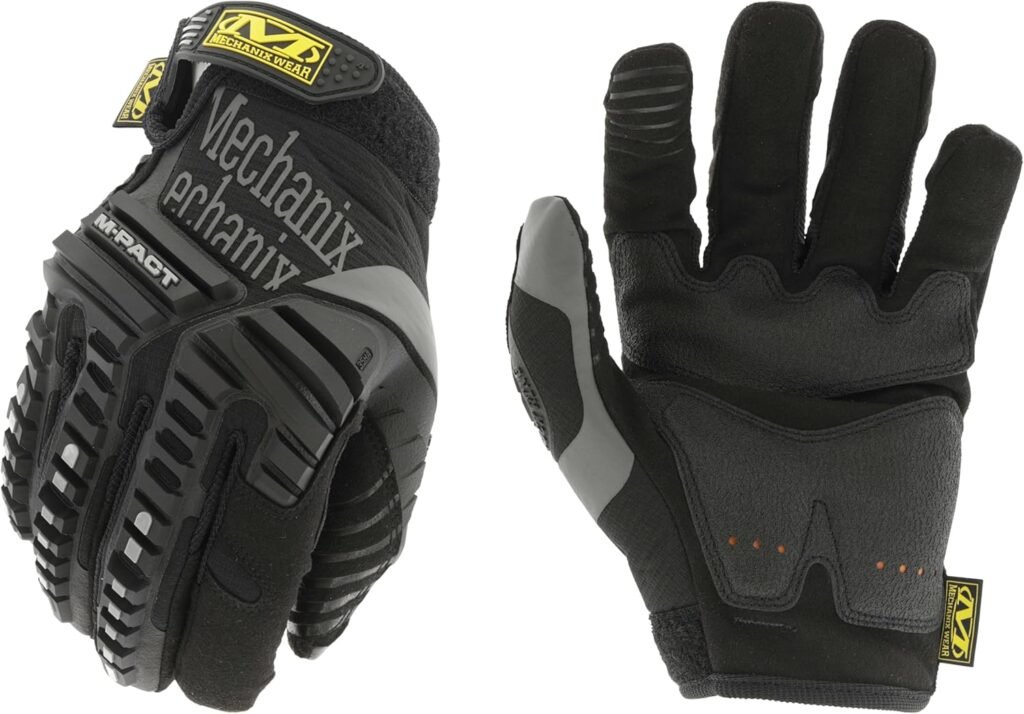
The Max Cut M-Pact takes the famous M-Pact impact shell and adds a true ANSI A9 cut liner. You get the highest cut protection on this list alongside the TPR knuckle armor that made the M-Pact a jobsite standard. D3O padding in the palm dissipates blunt force without turning the glove into a brick.
Dexterity stays surprisingly good for an A9 glove, so detail work is still possible. It is the pair I reach for when I do not know exactly what a day will throw at my hands.
| Cut rating | ANSI A9 |
|---|---|
| Impact | TPR knuckle, D3O palm |
| Standard | EN 388 rated |
| Touchscreen | Yes |
Pros
- Top tier A9 cut protection
- Proven M-Pact knuckle armor
- Good dexterity for the rating
Cons
- Premium price
- Warmer than a thin dipped glove
Score: 9.5 / 10
SHOP NOW
2. Milwaukee 48-22-8782 Goatskin Leather (Best for Construction)
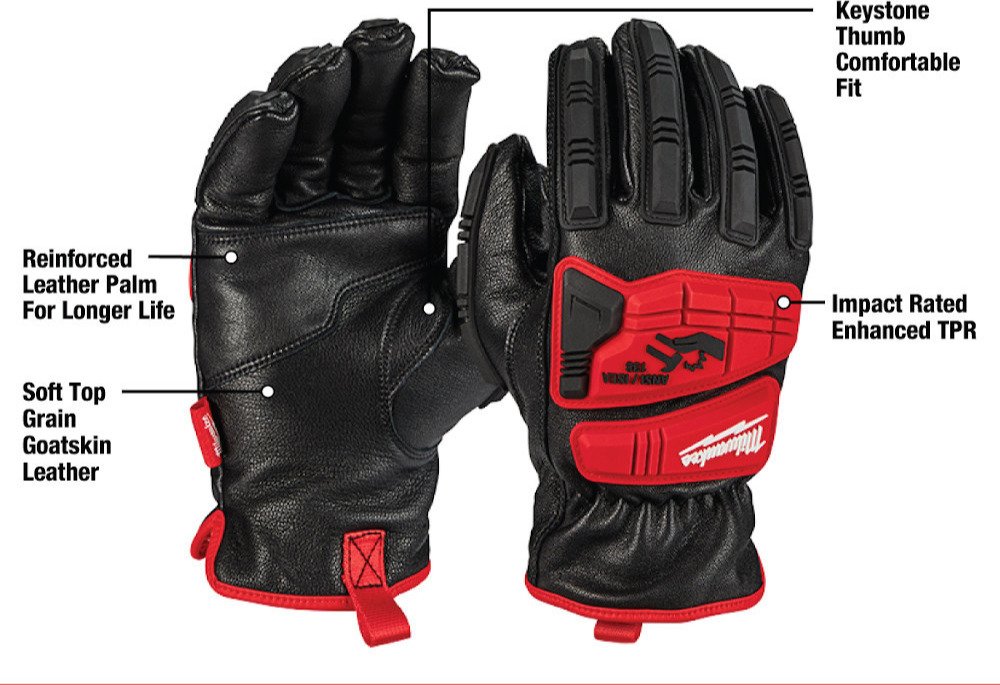
This is the workhorse for demolition, framing, and rough material handling. It delivers ANSI Cut Level 5 and ANSI Impact Level 2 in a goatskin leather palm that breaks in fast. Goatskin is softer and more flexible than cowhide, so grip stays strong even after weeks of abuse.
At around thirty five dollars it is a genuine bargain for leather cut and impact protection. The trade off is that thick leather reduces fine finger feel.
| Cut rating | ANSI A5 |
|---|---|
| Impact | ANSI Level 2 |
| Palm | Goatskin leather |
| Sizes | L to 2X |
Pros
- Durable goatskin palm
- Strong value for leather
- Breaks in quickly
Cons
- Lower dexterity than dipped gloves
- Not touchscreen friendly
Score: 9.1 / 10
Check Price
3. Milwaukee 48-22-8982 Nitrile Dipped (Best Dexterity)
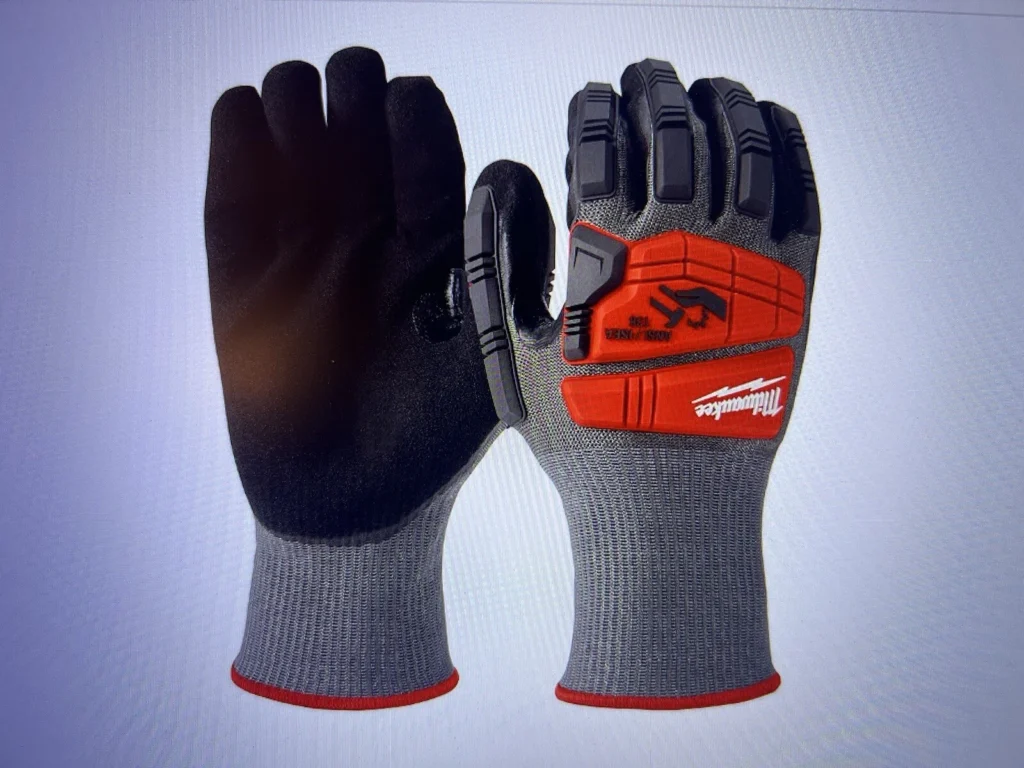
When you need to feel small fasteners but still want cut and impact protection, this nitrile dipped glove is the answer. It keeps an ANSI A5 cut liner and Level 2 knuckle padding in a much slimmer profile than leather. The nitrile palm grips well in oil and damp conditions.
This is the everyday glove for mechanics, electricians, and anyone juggling tools and hardware. It costs less than the leather pair too.
| Cut rating | ANSI A5 |
|---|---|
| Impact | ANSI Level 2 |
| Palm | Nitrile dipped |
| Touchscreen | Yes |
Pros
- Excellent finger feel
- Strong grip when wet or oily
- Affordable
Cons
- Less abrasion resistance than leather
- Dip wears over time
Score: 9.0 / 10
Check Price
4. COOLJOB Impact Reducing Gloves (Best Budget)
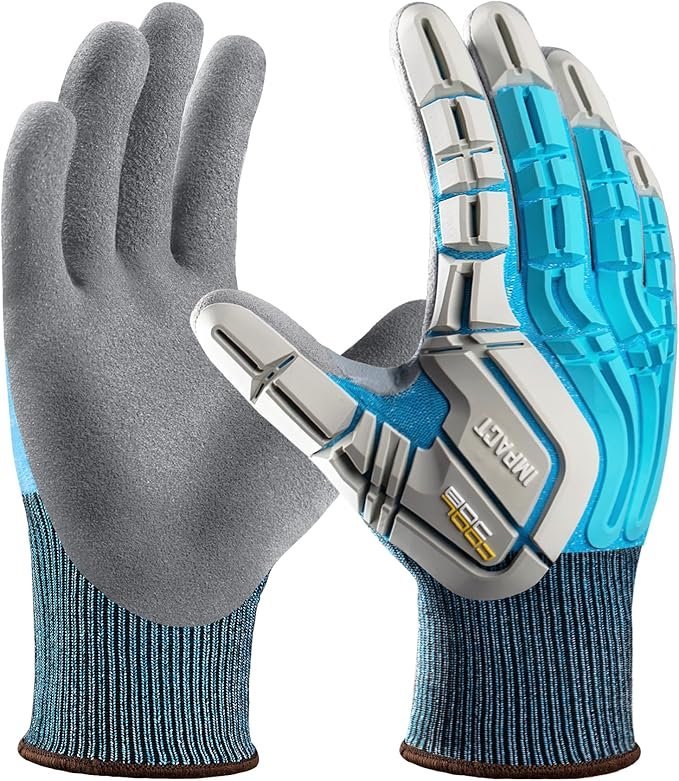
These gloves prove you do not need to spend big for real protection. They pair an ANSI A4 cut liner with molded TPR knuckle guards at roughly the price of a single fast food meal. The nitrile palm grip is honest and the touchscreen fingertips are a nice bonus.
They will not outlast a leather pair under demolition abuse. For homeowners and weekend warriors, though, the value is hard to beat.
| Cut rating | ANSI A4 |
|---|---|
| Impact | TPR knuckle |
| Palm | Nitrile dipped |
| Touchscreen | Yes |
Pros
- Outstanding price
- Solid A4 cut protection
- Touchscreen fingertips
Cons
- Shorter lifespan
- Lighter impact padding
Score: 8.6 / 10
BUY NOW
5. Youngstown Titan XT (Best Heavy Duty)
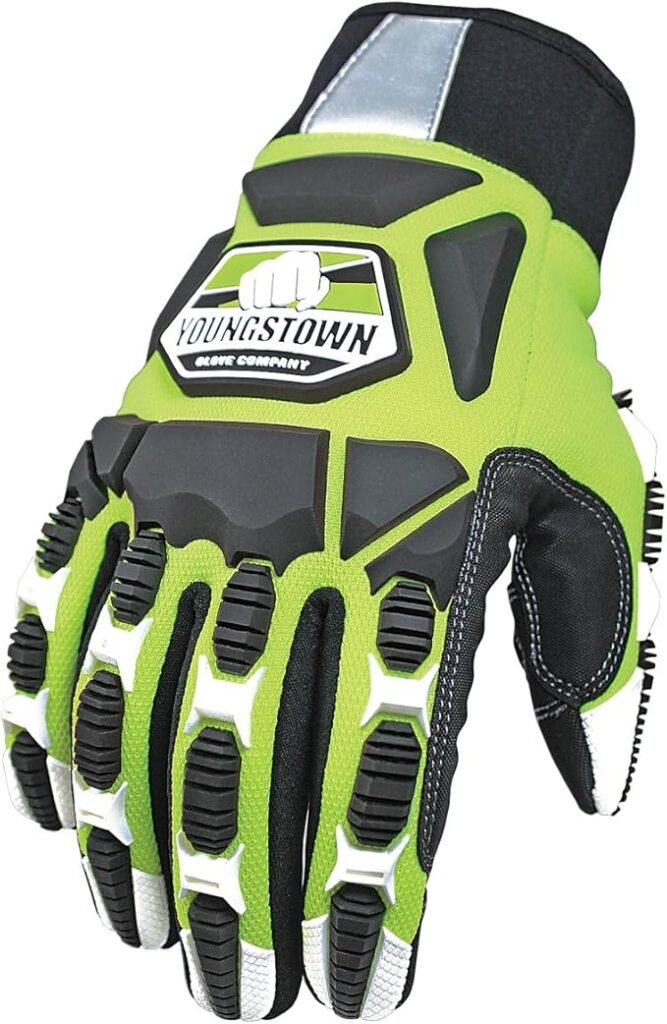
The Titan XT is built for the hardest jobs where leather alone is not enough. A Kevlar lining adds cut resistance under a reinforced leather and synthetic palm, while TPR guards protect the knuckles and fingers. The result is a glove that shrugs off rebar, demolition debris, and heavy equipment work.
It is the warmest and stiffest pair here, which is the cost of that armor. For demanding outdoor crews, the durability is worth it.
| Cut liner | Kevlar lined |
|---|---|
| Impact | TPR knuckle and finger |
| Palm | Reinforced leather hybrid |
| Build | Heavy duty |
Pros
- Extremely durable
- Full hand impact coverage
- Great for cold weather work
Cons
- Stiff and warm
- Lower dexterity
Score: 8.8 / 10
SHOP NOW
Frequently Asked Questions
What cut level do I actually need?
For general construction, fabrication, and tool work, ANSI A4 to A6 is the practical range. Step up to A9 only when you handle sharp blades or edges constantly. Over-specifying just reduces dexterity and comfort.
Do impact gloves really prevent injuries?
Yes. The molded knuckle and finger padding absorbs blunt force from pinch points, dropped loads, and tool kickback. Level 2 protection suits most trades, while Level 3 is reserved for demolition and heavy equipment.
Are leather or nitrile dipped palms better?
Leather wins on abrasion resistance and longevity for rough work. Nitrile dipped palms win on dexterity, grip in oil, and price. Choose based on whether feel or durability matters more for your tasks.
Can I wash cut-resistant impact work gloves?
Most synthetic and dipped gloves can be hand washed in cold water and air dried. Avoid hot water and dryers, which can warp the TPR padding. Leather gloves should only be wiped clean and conditioned.
How often should I replace them?
Replace gloves once the cut liner shows fraying, the palm dip wears through, or the knuckle padding cracks. A compromised liner no longer meets its rated cut level. Inspect them before each heavy task.
Also Read On:
Best Digital Multimeter for Electricians and DIY Use in 2026
The 5 Best Electrical Disconnect Pliers Reviewed
Best Non-Contact Voltage Tester Pen in 2026: Top 5 Picks Reviewed